







































![[ERROR]: Lack of Women in the Software Industry](https://theechohsmse.com/wp-content/uploads/2024/12/APC_0280-984x1200.jpeg)







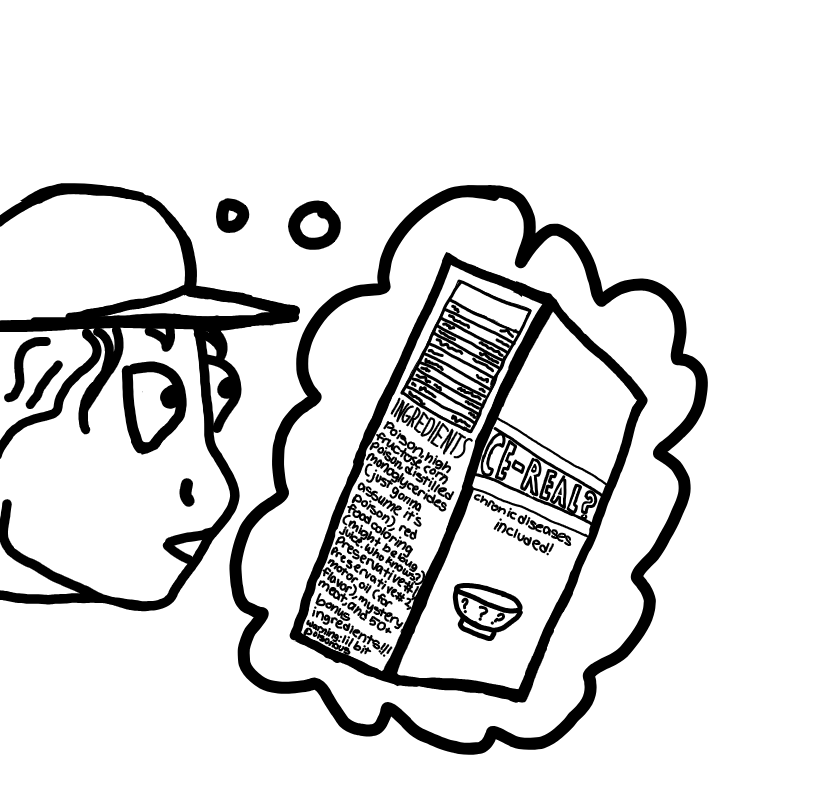
Distilled monoglycerides, sodium acid pyrophosphate, fumaric acid, steviol glycosides. These aren’t the components of a chemistry project, but just a few ingredients among many others from a pack of tortillas in my cabinet. What are these doing in my bread? Why can’t companies make food the way it was made hundreds of years ago? In a world where almost everything we see on the shelf has an ingredient list spanning halfway down the package, it is difficult to avoid eating foods with many unknown ingredients. But it wasn’t always this way. It seems like there’s more and more being added to our food, but is this actually detrimental to our health?
For most high schoolers, the difference isn’t noticeable because we simply haven’t been alive long enough to notice how short ingredient lists used to be. For older generations though, this isn’t the case. Even for foods as simple as a peanut butter and jelly sandwich, the ingredients have changed dramatically from just 50 years ago. Wonder Bread used to contain only wheat flour, water, sugar, yeast, salt, milk, and butter, but now it has over 31 ingredients. Peanut butter used to be just peanuts and salt, but now brands such as Better’n Peanut Butter have up to sixteen ingredients. Jam used to contain only fruit, sugar, and lemon juice, but now some brands have cane sugar, guava puree, water, glucose syrup, high fructose corn syrup, citric acid, pectin, and soybean oil. Not only are there more ingredients but many of them have seemingly no purpose, such as the soybean oil in modern jam. But why have companies recently been adding so many more ingredients?
Newer artificial ingredients and preservatives have been added to benefit both the companies and consumers. Even since additives have been introduced, the food market has been growing, and is predicted to increase by 58% by 2034. For example, high fructose corn syrup is far cheaper and sweeter than sugar, which has encouraged many companies to replace cane sugar with a medley of natural and artificial sweeteners to replicate its sweet taste. Contrary to popular belief, high fructose corn syrup has been shown not to cause more health risks than sugar, so it poses no risk to consumers. Preservatives have reduced food waste from 9.3% of food purchased to 1.6% by extending shelf life, and control contamination that causes food poisoning. Foods without additives are, on average, 63% more expensive than those containing them. Food additives have simply been the logical decision, economically and ecologically.
A reason many people don’t consider is the stricter food regulations. Ever since 1958, compound ingredients had to include their components in brackets. This is why you will never see “enriched flour” by itself, but it’s always followed by the minerals and vitamins that it’s enriched with. Even relatively small amounts of ingredients must be included, and their purpose labeled (such as artificial flavors and colors). Additionally, until the late 20th century most information on food labels were voluntary, unless it was marketed specifically for certain ingredients or health benefits. Both of these relatively new regulations have prevented companies from hiding what is really in their food.
Do people actually care about how many ingredients are in their food? It turns out, 26% of people under 45 base their food choices on the ingredients, and 33% of people think of shorter ingredient lists as a positive factor. When asked what impacts her food choices, Dr. Donell Bailey, an administrative assistant at CCNY, says, “If it has a bunch of additives and chemicals, then I’ll put it back on the shelf. I think it’s both [the length of the ingredient list and whether they’re natural impacting my decision].” A large group of consumers place importance on the length of the ingredient list, even if the ingredients are conventionally “healthy.” In fact, a common dietary guideline is the five-ingredient rule: only picking food with five ingredients or less to avoid processed food. Although foods with fewer ingredients are strongly correlated with being less-processed, they have no evidence of actually being healthier.
Even though it is true that ingredient lists have become longer, there is no evidence that it means it’s unsafe. All food additives are thoroughly tested and must be approved by the FDA, ensuring that it will always be safe to consume in recommended amounts. Although overconsumption of some additives may cause problems, this is true even of natural ingredients found in shorter ingredient lists. As consumers grow more concerned about how many ingredients are in a product, many brands have aimed to create products with the sole purpose of containing fewer ingredients as a marketing point. Even if people have preferences for seemingly less-processed foods, they still have a wide variety of options to choose from. Although a poor diet does have a negative impact on health, the type of food has much more of an impact than the number of additives. For example, the foods that cause the highest rates of cancer are red meats and alcohol, both of which have very few ingredients and have been around for centuries, if not a millennia. Having more ingredients is not a health crisis. They haven’t raised rates of food poisoning or cancer caused by food. So go ahead and make your 55-ingredient peanut butter and jelly sandwich. After all, it’s still safe, even if the complexity of the food label might suggest otherwise.