









![[ERROR]: Lack of Women in the Software Industry](https://theechohsmse.com/wp-content/uploads/2024/12/APC_0280-984x1200.jpeg)


Disclaimer: This article is purely theoretical and should not be used as any form of advice.
The idea of having ultimate power over the outcome of someone/something else is one that has occurred all throughout history. Understanding the process by which they were debated can help to decipher the ways in which we handle such a difficult situation.
In 1945, Harry Truman came into presidency amidst World War II. At the time, Germany had surrendered, and the only country left fighting for the Axis Powers was Japan. Japan had shown that it would fight ruthlessly until the end, resisting any attempts to force its surrender. Harry Truman had been notified about the Manhattan Project—a secret project aiming to win the race to the atomic bomb. The atomic bomb, if possible to create, could be a very destructive force that would win the Allied powers the war. Soon after its creation, the atomic bomb was tested in the Alamogordo Desert, New Mexico. The launch was successful, and caused a crater five feet deep and 30 feet wide, melted the sand around the explosion, and evaporated any structures nearby.
Harry Truman now had to make a decision on whether or not to drop the atomic bomb. “It is an awful responsibility that has befallen us,” said Harry Truman. President Truman saw four options; the first was to continue to bomb Japan like the US had been doing, the second was to perform a ground invasion of Japan, the third was to drop the atomic bomb on a small town, and the final option—and the option President Truman chose—was to drop the atomic bomb on a large city.
In the end, Harry Truman decided to drop the atomic bomb on Hiroshima and eventually Nagasaki once Japan showed no attempt to surrender. Truman felt that the other options would not cause enough damage for Japan to surrender. Japan had already resisted multiple bombings, and a ground attack would lead to more American casualties. Even so, the decision was not any easier. Harry Truman spoke of himself, “And he alone, in all the world, must say yes or no to that awesome, ultimate question.”
Harry Truman’s decision ended the war, but at what cost? It is estimated that within the first couple of months after the bombing, between 90,000 and 160,000 people died in Hiroshima, and another 60,000 and 80,000 died in Nagasaki. The bombing decimated infrastructures, leaving many citizens concerned about whether or not Hiroshima and Nagasaki would be inhabitable again.
What would you do if you were in Truman’s situation? It is not an easy decision, especially with the lives of so many people at stake, from both sides. Dropping the bomb obviously led to the death of many civilians, but choosing not to could have led to the continuation of WW2. This example provides an insight into the ways in which we negotiate our options, leading to the question of “what do we value?”
That is just one piece of the puzzle, though. What if we took out the negative effects of an ultimate decision? Instead of arguing the possibility of a plan working out, you have to argue morality and ethicality. The decision seems easier, but there is a lot more to it than meets the eye.
Imagine you are given the opportunity to completely eradicate the mosquito species from Earth, with no chance of ever seeing it again. Would you? After all, not only are mosquitoes annoying, but they are also one of the top contributors of the spread of malaria. However, mosquitoes are both pollinators and a staple part of the food chain. So, the decision is not so easy after all.
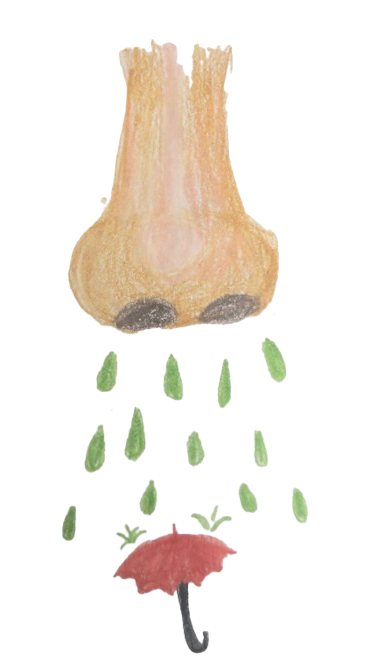
The New World Screwworm (NWS) is a parasitic fly that lays eggs in wounds, causing extreme pain to the host. They were long regarded as a ranchers worst nightmare because they infected livestock and were difficult to remove from the infected animal. The NWS caused large damage to the livestock industry. However, the fly was thought to be long gone since the 1950s, thanks to a man named Edward Knipling.
Knipling was an entomologist who came up with the idea of removing NWS from society. He had originally worked as a farmhand, and his experience with the NWS led him to want to find a way to completely eradicate it. When examining the way they reproduced, Knipling discovered that the female fly would only have one shot at reproducing and having children. He thought that if he could sterilize male flies, then he could prevent female flies from reproducing, and therefore prevent the creation of more NWS. He determined that through radiation from X-rays, he would be able to mutate the flies before they could reproduce. After having tested that the plan worked, Knipling was able to mass-produce infertile flies that were then flown and dropped through airplanes across the Americas.
Eventually, the NWS was chased all the way to Panama, which served as a border for many cases. However, in 2016, because the flies were not fully eradicated, they were able to make a resurgence and start spreading back towards the US and the rest of the South American countries. More money was invested in continuing to build factories to fight screwworm infestation. Eventually, a new method began developing, called a gene drive.
Modern technology makes it possible to inject genes into the NWS population, such as a gene that automatically kills any female flies. Typically, this method only allows for 50% inheritance of the gene, preventing the gene from spreading consistently. However, using a gene drive ensures that near 100% of the population inherits the gene by biasing their transmission. Eventually, this method could cause the NWS species to become extinct.
This technology sparked a debate. The idea of gene drives was discussed by a panel of geneticists, ecologists, environmental ethicists, etc, on whether or not they should be used on some species. The panelists tried arguing different reasons why a species like the NWS should be kept alive or killed. They mentioned ideas such as whether the species plays a role in the food chain, or if the species is good for the environment, such as pollinators. However, even though all other species, including the mosquito, were important to Earth, the NWS were not. It holds no importance to mass pollination, no other animals require it for nutrition, and the animals it keeps in check are already under pressure from humans.
If given the opportunity, would you keep the NWS alive? The main issue standing between the NWS’s extinction and survival is ethicality. The idea of being able to completely eradicate a species is a strong one, but what gives us the right to completely determine the fate of a whole species? Once we use gene drives, what stops us from using it again? Plus, there could always be consequences that were not previously envisioned.
One can never be fully certain about one’s decisions. Something may look promising, and the repercussions may seem nonexistent, but in actuality, there is so much that is left unknown. Big decisions like that of the atomic bombs, or killing the NWS, are the largest sufferers to this issue, because once the decision is cast, there is virtually no turning back.
Hypotheticals like these are great ways to stimulate thought. You might never find yourself in a position just like this, but comprehending the way that you handle big decisions can help make smaller decisions all the easier.