

For decades, putting trash in large, smelly piles of garbage bags has been the standard practice of disposing waste in New York City. Yet, if the city is successful in their new efforts, those mountains of garbage may soon become a thing of the past.
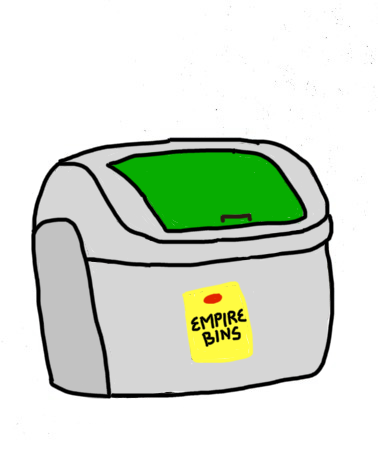
In the past year, you’ve probably seen the city’s new “Empire Bins” in the area surrounding our school. These gray containers reside on the curbside of the road, are about the size of a small car, employ a sleek utilitarian design, and can hold around four cubic yards of waste. They were rolled out in 2025 between April and June in Manhattan’s Community District 9, which encompasses the area between 110th and 155th Streets on the west side of Manhattan.
Empire Bins are now required for residences with 31 or more residential units in the district, and can only be opened by building staff or sanitation workers.
The effort was a part of former Mayor Eric Adams’ trash containerization agenda, and was intended to be replicated across the city. Now, Mayor Zohran Mamdani will expand the program into all 5 boroughs by 2027, with the intent to implement full citywide containerization by 2031.
The rollout has not been free of controversy. “At first I didn’t like them,” said Francisco DaSilva, a maintenance porter at Columbia Residential housing whose job responsibilities include dealing with the bins, in an interview with The Echo. “But they do help with the garbage [and] keeping the rats away. The bad part is they take away parking, and the residents here need parking…it’s a balance.”
Those parking concerns aren’t going anywhere. As part of the mayor’s new rollout, more than 6,500 bins will be placed in parking spots, reducing the availability of parking considerably. This has drawn the ire of right-leaning publications such as the New York Post, which has described the bins as “gobbling up” parking spaces.
It’s difficult to know for certain how successful the new bins have been in one of their primary goals: reducing rat activity, a long-stated desire of the New York City government. The city publishes data on rat inspection results by Community District, but the data is only grouped by year, not month. The program began halfway through 2025, so data from before the Empire Bins were installed and data afterwards are grouped together. Still, rat inspection failures saw a modest decline in Community District 9 in 2025, albeit the decline was not more dramatic than that of other districts without Empire Bins. 311 rodent reporting data by neighborhood did show a significant decline of sightings after the bins were implemented, although again, the decline was also seen in other neighborhoods that were not part of the rollout, such as the Financial District, making it difficult to attribute to the Empire Bins. The Department of Sanitation has attributed this to broader citywide trash containerization efforts beyond Empire Bins. Nevertheless, the Harlem Rat Mitigation Zone, which includes parts of Community District 9, showed a sharp decline in both signs of rodents and rat sightings following the implementation of the bin, which was not replicated in other Rat Mitigation Zones in the city, suggesting that the new bins in particular may be having some success.
Whether you hate the new bins or love them, they’re likely coming to your neighborhood sooner or later. We’re entering a new era of New York garbage collection, defined by containers on the curb rather than piles on the sidewalk, and perhaps also one with fewer of our rodent neighbors. Our school community will be one of the first to experience the new changes, so next time you’re walking to your favorite deli for lunch, make sure to take a moment to think about how these bins have affected you.