




























![[ERROR]: Lack of Women in the Software Industry](https://theechohsmse.com/wp-content/uploads/2024/12/APC_0280-984x1200.jpeg)







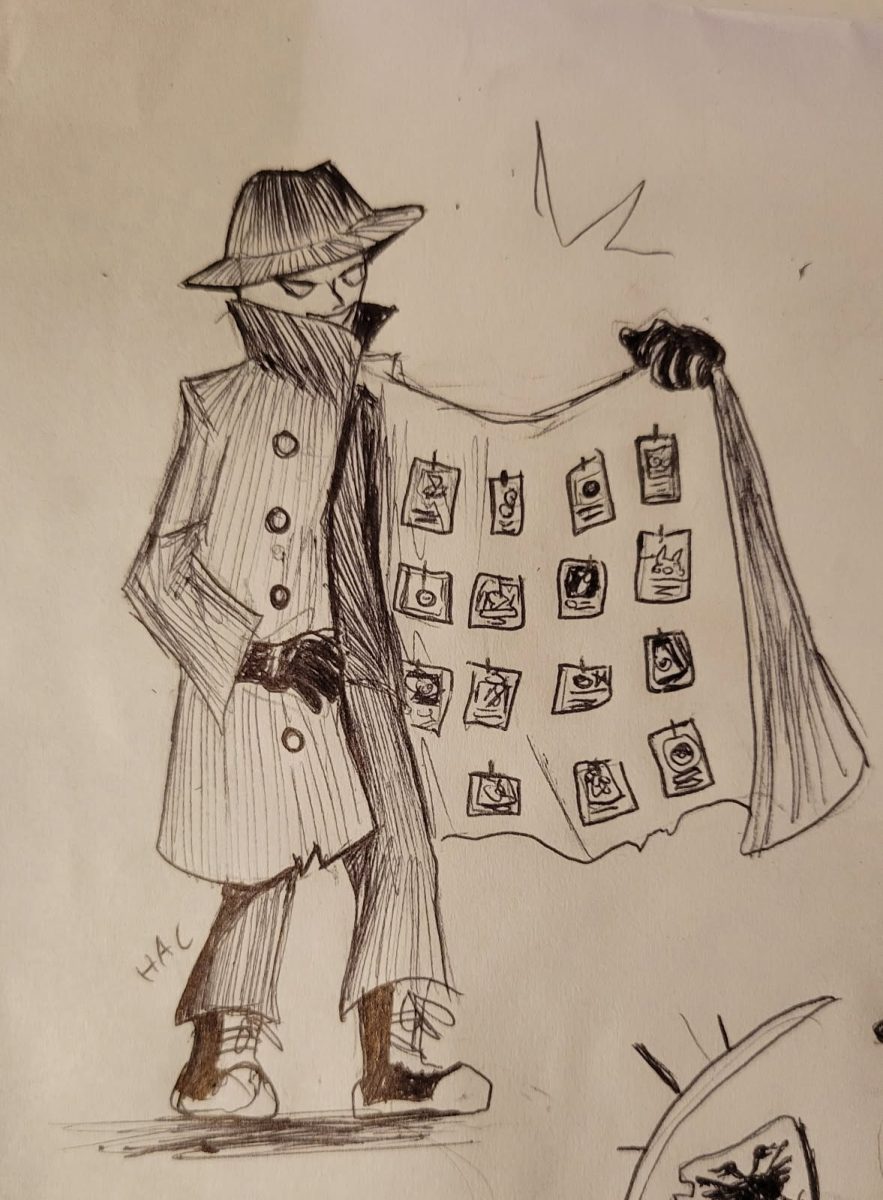
ProjectMoon is a South Korean game company founded by Kim Ji-hoon in November 2016, during his fourth year of university at Ajou. The company grew from just seven people, and it has since expanded to 52 (45 in the studio and seven workers at the themed restaurant HamHamPangPang) after the success of the game series, also called ProjectMoon. ProjectMoon (the games) currently consist of Lobotomy Corporation, Library of Ruina, and Limbus Company, which all take place in a dystopian city called “The City” and explore unique game concepts, a rich story and world, and are known to have a crushingly difficult nature.
Lobotomy Corporation
Lobotomy Corporation was released in 2018, while ProjectMoon was still in relative infancy. You play as X, working as the manager of the titular Lobotomy Corporation alongside your AI companion Angela. Your job consists of commanding various employees (also called “nuggets” by both fans and the series itself in Library of Ruina) to work on horrific creatures called Abnormalities, which are also a central point of the entire series.
Abnormalities are monsters extracted from the human subconscious, which can take forms ranging from two shrimp who traffic people through a method based on a South Korean urban legend (F-05-52), to an interpretation of Lucifer in the form of a biblically accurate angel (T-03-46). From there, they are contained in Lobotomy Corporation for further use. The nature of Abnormalities’ randomness and containment draws a very close parallel to The SCP Foundation—an internet horror concept with similarly endless concepts and creatures trapped within a facility—which was taken as direct inspiration for Lobotomy Corporation as a whole.
By commanding your employees to interact with these shackled abominations, you generate a substance called enkephalin, which serves as both a power source, a resource to create E.G.O. equipment (weapons and armor based on the Abnormality), and an opioid that is sometimes taken/given to employees to numb the pain of the average work day. As Lobotomy Corporation, you power the entire city you live in with this work-to-energy cycle under the official name of L. Corp.
There are 26 Districts in the City, which each have respective Wings, Nests, and Backstreets. L. Corp is one of these Wings, a megacorporation that protects its Nest, very similar to the role of a bird protecting its eggs. Those in the Backstreets do not get this liberty, and have to fend for themselves in a lawless land where money is all that matters.
Returning to the characters residing in Lobotomy Corporation, over the course of the game you meet more AIs called Sephirah, all of which take similar names to parts of the Kabbalah, the tree of life in Judaism. Each Sepirah helps to manage individual departments, although none are very good at their jobs, and incidentally let on that they have some amount of underlying trauma that inhibits their abilities. This assumption could not be closer to the truth. By completing days, missions, and interacting with the Sephirah more, they gradually begin to show their flaws and break down. All the Sephirah are shown to have had a previous life at some point, many part of an old Lobotomy Corporation in the Outskirts (all the area outside The City). After all the events that occurred previously, these Sephirah have endured very high amounts of trauma connected to Lobotomy Corporation. Consequentally, they choose to release this meltdown across the entire facility. These lead to events known as core suppressions, being otherwise normal days of Lobotomy Corporation where the Sephirah’s meltdown causes extreme effects across the facility, such as setting your graphics quality to that of a Ti-84. Upon completion of these events, the player can get closer and closer to the true end goal of the game, which is established to not be powering the city.
One of the original founders of Lobotomy Corporation, Carmen, sought to fix the minds of all in the city, freeing them from their endless dystopian torment and allow them to truly shine free, starting Lobotomy Corporation to achieve that goal. Once this goal becomes close to completion, A—another previous founder of Lobotomy Corporation and current owner—begins to break down just as the Sephirah under him did. Days 46–49 of the facility’s operations include repeating similar trials as in the previous core suppression events. In this time, your original AI companion Angela is notably absent. Among all those to be with the player at the end, it seems Angela is not among them. Furious at this betrayal, she takes away all that was worked for, right at the end, meaning the seeds of light would be sown no more. As the player fades into the light, the stage is set for another installment.
Library of Ruina
Library of Ruina, released in 2020, takes a very different approach to game direction compared to Lobotomy Corporation. Angela has taken control of what used to be Lobotomy Corporation and turned the light collected previously into a massive library, attempting to recollect enough from The City to live a life she was never supposed to live.
At this time, we are introduced to Roland, who randomly appears in The Library, mutilated and un-mutilated by Angela, and becomes the first librarian. Librarians are your equivalent to employees in the game. Instead of being a management sim, Library of Ruina is now a turn-based deckbuilder. The Library holds the power to send invitations to residents of the city, who then inevitably appear to fight against the librarians.
Upon the librarian victory, you resolve books and some of the lost light. Roland serves as the patron librarian of the Keter floor, and the previous 9 Sephirah appear again as the other patron librarians. Due to the events of the previous game, most of the Sephirah absolutely despise Angela, and only help her due to sharing the common goal of escaping back into The City. The gameplay consists of controlling the patron librarians and up to 4 other assistant librarians to fight and kill the invitees to The Library by building 9 card decks, which are attached to key pages and provide stats and passive abilities. You start at the rank of Canard, a rank assigned to unknown threats in The City with little to no danger. You gradually rise through the ranks to become a Star of The City, a rank given to only the most dangerous of threats the City holds.
From a story perspective, Library of Ruina focuses much more on The City and those in the Backstreets, compared to Lobotomy Corporation’s focus on Lobotomy Corporation as a Wing and those who lived in the Nests or worked at Lobotomy Corporation. The first invitees are gut-harvesters in the Backstreets, the lowest of the food chain in the City. They are the definition of poverty, and they struggle every day to make ends meet without being killed. Afterward, we are more directly shown the biggest employment conglomerate in the City: Fixer work. Fixers are effectively all-purpose mercenaries, who range from pitiful Grade 9s to extremely adept Grade 1 Fixers, who are extraordinarily powerful and expensive to hire. Some Fixers become so strong and skilled that they are assigned a Color rank, and are some of the most powerful individuals in the City as a whole.
Fixers work in either Offices or Associations, where Offices are quite small (usually no more than about a dozen people), while Associations have hundreds of members split among several branches. There is also an inverse to Offices/Associations: Syndicates, which are groups of people who simply perform crime to get their way in the City, and are assigned risk levels in the same category as the Library throughout the game.
The story has the player battle through Offices such as Yun’s Office and Molar Office, all the way up to Associations such as the Shi Association or even the Hana Association. The Hana Association houses the overall best Fixers and is responsible for grading Fixer Offices and Associations, and giving risk levels to things such as the Library, Syndicates, or loose Distortions.
Distortions are a type of monster whose origins are similar to those of Abnormalities, which started occurring after the fall of Lobotomy Corporation. After a person goes through severe enough mental stress, they can distort, becoming a creature centered in their own subconscious and insecurities.
This game also gives a spotlight on Angela’s and Roland’s backstories, showing the ways that Angela suffered in Lobotomy Corporation and Roland’s struggle through life in the Backstreets. The game climaxes with combat against the Blue Reverberation, a Color Fixer and Roland’s long term rival, and his ensemble of Distortion-adjacent creatures, among several other fights if the player seeks the true ending. At the end, the Library shuts down due to the ending battles, and Angela retires with Roland to write a book documenting all the stories they picked up along their journey, such as those taken by the Library’s pursuit of an unattainable goal. And then ProjectMoon decided to make yet another game after tying up all the loose ends that instead created several more loose ends.
Limbus Company
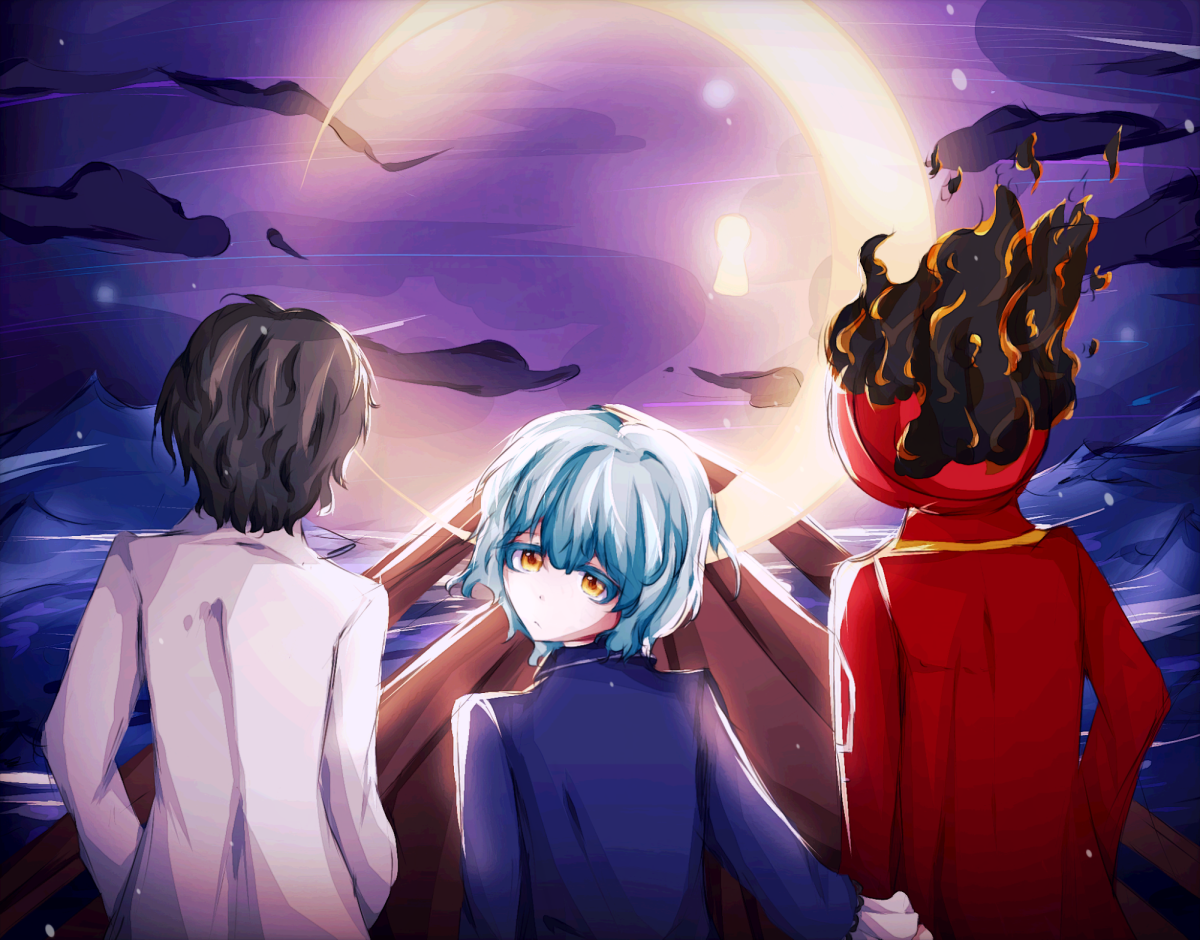
Limbus Company is the third and final game in the ProjectMoon series, which takes a similar gameplay approach to Library of Ruina, while following a completely different storyline in the same universe. The protagonist this time is Dante, a man whose head has been mysteriously replaced with a clock and who had been forcefully hired as the manager of the LCB, which is a branch of the titular Limbus Company. The remaining members of the LCB include Vergilius, a Color Fixer known as the Red Gaze who is hired as a guide, the bus driver Charon, and the 12 Sinners, all of which are some form of literary reference which is used as a basis for their story. For instance, Sinner #13,Gregor, is a reference to the book The Metamorphosis by Franz Kafka, having a similar feature in having an insect appendage, referencing Gregor’s full-body conversion in The Metamorphosis. This game is also arguably where the story is at its best, with the game separated into chapters (called Cantos in game), which each focus on one Sinner each and truly flesh out each individual member of the cast in unique ways.
Gameplay-wise, Limbus Company takes to being a free-to-play game, where unlocking new units (called Identities in game) is entirely up to luck, and the newer content tends to be stronger than the older content. Unfortunately, this leads to a rather unbalanced and dry gameplay loop,as the story has to do a lot of the heavy lifting to keep the game as good as it is, and the game has the lowest Steam Review Score of the series (which, granted, is not a bad score). Otherwise, relatively little else is done to flesh out the world as a whole, as most of that worldbuilding has already been done in Library of Ruina. Despite this, we still learn a lot more about the inner details of some groups in The City, such as how some districts and syndicates operate, and an in-universe explanation for the gacha system. Currently, the game is not finished, and instead gets pieces of content over time, with the most recent full Canto being Canto IX: The Unsevering which focuses Sinner #4 Ryoshu and the most recent content in general being the intermediary mini-chapter being Twinning Threads.
Difficulty
The main subject of conversation when ProjectMoon is brought up is frequently its difficulty. None of these games are easy and many parts can feel punishing. As Clodsire Nutella asserts in their Steam Review of Lobotomy Corporation, “10/10 Incredible game, never play it! I’m pretty sure it took years off my life …” Many can’t deny the quality of the products, but to say completion is straightforward would be a gross understatement. Events such as an Arbiter in Lobotomy Corporation and Apocalypse Bird in Lobotomy Corporation/Library of Ruina or Rufo in Limbus Company contribute to the reputation of ProjectMoon being an incredibly difficult game series to complete, although very rewarding once you complete the tasks presented to you.
Faults and Strengths
Nothing is perfect, and ProjectMoon is no different. There are a lot of problems people can have with the series for very valid reasons. All around, the tutorials and explanations of how to succeed are confusing at best, practically useless at worst, and get arguably worse in later installments. They get so bad to the point where even when you understand how to play the game, you may miss what the specific gimmick of a fight is and be doomed from the start due to not realising exactly which small lines of text you had to read to win.
On the contrary, there are many things that ProjectMoon excels at. The biggest of these being the narrative behind every game. This is shown exclusively either through character dialogue—present or flashback—and leads to a story that is constantly building itself up, expanding the characters and the world they live in. The gameplay, while challenging, always explains itself somewhere (even if hidden) and never works arbitrarily. For example, any time an employee dies in Lobotomy Corporation, it can be traced to a specific source that was directly the player’s fault that can then be avoided. All elements are very intentionally woven together to deliberately create every backstory, player mistake, world shattering event, or eventual triumph that these games display.
Conclusion
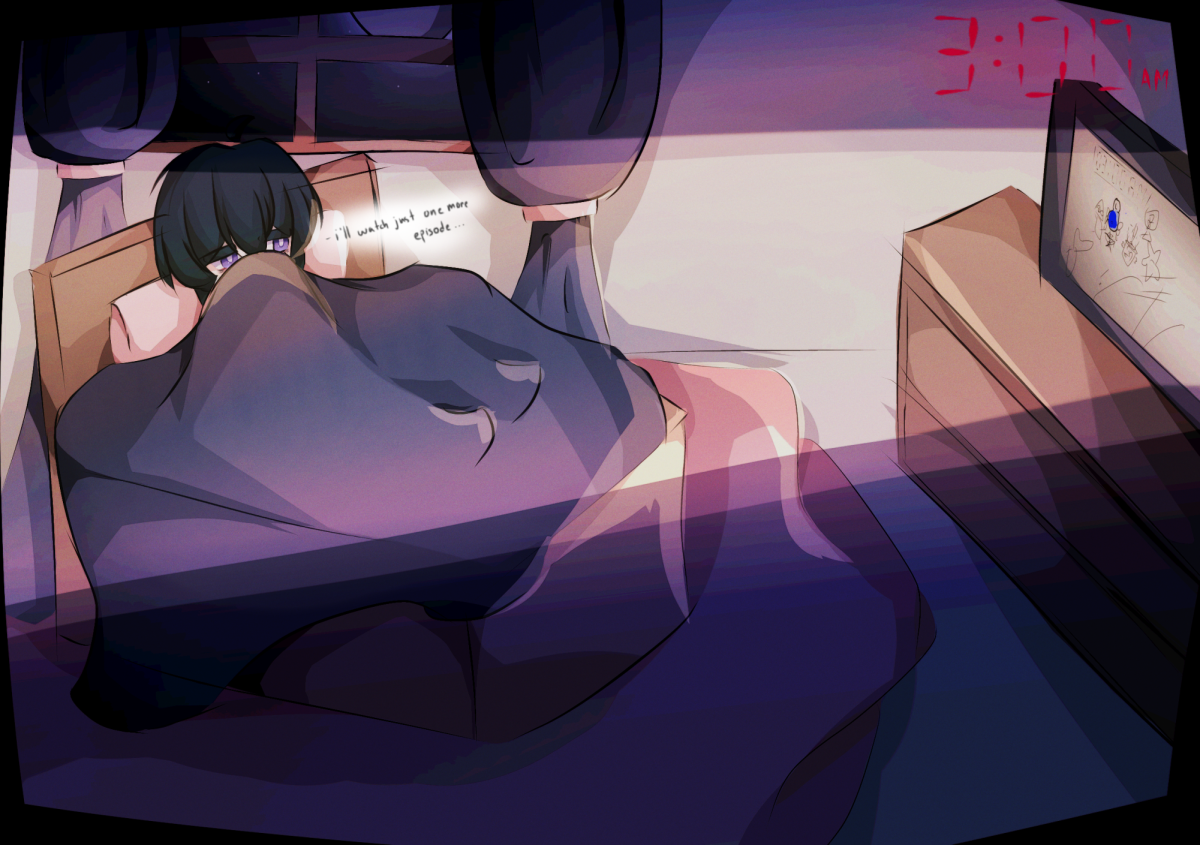
ProjectMoon is a phenomenal game series. It avoids being a truly unfair or punishing experience, has some incredible stories, and can easily eat up a month of your life. While it may not be for everyone, it is an easy recommendation for anyone looking for a challenging game to keep them engrossed for the entire runtime.