
















![[ERROR]: Lack of Women in the Software Industry](https://theechohsmse.com/wp-content/uploads/2024/12/APC_0280-984x1200.jpeg)






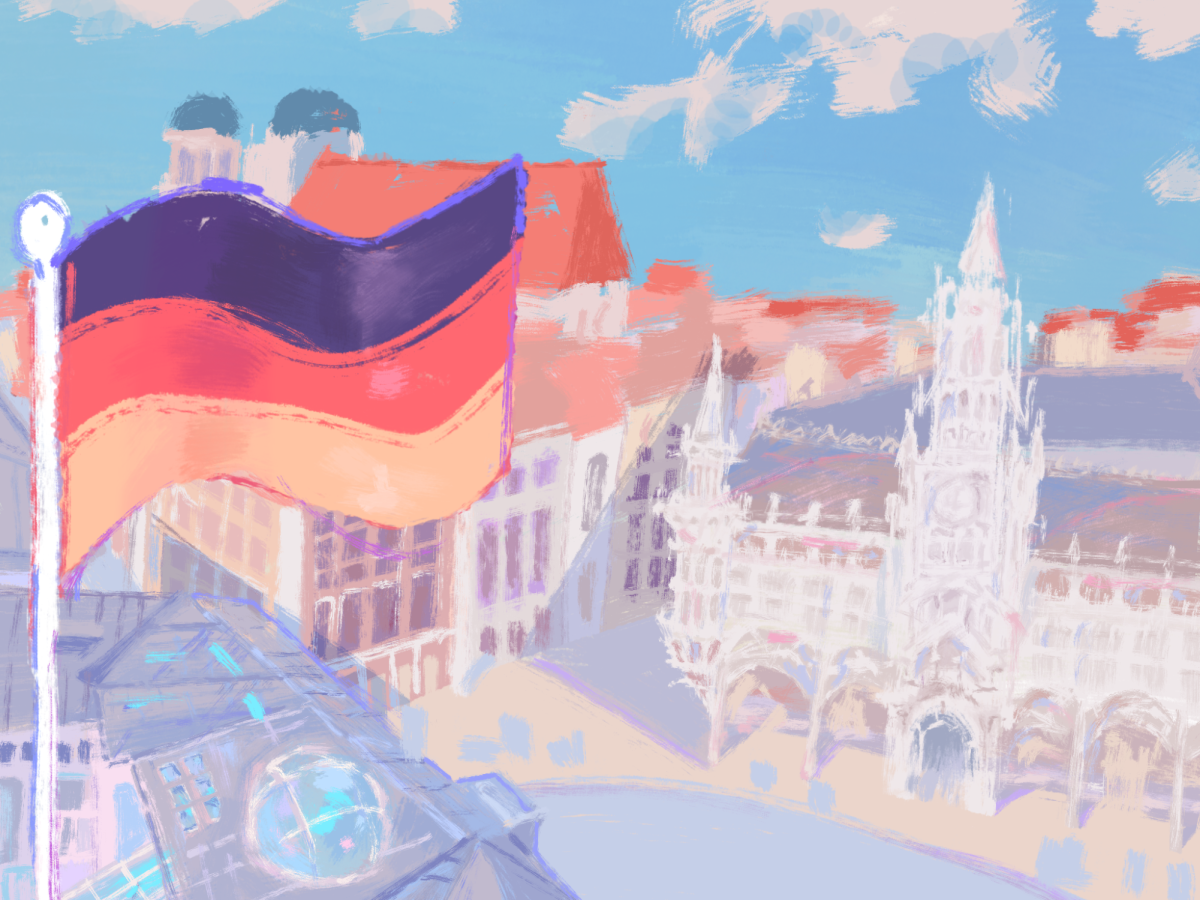
Did you know that Germans always answer truthfully when asked how they are? As a student at HSMSE, you may take German as an essential language credit. However, despite being a language course, German should also be a link into a culture often blanketed by stereotypes of directness and sternness. To bridge the gap between textbook vocabulary and reality, I spoke to Mr. Salisbury, who spent years living in Germany, and Christian Gauchel, a one-year exchange student from Bonn who is currently placed in Texas. Their experiences revealed a society that values deep-rooted loyalty and communal order. From the Pfand system to the healthcare system, here is what it’s really like to experience the social heart of Germany. Los geht’s!
Socialization
Kathryn Lee: Is it true that Germans are slower to trust and form friendships than Americans, but those friendships last long?
Mr. Salisbury: That is very true. I remember I moved into a dorm and it took three months before I spoke one word to anybody. This was around 20 years ago and I’m still in contact with all of them.
Christian Gauchel: It isn’t that much harder to form friendships. It really depends on the person you are trying to bond with but it usually takes a week or two to find friends in a new place.
KL: What is your advice for navigating the directness of German conversation with your friends or acquaintances?
WS: My advice is to be amused by it and just know that that’s what they’re going to say. However, Germans are not going to actively insult people for their personal characteristics. I would also like to add that they tend to be long-lasting, loyal friends who have trouble understanding American superficial friendliness at times. For instance, when an American in Europe says, “Ooh, it would be great for you to come visit!” the German would call in a few weeks saying they already booked the flight, much to the dismay of the American!
CG: In my opinion, it is actually easier to navigate if people are direct because then you know what you are doing wrong.
KL: How do you spend time with your friends?
WS: If you are younger, you would play sports like soccer. And of course, just going out with friends to cafes, beer gardens, hiking, and lots of vacations. Germans love going on vacations to places like New York. They would gather a big group together and do that.
CG: Where I’m from, Bonn, high schoolers normally sit by the river or go to the supermarket. Like in New York, we walk or bike everywhere. We also have a lot of cafes.
Rules and Everyday Expectations
KL: Are there quiet hours in Germany?
WS: Yes. I think that during the week, it’s ten o’clock, so no one can be outside after that time. On the weekend, it might be later, but on Sundays and during lunchtime, it is quiet out. For instance, if you’re mowing the lawn on Sunday, people will call the police. Good Friday is also a quiet day, so you are not allowed to play loud music.
CG: Every town has different hours. We have to keep the noise down to room volume on public holidays and Sundays and construction work is strictly forbidden.
KL: Is it acceptable to jaywalk in Germany? Why or why not?
WS: Absolutely not. You will be viewed as one of the worst criminals of all time especially if there are children around, in which you will be lambasted for being a horrible example to kids. You will definitely get yelled at. I actually got yelled at by a German woman in New York City for jaywalking, but the bigger the city is, the less it is frowned upon.
KL: How does the bottle return system work, and why is it so effective?
WS: The recycled bottles are not broken up but are cleaned and reused. This system is called Pfand. Basically, you have to pay an extra few cents when you buy a bottle and you receive your money back in the form of a coupon when you return it. Larger bottles usually have higher deposits. A smaller Coke bottle might have an eight-cent deposit, while a larger bottle might be 15 cents. Non-reusable items like plastic two-liter bottles or Coke cans have higher deposits of around 25 cents or more to discourage their use and encourage returns.
CG: To add onto Mr. Salisbury, only the plastics get reformed and the glass bottles often get reused.
Shopping
KL: Which grocery stores are popular in Germany and what features of them are different from in America?
WS: Grocery stores like Aldi, Lidl, and Penny are very common in Germany, especially for students and middle-income families. They are discount supermarkets, and even though Lidl is sometimes seen as a step up from Aldi, all of them focus on low prices and simple, no-name products that often look suspiciously similar to branded goods but cost much less. There are also larger supermarkets like Edeka, which are more similar to normal American grocery stores than Aldi and the other markets I previously mentioned. Another common feature is drink markets, [where you can] return bottles because of the Pfand system.
CG: We have both Aldi North and Aldi South in Germany, which are different stores that sort of cooperate. Basically, two brothers split the store due to a disagreement. Our joke is that we are not separated by a wall anymore but by Aldis. In terms of grocery store practices, you don’t get your food packed and must bring your own bag. One of the most stressful parts of the grocery store experience is that the cashier puts your stuff on the counter at light speed and you must bag it quickly to not be looked at like a crazy person.
KL: What do shopping habits reveal about German culture?
WS: Germans are not as ostentatious as Americans—they do not flaunt name brands much. As a matter of fact, they would likely brag about getting a good deal more than spending a lot of money on things. Also, Germans like to shop on weekends in the Innenstadt [downtown].
Daily Expenses
KL: What is the cost of living in Germany?
WS: Taxes are half of your income and [a lot of the] remainder goes towards your rent. It really depends on where you live. Some areas are very expensive, such as Munich. In Berlin, by contrast, you could find anywhere to live and not have to pay too much. Specifically, younger Germans usually live with three to four other people and split the rent. Also, you have to pay a tax to use a TV or radio. They have spies to knock on your door and windows to see if you have a TV or radio and check if you paid your tax (the GEZ or Rundfunkbeitrag).
CG: In contrast with Mr. Salisbury, I think Berlin is super expensive! The average rent is around 1,000 Euros for one room! Also, we don’t have spies anymore and the taxes are graduated based on your income, so it costs way less if you earn less.
Through Mr. Salisbury’s and Christian’s stories, we get a glimpse of everyday life in Germany that goes beyond what is covered in our textbooks. These experiences don’t define all of German culture, which varies from person to person, but help us fulfill the bigger goal of learning a language: stepping into another lifestyle and understanding how people live, speak, and interact. Whether you’re preparing for travel or just trying to learn more about a country you’ve never been to, stories like these demonstrate that language is ultimately about understanding the people—not just words.