





![[ERROR]: Lack of Women in the Software Industry](https://theechohsmse.com/wp-content/uploads/2024/12/APC_0280-984x1200.jpeg)


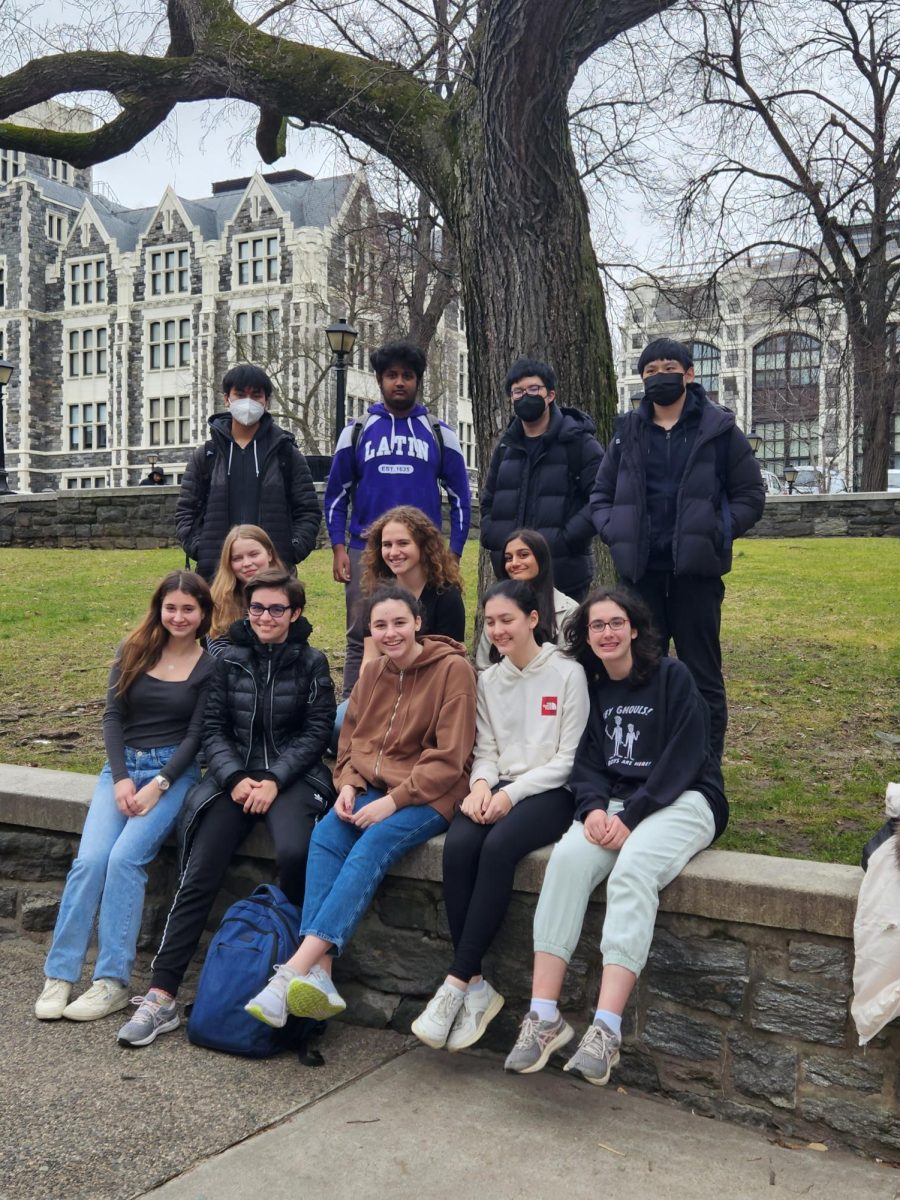
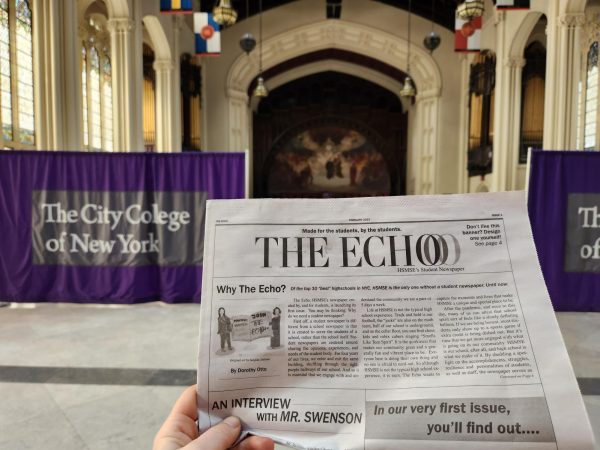
Nowadays, if you ask any HSMSE student if they know about The Echo, there’s at least a 98% chance that they know what you’re talking about. Over the last two and a half years, The Echo has grown to encompass a club, an elective, and HSMSE’s collective fascination once every two months on distribution day. But look back just two years ago when our student newspaper was only about to publish its first issue: The Echo didn’t simply appear out of thin air; its creation was a process started and nurtured by dedicated people.
But where did the idea of The Echo come from? How has it changed since it was founded? To answer these questions, we interviewed Zoe Otto (‘24) and Orlena Fella (‘24), The Echo’s founding Co-Editors-in-Chief.
The Spark of an Idea
The idea of a newspaper had been simmering in Zoe’s mind for a while: “Honestly, in tenth grade I felt like I didn’t have a place in my community at HSMSE. For some reason—I didn’t have any background in journalism—I felt like [a newspaper] was something our school really needed. It was random. It landed in my mind and it was calling to me. [But] when I would reach out to people and ask them, ‘What do you think about HSMSE having a newspaper?’ a lot of them were like, ‘Oh no, we don’t need that. What would we even write about—the track team? We’re such a small school.’ This was an idea that I had, but [couldn’t] start.”
The vision didn’t come to fruition until Zoe shared it with Orlena. Orlena described how “In the beginning of junior year, when I was first getting to know Zoe, we were walking through Central Park, and she was like, ‘Hey, I’ve actually been thinking about starting a student newspaper.’ It came [up] from a discussion [about] how everything at HSMSE, especially after the pandemic, felt socially isolated. Everyone was alone or on their phones, we felt like everyone was so disconnected… It wasn’t the small and close-knit community that we had been both seeking at a school like MSE.”
For Zoe, the moment was transformative: “When I was with Orlena, it just clicked. When I [originally] had an idea of a newspaper, [it wasn’t] The Echo; The Echo started when Orlena and I came together, genuinely thinking [that] ‘Our school needs this and we’re going to do it in our own way representative of who we are as a community.’”
Funnily enough, Orlena “had spoken to [Zoe] a couple of times… [but] I didn’t know her at all. I was like, ‘Yeah, sure, that sounds great.’… It was a huge transition moment for me.” Although it was just a random conversation, it created something massive. She continued, “I don’t know what I would’ve done without the newspaper. It became my [primary] experience in high school.’”
Overcoming Discouragement
While the idea of The Echo had begun to take root, it was far from being implemented. Orlena explained that “[We asked] probably every teacher in the school. We tried English-adjacent people, [though] initially we avoided Ms. Hesseltine and Ms. Walker because they’re so busy.”
Teachers weren’t overwhelmingly encouraging about the idea—some even told them not to attempt it at all. Zoe explained that “They didn’t want to pick [the newspaper] up and have that responsibility. It took a lot of persistence just to get it started.” Orlena added that some teachers said, “‘You guys can’t do that, that’s a ton of work, you don’t know what you’re doing, no no no…’ Obviously it became a lot more [work] as we went along, but I didn’t feel like I was taking on [that much].”
Eventually, though, they asked Ms. Hesseltine. “Thank god I paid attention in her class!” Zoe joked. “Ms. Hesseltine can be difficult to break, but she has a big heart.” Reflecting on the moment, Zoe added, “I hope she felt the potential and just wanted to see how far it [went].” When asked about this time period, Ms. Hesseltine remarked, “As much as I love[d] them, I didn’t think Orlena and Zoe had an idea of just how much work [a newspaper] would be… When I saw that [the people in The Echo] didn’t just want to write articles, but actually train each other, [self-educate], and figure out the process of a newspaper, then I was like, ‘This might be around for a while.’”
The Initial Team
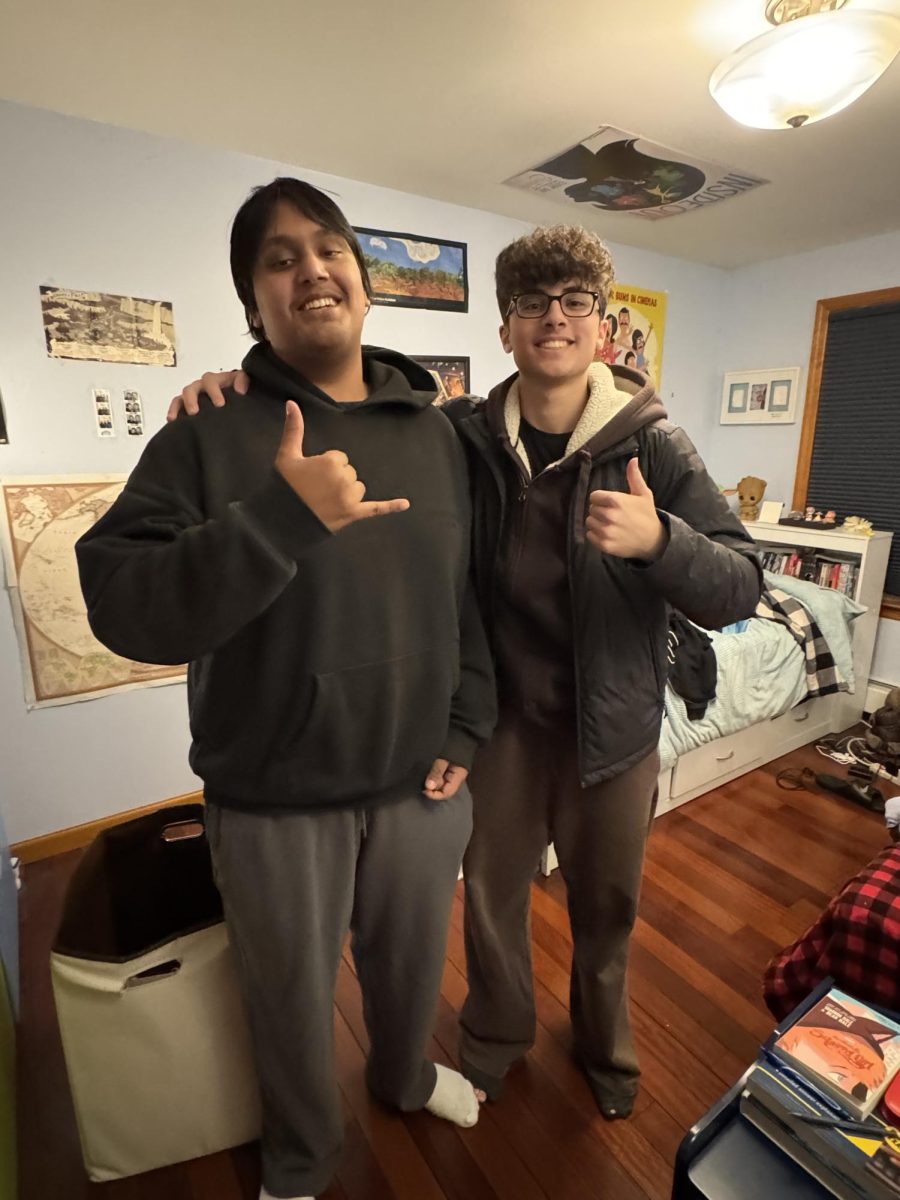
With the hardest part behind them, Zoe and Orlena just had to concern themselves with recruitment. The first group to come along was MD Islam (‘24) and his friends. “Thank god for MD. Without MD, none of this would’ve worked,” Zoe reflected. “He was genuinely like our third secret partner.”
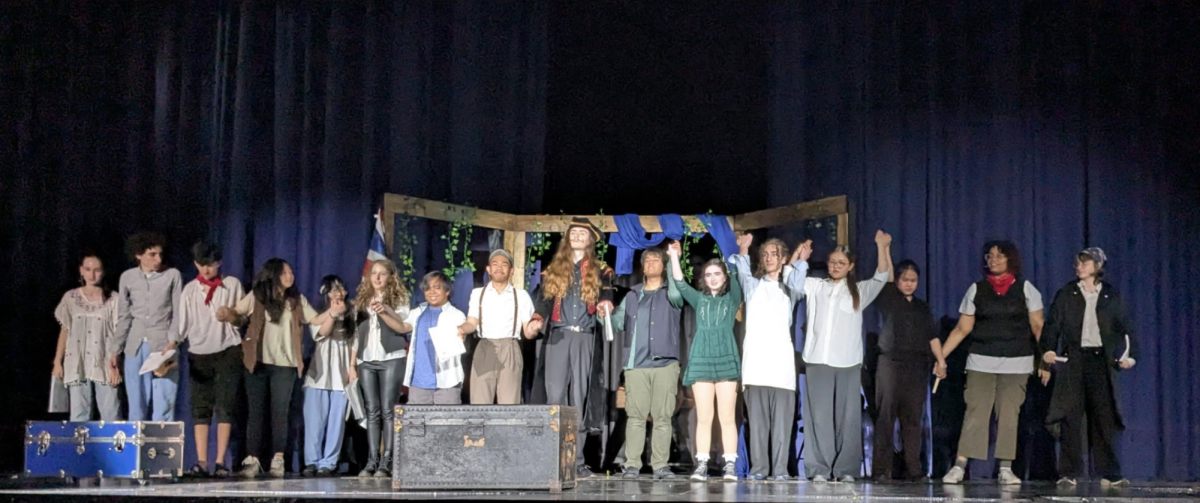
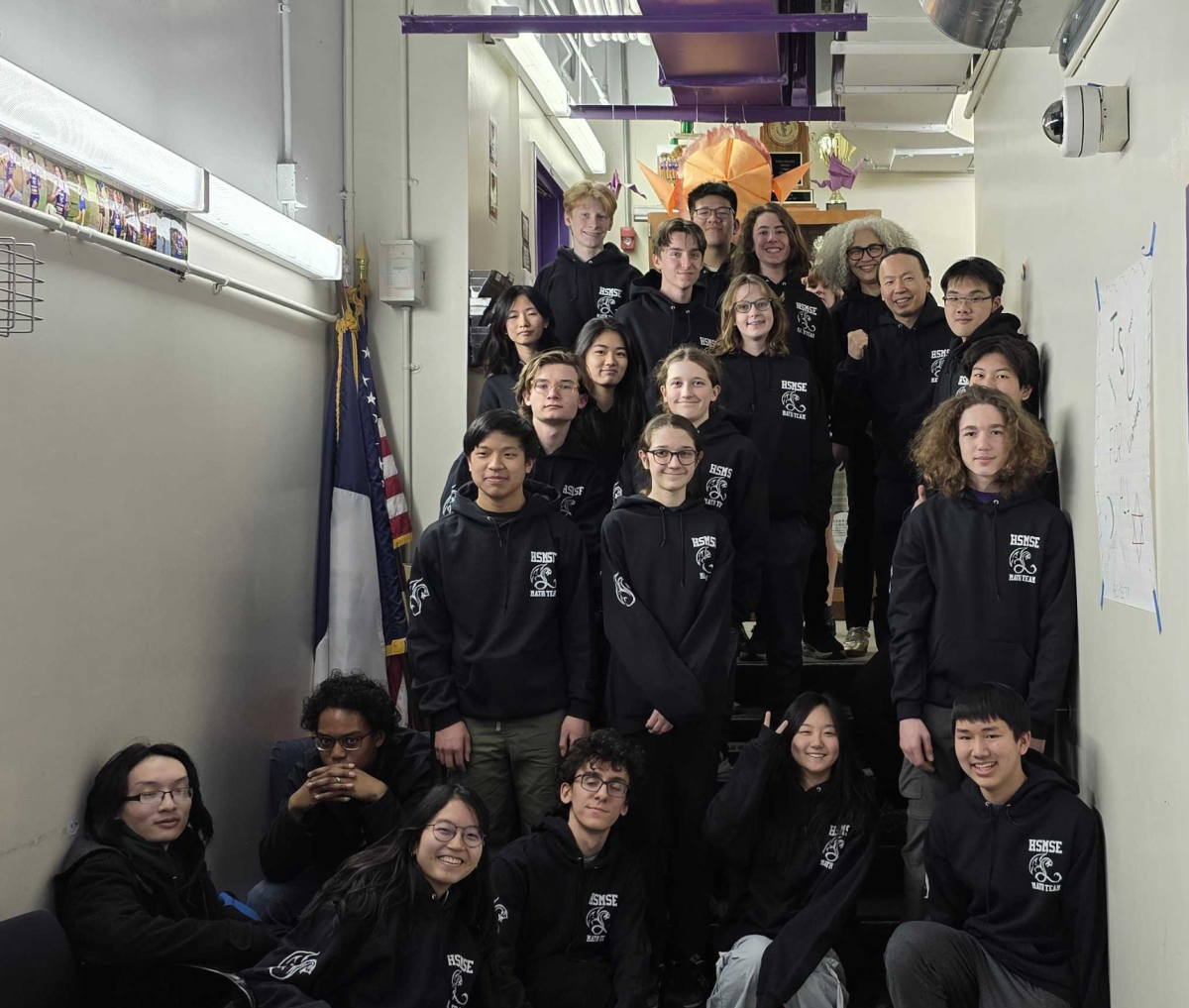
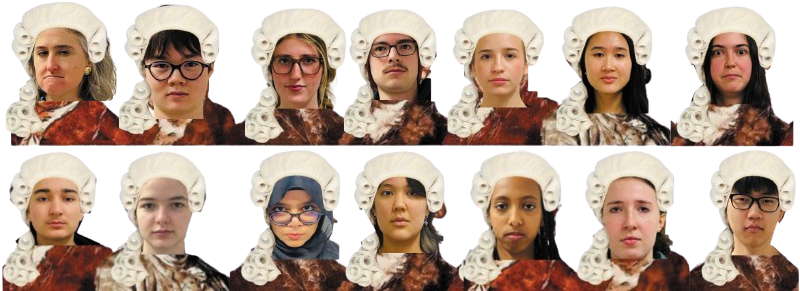
Orlena described further recruitment: “We went up to [Astrid, Arianna, Phoebe, and Emily] at lunch; they were like, ‘Sure, that sounds interesting…’ They were also eager to be a part of it in a way and contribute, not just to show up to [club] meetings. We brought munchkins for the meetings [and] those weird icebreaker cards. We tried everything.” With their large efforts, their starting team grew from just the two of them to about 15 people.
The First Issue
The Echo started, but not without facing more trials: “We didn’t know what we were doing. I feel like the first issue was pretty chaotic,” Orlena remarked. “We didn’t really have a system for anything. Editing was the most difficult—figuring out how many rounds of editing, who’s editing what, how writers and editors are collaborating or communicating. There were some difficult articles in the first issue. How do we decide what sort of things go in? The best thing about The Echo is that [it’s] driven by student interest, but having it entirely decided by the writer doesn’t really work.”
Zoe added that “The first issue was kind of a drag. It’s hard to do the work when you don’t know what the result is, when you don’t know what you’re a part of or if it’s going to have an impact in any way or if it’s going to matter. So I remember putting a lot of time and energy into being like, ‘Guys, let’s do this. We got this. We need this. We need to know why ants are going to rule the world. We need to know what’s going on on the C floor’ … I remember feeling like, ‘Okay, this feels like the seed of something that could be really great’ and I think everyone in that room also [did]. I feel like without [that] feeling, people would’ve been lost. It was harder to hold [onto that], especially when we got further along. What kept that feeling alive was us all together feeling like [we were] creating something that we all believed in [that] reflected us individually and as a whole.”
After five to six grueling months spent creating the first issue, the final distribution-worthy product was ready in February of 2023. “It was a really amazing time I think, that first issue … only like 12 of us maybe, but everyone who stayed stayed, put in their best effort, and did what they wanted to do. We all felt like equal contributors. None of us knew what we were doing, but we all sort of were figuring it out,” Orlena reminisced. Zoe added, “People didn’t really believe in [The Echo] or think it [was] something we needed until the Swenson interview.”
Zoe proceeded: “For the first issue, we could not afford to have a story dropped: That’s a hard place to be in as an Editor-in-Chief because you want to have options for stories, some flexibility in that sense… we didn’t have that [for the first] issue. The second issue felt a bit easier because if you [didn’t] want to do [an article] you [didn’t] have to.” Orlena continued, “Once we had that first issue, and people were holding it in their hands and seeing it and knowing that ‘Oh my god, this is something that I wrote’ or, ‘I could write something that it will end up seen throughout the community,’ I feel like that changed a lot. After Issue 2, people really got a sense of what they could do.” Zoe added on “Every progressive issue became less of a drag. Once we got the elective [in Fall 2023], it started building its own structure.”
With no previous groundwork, the first issue was hard for its members. But Zoe and Orlena brought the energy and worked to deal with the circumstances. Even now, in the interview, they radiated passion when referencing The Echo’s early days.
A Lasting Legacy
Now, Zoe and Orlena are both in college. But each issue of The Echo arrives in their mailboxes, and they get to see their creation continue to thrive in their absence. Orlena reflected, “[The newspaper has persisted] beyond all expectations; even with each issue it seems to grow so much more. While you’re doing it, there’s not enough distance to be aware of what it is. Having that distance now without the direct connection of working in it—the amount of articles, editors, designers, it’s amazing. I couldn’t have expected that, seeing how much of a presence it has in the [HSMSE] community now. I’m amazed. It’s grown so, so much. It’s like seeing a baby cousin that you haven’t seen in three years, like, ‘Oh my god, it’s a different person now and it’s grown up!’”
The Echo holds a special place in both founders’ hearts. Zoe said, “I feel like The Echo is so integral to who I am as a person. It’s nice to have a product like that and be able to see it and know that even though I’m not there anymore—[I’ve moved] on and [found] new things—it exists, and the time and dedication we put in at the time mattered. Orlena [and I] put so much of ourselves into that paper, so much of our energy and our love, so much of everything. Genuinely, it’s something I’m so proud of; I’m so proud of everyone who’s a part of it; I’m so proud of the place it’s created in HSMSE. I know it’s just a piece in a bigger picture, but I feel like it’s something in my life that grounds me. It reminds me of who I am in life and what matters to me.”
Orlena added, “Being in college, I feel like we’re disconnected to an extent. Seeing that issue in my mailbox when I’m feeling isolated or totally at a loss of who I am or what I’m doing with my life… it means everything to know that [my work in The Echo] mattered—it’s nothing that I conceptualized. I didn’t realize it at the time, [but] we put more time into The Echo than we did in school or anything. It was everything … to really, really work at something and see it pay off, I think that’s something I’ll remember forever… You don’t realize how important, [how rare] it is to have something you can pour yourself into like that. I feel like for the rest of my life, I’m going to be continually searching for things I can pour myself into. Because of The Echo, I know what that feels like.”
Advice for Current Student Leaders, or Those Who Want to Be
Zoe and Orlena both had advice for current or aspiring student leaders in the school community.
Orlena said that “Having something that you really passionately believe in and finding people that share that with you are the most important things. It’s really, really hard to do something alone; I don’t think [either] Zoe [or] I [would] have been able to do it on our own. Having a starting group was the most important thing. Even if you lose faith, you’ll have someone else to say, ‘No no no, you can’t give up.’ Something that you can put yourself into—that’s what matters. Know that it has value for [the] community, but also believe that it will work out—if you believe in it, it will. Even if it’s new or it doesn’t exist, that’s the reason to start it. As long as you find people, [you’ll have something.]”
Zoe added, “If you’re put in a position of leadership, do something different! Don’t just do what the person before you did. You’re not just leading a club, you’re working with a bunch of individual people who want something different from that experience. Try to do something different and grow it into something more and new; take the risks: That is how you get involved on a deeper level.“
Orlena closed off the interview by saying that “Having the community of The Echo was so important in finding myself and what I was interested in. Having, as Zoe said, something to pour yourself into—sports or some form of academics or something beyond that—I think is really important. In the pressure cooker of MSE, college stuff and all of that, having something like The Echo was oh-so important. You could hold it in your hands and see the space and see the people and interact with that beyond the anticipation of ‘Oh my god, I’m not gonna get in anywhere or write this for this application.’ The Echo was actually something substantial. Having something like that was so important. Everything is so crazy now. I needed something like that in high school instead of worrying about just meeting these criteria.”
Though once just a seemingly impossible idea, The Echo is now a real publication and community housed within our school walls. We here in the newsroom think it’s amazing how something so relevant to our lives today could’ve been created through the determination of fellow MSE students. As we reflect on the creation of The Echo and its evolution, we hope that it can stand as an inspirational testament to the power of determination. Moving forward, always remember that creations of all kinds come from places and people of all kinds. You yourself have the power to start a school club, or something even bigger. Thank you to Zoe and Orlena for creating The Echo, thank you to its founding members for planting its seeds, and thank you to Ms. Hesseltine for guiding and supporting us. Best wishes to everyone in our school community, and thank you reader for getting this far. Have a great day.