














![[ERROR]: Lack of Women in the Software Industry](https://theechohsmse.com/wp-content/uploads/2024/12/APC_0280-984x1200.jpeg)


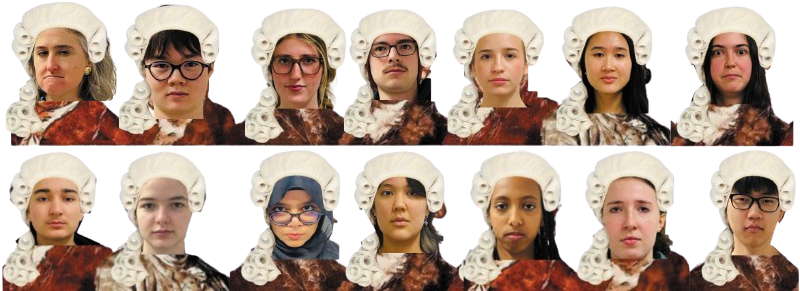


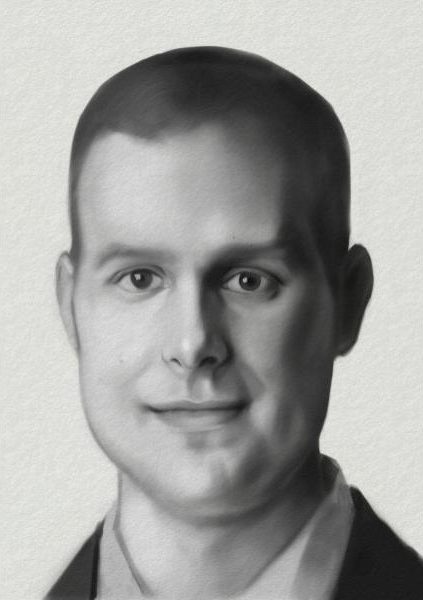
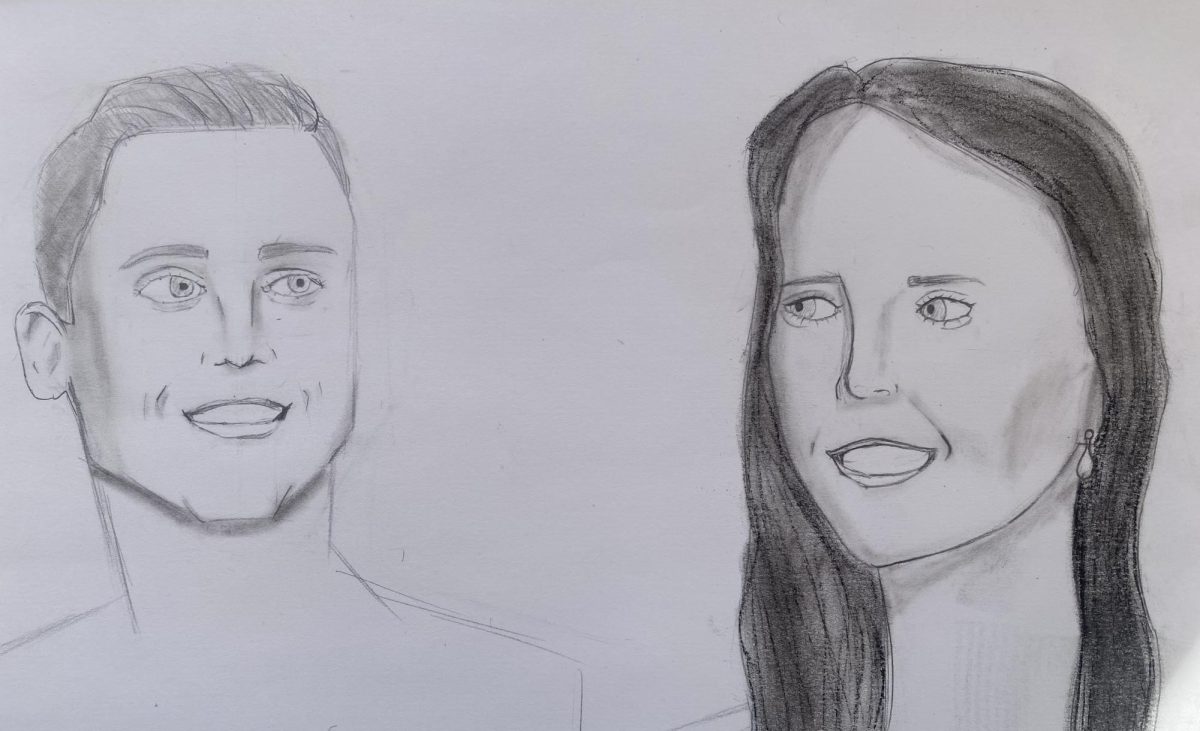
Last semester, our newspaper got to hear from Nicholas Kulish, a published author and correspondent for The New York Times, and Ella Feldman, a freelance journalist completing a master’s program through the Craig Newmark Graduate School of Journalism at CUNY. Feldman and Kulish each spent an hour in C5 discussing their journalistic experiences, philosophy, and advice with the 30 students who make up our elective. These seminars refreshed my passion and appreciation for journalism; they were powerful, funny, and honest windows into the field. Regardless of your take on journalism—skeptic, rookie, practiced journalist, or ambivalent tolerator—Feldman and Kulish’s perspectives are thought-provoking and fascinating; this is part one of a series on their seminars.
There isn’t a Singular Path to Becoming a Journalist
Nicholas Kulish wasn’t set on becoming a journalist when he was younger, but he knew he wanted to write. He recounted that his very first introduction to journalism was writing “a comparison between the film version of Bram Stoker’s Dracula and Autobiography of Malcolm X” for his high school paper. Though he dabbled in journalism through Columbia’s undergraduate student newspaper, The Spectator, his first real experience as a journalist was working at a magazine in Hong Kong.
Ella Feldman’s journalistic trajectory, on the other hand, was rooted in high school student journalism: “[It] taught me so much, really the bread and butter of being a reporter.” She worked on her high school’s newspaper, The Beacon, before joining The Rice Thresher at Rice University. It seems like student journalism is a great way to get a taste for the field—if only we had some opportunity for that at MSE…
Self-Advocate!
Feldman’s first internship was a radio one with Houston Public Media, which she got by cold-contacting. She reached out and said, “‘Hey, I have some free time this semester—I would really be interested in helping out.’” She told us that she’s “always a fan of cold-emailing places that you think are cool and just seeing if you can do a little bit of networking, seeing if there’s any opportunity for you to get involved.” It is really common to let imposter syndrome get in the way of being a go-getter, but Feldman assured us that “you [definitely don’t] need a certain level of experience to [cold-contact]—that was [her] first time ever doing that and it worked out.”
Her next internship was with Washington City Paper; she reflected on how significant it was to her career: “It was really awesome [to see my growth] from my first meeting to the end of the summer. I was so shy the first time I was there, and by the end of the summer, I had [a] cover story [I] was really proud of. I [also] had a ton of bylines there, and [it’s] a place that I still freelance for.” Feldman reinforced how important it is to be proactive in the field: “[Again, the way I got] it was through … reaching out, so you don’t always have to wait for an internship posting or something official.” After graduating, Feldman took an internship at the Austin American Statesman, which eventually turned into a job as a trending-news reporter.
Kulish laughed as he warned that his path to the Hong Kong paper was perhaps “not a great story in terms of, like, how to build a career”—I couldn’t disagree more. Essentially, Kulish wasn’t having much luck applying for internships and entry-level jobs at daily newspapers, and his friend was tentative about leaving his girlfriend to take a job offer in Hong Kong. An idea struck Kulish: “Sort of like A Tale of Two Cities, I was like, ‘What if I just went instead?’ and then he was like, ‘Do you think we could do that?’ and I was like, ‘sure,’ and then it worked out.” His hilarious story aligns with a message Feldman wanted us to take away: “[The] worst thing that can happen is that they say no.”
Work Your Way Up
Moving back to the states, Kulish broke into journalism as a secretary: “I think an early-stage journalism career is usually hit or miss. [Finally], I took a job at The Wall Street Journal as a secretary, which really meant photocopying 140 copies of daily schedules, [stapling] them, and delivering them around the office; [I would set] up big urns of coffee and [answer] phones and all that kind of stuff.” He explained that taking that job was a way for him to make a living while writing for the paper: “I eventually ended up on the night shift. So what I would do is I would come to the office … at, like, 11 a.m. and start working on my articles—which I wasn’t being paid for—and then at 4 p.m., my shift would start, and I’d be answering phones and stuff. Then at midnight, I would go home, and then I’d get up and come back the next day. [I] broke into the business [by] doing these, like, double shifts at The Wall Street Journal.”
Feldman obtained journalistic experience outside of student papers through her aforementioned part-time internships: “Unfortunately [they were] unpaid, which is still a super normal practice, but at that time…I could make time to do that. And I’m really grateful I did because it was my first time being in a professional newsroom and I made so many great contacts.”
Specializing within Journalism
Kulish told us that “being a foreign correspondent [was] definitely the dream job” for him. A foreign correspondent is a journalist who is either permanently stationed abroad to report on foreign affairs or sent abroad during major global events. Kulish explained that “there are two main ways to become a foreign correspondent, and one is to start working at a publication and sort of work your way up and then raise your hand for assignments.” He added that the second, “scarier, but in some ways more exciting,” option is becoming a stringer, an independent journalist who moves to places where news organizations have no correspondents stationed and works with the organizations’ journalists to expand their papers’ reach. Reflecting on his time as a foreign correspondent with The New York Times, Kulish shared that if stringers built up “credibility with the paper, then they would write their own stories.”
Feldman, on the other hand, was eager to explore different areas of journalism: “I’ve done a lot of different things; [I] wanted to try my hand at a lot of different places, a lot of different kinds of jobs and journalism, so I had a few part-time jobs.” She recounted being at the Austin American Statesman as a [part-time] trending news reporter; she also spoke about doing a “social media gig in journalism,” which she realized wasn’t right for her. After that, she “became an editor at Washington City Paper, overseeing [the event] section—basically [the section] where people write blurbs about things that are happening in the city.” She elaborated on the responsibilities of this position: “I was in charge of managing freelancers, getting things commissioned, [and] making sure that across the board [we] had diversity [in] things represented.”
After that, Feldman went full-time as a freelance journalist: “That was for a number of reasons, but partially because I hadn’t felt like I found my place yet and I knew that I wanted to try writing for all sorts of different publications.” Freelancing is an arrangement where the writer is not fully employed at one paper. Instead, they develop their own content and then approach publications. Feldman noted that the most valuable thing she gained from freelancing was exposure: “you get a sense of how many different ways there are to have a newsroom and and how different people edit your writing.” Feldman emphasized that freelance is a very particular way of working in journalism, especially with regard to the level of autonomy. If freelancers form relationships with editors, they may be offered the opportunity to write on a specific topic, but they don’t have official assignments. They are particularly responsible for keeping up with deadlines in order to maintain a good reputation, and they are “always [looking] for the next thing.”
In part two of this article, I’ll delve into both journalists’ best practices as writers and interviewers, their reflections on some of their prominent works, and where they are in their careers today. For now, remember that while there is no one right way to build a career, success won’t be handed to you—you must chase it down.