























![[ERROR]: Lack of Women in the Software Industry](https://theechohsmse.com/wp-content/uploads/2024/12/APC_0280-984x1200.jpeg)






For over 450 million years, insects have roamed the earth. Currently, 25% of humans regularly consume bugs as part of their diet, which spans over 80% of the world. Yet many people in the United States choose not to eat insects, and most of those people never plan on even trying them.
Today, our food system heavily relies on the meat industry for protein, especially now that dietary guidelines are reintegrating meat as a staple. Livestock production accounts for 14.5% of the world’s greenhouse gas emissions. Livestock also remove nutrients from our soil, by grazing on plants that get nutrients from the ground, thereby not giving enough time for a new cycle of plants to grow. Insects, on the other hand, provide a clean, sustainable, and efficient source of protein. They have a higher ratio of protein per calorie in addition to a greater number of nutrients, like amino acids and antioxidants. Methane released by cockroaches and beetle larvae is 20 times less than the amount of methane released from cows.
HSMSE’s architecture teacher, Ms. Rasuk, believes that in time, insects will become a mainstream food. “The problem that we’re having is [that] some of those farming areas that we have—because of global warming—they’re drying up, so I think at some point we are really going to need to really rely on [insects].” Although this sounds unlikely, it has happened before that a food, originally seen as disgusting, became a staple of American food culture.
The lobster is one famous example of a food deemed “inedible” or “disgusting” that ended up being part of lucrative American cuisine. Native people in the Americas depended heavily on lobster for a source of protein, mainly due to its abundance alongside shores after storms. Lobster spoils quickly if not prepared fresh, so settlers in the Americas would consistently eat lobster and the smell of decaying lobsters on the shores would put them off. Because of this, lobsters built up a negative connotation and were reduced to solely being eaten for subsistence. Lobster was given to people in poverty and inmates because of its relatively cheap and abundant status.
In the 1800s, the lobster became a lot more readily available to people around America because of its ability to be canned when cooked. Because of this, the lobster was used a lot more frequently in trains. Tourists from around America who had not heard of lobster before would not have any negative connotations against it, and therefore would get to truly enjoy eating lobster.
However, the same scenario is much harder for insects in modern Western culture. Unlike the lobster, insects have been widely stigmatised across most American communities. As a result, the people around us have exposed us to negative views of insects that influence what we are willing to eat. Monica, an NYC resident, explains the way in which the media affected her viewpoints on insects: “I have a fear of insects, and it’s probably shaped by the media more than my actual experiences.” The media and people around us will depict bugs in certain ways that impact our views on them.
The issue is generational; in order to properly incorporate insects into our mainstream food culture, we need to limit the spread of negative views of bugs to newer generations. Our sense of disgust doesn’t develop until we are three to five years old, meaning that people around us will teach us what to be disgusted by. Marius Thuault (’28) shares his experiences with insects depicted in media. “I don’t see [insects] the same way as cows or chickens, because generally when you are a child [you] see cows [that] are happy and [then] there … are evil spiders that take your children while alive.” People who grow up thinking that bugs are creepy and dirty will end up perpetuating those same ideas.
Another example of a food seen as inedible in Western culture was sushi, more specifically raw fish. In the 1960s, sushi was considered gross because of its connotations with raw fish. Sight was also a big issue that turned people away from eating raw fish. However, when chefs started to disguise the fish inside of rolls, people became more open to trying it. Insects similarly can be used in ways that avoids its displeasurable look affecting a person’s appetite.
Quinten Cremers (’26) shares the ways that sight impacts his willingness to eat bugs. “It is not exactly appetizing to know you are eating crickets or [other insects], but if they are blended into some sort of food stuff that … doesn’t look too bad, I wouldn’t mind.” Removing one of the senses that may turn us away from eating bugs can be key to unlocking their potential.
Starting off by eating insect flour but then working your way up to eating the whole insect can help work around the sense of disgust that is applied through sight. Molly Holman (’28) explains how she would be more open to bugs. “I think I would start with something that doesn’t look like or have the texture of insects … because then I could normalize eating bugs … and then I could work my way up to eating [the whole insect] because then I already have that prior experience.”
By removing the element of sight, you could be less scared of eating insects, and if you do try bugs, you might see that they really aren’t that bad. And by coming to that conclusion, you can distance yourself from the fear that comes from looking at insects.
Another way to distance oneself from the animal that is being eaten is by calling it by a different name. For example, we don’t call beef cows or pork pigs. The word “bugs” already has a lot of negative connotations—being associated with pests and disease—but calling it by something else could help make it seem different.
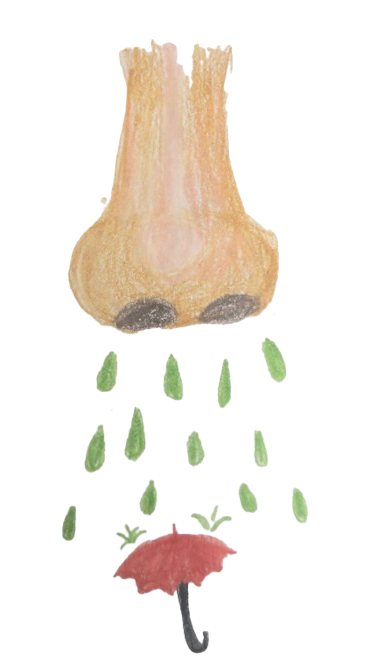
Our sense of disgust was most likely developed as a mechanism of self defense. In the past, things that tasted bad or looked weird could have been poisonous so by repelling our body from it, humans managed to stay alive more often. In this way, people were able to avoid things that could possibly kill them; however, in modern times, disgust can affect things we know to be safe. This new usage hinders our ability to try new flavors.
Bugs are not only great for the environment but they also offer a wide range of flavors that can’t always be found in other places. The problem is that the vast majority of people don’t see insects’ potential as food. “In general in America, insects are regarded as less savory than other animals,” Allen Yee, an NYC resident, said.
Some examples of ways insects provide new flavor possibilities are black ants, which offer an acidic taste and can be used as garnish; grasshoppers that have a more earthy, umami taste when unseasoned but when seasoned can be a small snack that tastes like the seasoning used; and grubs, which can be a lot more savory, sometimes being compared to bacon.
You never know what you will enjoy until you try it. Sometimes your first try will taste bad because that is what you expected, but keeping an open mind and trying again can eventually lead to an acquired taste. By limiting how other people influence your decisions, you can experience a lot more. “I’m very open minded, if I see something I wouldn’t mind trying it, even if they disagree with me, I am my own person so … I can [make] my own choices.” Irving Valle, an NYC resident, said.
As our population grows—as well as food insecurity—insects will be changing the Western culinary scene, whether you are prepared or not. People don’t need to eat bugs for breakfast, lunch, and dinner, but keeping yourself open to the idea will help stop people’s ick.