



































![[ERROR]: Lack of Women in the Software Industry](https://theechohsmse.com/wp-content/uploads/2024/12/APC_0280-984x1200.jpeg)





Disclaimer: The content of this article should not be taken as nutritional advice, as neither the writer nor Ms. Boylan is a nutritionist. Please consult a medical professional for guidance on healthy eating.
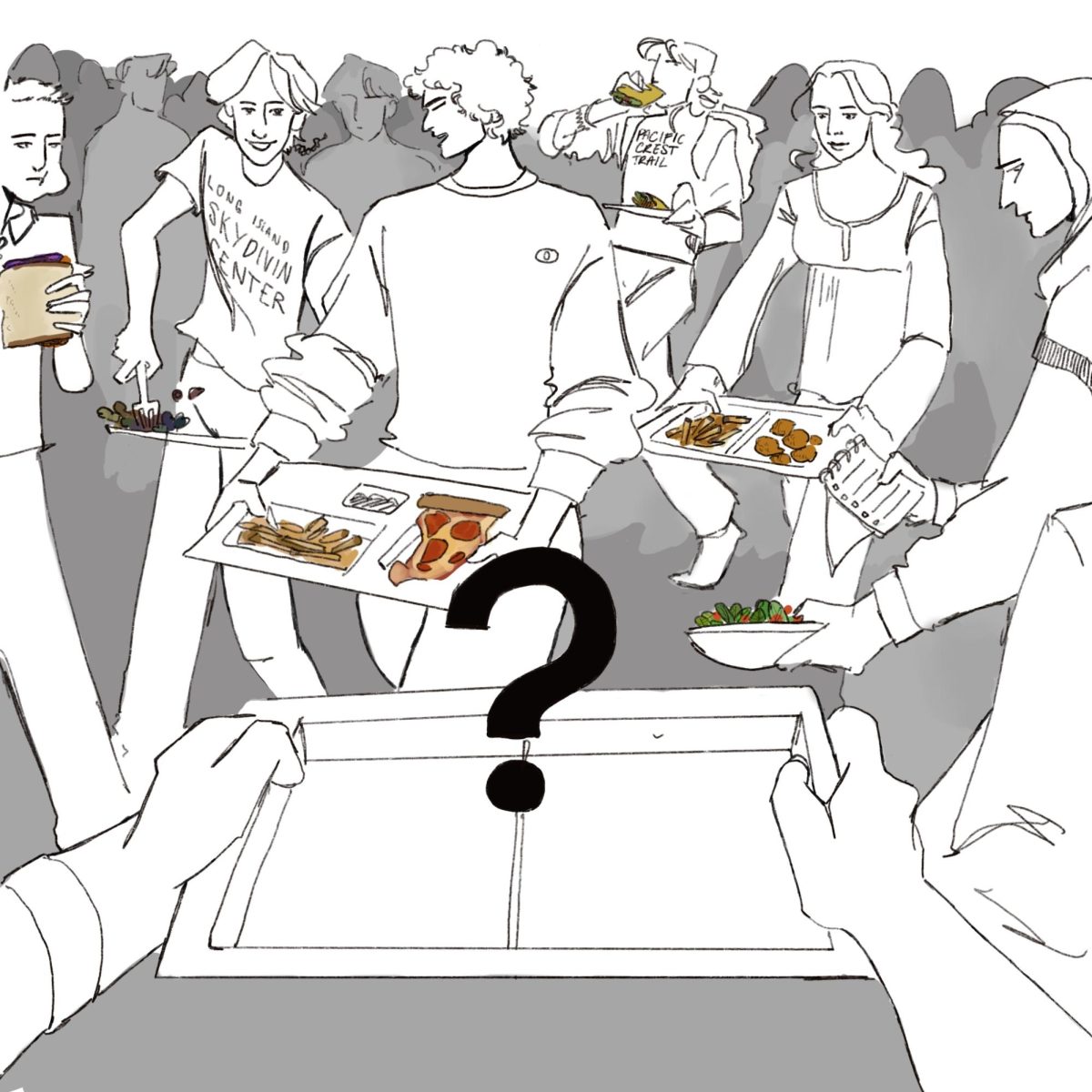
On January 6, 2026, under the regulations of Robert F. Kennedy Jr, MyPlate’s standardized health guidelines were replaced with a new look, an inverted pyramid. If you are an HSMSE student, you might not know that there was a change in the food pyramid, and if you did, you probably wouldn’t bat an eye. Why does the food pyramid matter, anyway? Why should we care about the government’s suggestions on how to stay healthy? After all, you might just see the food pyramid as a fun tool for doctors to use whenever we have our yearly checkup. But the new food pyramid and dietary guidelines have importance past the doctor’s office. Our everyday life is impacted by the food pyramid. Public institutions are meant to follow the dietary guidelines. This means that our school lunches are dictated by the food pyramid, and a change to the food pyramid could mean a change to school lunches.
The new dietary guidelines and food pyramid are part of the Trump administration’s Make America Healthy Again (MAHA) campaign. The goal of this campaign is to have America “Eat real food.” According to the American government, real food is protein, dairy, healthy fats, vegetables, fruits, and whole grains. The Trump administration relates America’s health issues—such as the fact that 50% of Americans are overweight or obese—to previous health recommendations, which it deems “misinformation.” The government website Eat Real Food, which reviews the changes made to the dietary guidelines, claims, “For decades we have been misled by guidance that prioritized highly processed food, and are now facing rates of unprecedented chronic disease.”
The Echo interviewed HSMSE’s gastronomy teacher, Ms. Boylan, for her insights on the food pyramid. “It just seems to say, ‘We are now telling you the truth about what nutritious eating actually is, [and] any administration before us has somehow misled you,’” she said in reference to the new guidelines. Over many years, our understanding of what’s healthy has been modified to follow current research. This change is what causes new guidelines and visuals to be produced; claiming to ensure that people have the proper education on what to eat.
In order to reach this new “healthy America,” the Trump administration conducted scientific research into the nutrition behind the foods we eat, overshadowing the research done by previous administrations, according to Press Secretary Karoline Leavitt. Using this information, the administration came up with a series of recommendations to the way we eat, including adaptations for different ages and health conditions. These special diets are detailed on the last two pages of the guideline. These specifications are helpful in ensuring anybody can be healthy whether they are pregnant, have a chronic disease, are a vegetarian, etc.
However, the new guidelines prioritize the consumption of protein and vegetables over grains. “It seems to de-emphasize the importance of whole grains,” Ms. Boylan said. “That’s another good source of protein and fiber.” Previously, MyPlate (as well as the old food pyramid) presented grains as a major part of the diet. However, now, grains are placed at the very bottom of the inverse pyramid. Also, the new dietary guidelines are a lot less restrictive on alcohol consumption. The final big change is an increase in the prioritization of protein. Part of the campaign is to bring back meat and dairy as a core part of the American diet, expressing that “The war on protein is over.” At the very top of the left of the pyramid, there are big meat products, particularly red meats. Slightly below it, there are certain dairy products such as whole milk and yogurt, as well as fats like oil.
The new dietary guidelines made a lot of changes from previous models. The most glaring detail is the shortening from being 164 pages long to ten. This simplification is meant to allow the new dietary guidelines to be more digestible: “It’s a fun colorful graphic which can draw people in,” Ms. Boylan said. These ten pages condense most of the information mentioned in previous guidelines, which ranges from specific dietary conditions to the identification of unhealthy foods. The new dietary guidelines provide a solution for cheaper vegetables, depicting that canned food and frozen food are healthy remedies to financial strain. Frozen foods in particular are healthy because they maintain most of their nutrients after being frozen. The new food pyramid has a clear message: “Eat Real Food”; real food is specified to be nutrient dense foods without being highly processed or containing added sugars or refined carbohydrates. The stigmatization of added sugars is supported with a description of how to determine what foods contain added sugars. The guidelines state, “look for ingredients that include the word ‘sugar’ or ‘syrup’ or end in ‘-ose.’”
However, the new food pyramid isn’t perfect, and has faced significant criticism. One major issue is its ambiguity; a lot of the pyramid is information that is hard to digest without a degree in nutrition. “I think it’s political, the way it’s constructed, and it requires an education to interpret,” Ms. Boylan said. One example is the recommendations on alcohol consumption. The guidelines say, “Consume less alcohol for better health,” the question being “What does ‘less’ even mean?” This simple statement does not provide a reason for a reduction in alcohol or specify how much less alcohol entails. In simplifying the food pyramid, MAHA has also removed a lot of clarifying details that were important to understanding the specifics of a diet, such as how much alcohol people can drink, calorie limits, eating a wide range of colorful vegetables, and much more.
Another glaring issue with the new food pyramid is the influence of politics on its creation. This is shown with the expression of meat and dairy as an important source of protein, which casually overshadows plant-based sources of protein. “It focuses on protein coming from meat, [specifically] red meat, and that could be misleading,” Ms. Boylan said. According to Marion Nestle, a nutritionist who posts on food issues, the review panel—which discussed the validity of the new guidelines—contained “six reviewers with financial ties to corporate interests with a direct stake in the outcome of the guidelines.” This indicates that there could have been a biased influence on the high prioritization of meat products, and the people who benefit are those who hold monopolies over the meat and dairy industry. When big corporations take over, such as Tyson, many smaller corporations cannot sustain themselves. Large corporations, although convenient, can be disastrous to the economy if it collapses. Such a case occurred in 2021 when an FDA investigation temporarily caused a cease production of one of Abbott Nutrition’s plants, one of their leading producers of baby formula. This led to a nation-wide shortage of baby formula, leaving many children malnourished.
The dietary guidelines place the responsibility of one’s health solely on individuals. “I think some of the phrasing of the document suggests that our health and nutrition is only this personal choice, [over] which we have full control, and I don’t think that’s the full picture,” Ms. Boylan said. And although it is part of the individual’s responsibility to make healthy decisions, the government is the reason why we see so many ultra processed foods on our grocery shelves. There has to be adequate government funding to help someone afford an apple over something like a chocolate bar. “There are clearly policies that drive the [foods] that are available,” Ms. Boylan said. Currently, there is not enough federal government funding into making affordable, healthy food, leading to junk food being cheaper than fruits and vegetables.
The new food pyramid reflects how politics influence everything, even what we eat. Political influence is inevitable, but how it is used is something that can change. The new food pyramid shows bias, whether intentional or not, but that same bias could be the catalyst for change. “The pleasure of good food needs to be highlighted,” Ms. Boylan said. What we eat is dictated by our surroundings. Why do you eat what you eat? Is it because of culture and tradition? Or maybe it’s pleasure, emphasized through flavor? It can also be because of class dictated pricing. The new dietary guidelines claim that the new administration will aid in the health of Americans. Is the government truly intent on making America healthy again? Only time will tell the results of the new food pyramid.