




































![[ERROR]: Lack of Women in the Software Industry](https://theechohsmse.com/wp-content/uploads/2024/12/APC_0280-984x1200.jpeg)






How does a virus that was discovered years ago still make the headlines as if it were new? Recent news reports have renewed public concern about Hantavirus. After several high-profile cases, some commentators and social media users questioned whether the virus could become “the next COVID-19.” This comparison is frightening, but it’s actually not accurate.
Infectious disease specialists repeatedly pushed back against comparisons between Hantavirus and highly transmitted respiratory viruses, most famously COVID-19 and influenza. In a recent interview with CBS News, Dr. Céline Gounder compared COVID-19’s situation to a wildfire and Hantavirus’s to a wet log in a fireplace, stating that it is able to cause several cases but far less possible to spawn widespread transmission. Unlike other epidemic diseases, Hantavirus is low-risk since it’s primarily a zoonotic disease, an illness that spreads from animals to humans. Human-to-human transmission is extremely rare. Instead, the virus is contracted through direct exposure to infected rodents and contaminated air. In addition, Hantavirus mainly affects deep lung tissue, which limits the efficiency of transmission. Yet COVID-19 replicates rapidly in upper and lower respiratory tracts, making it easier to spread through daily activity like breathing and coughing.
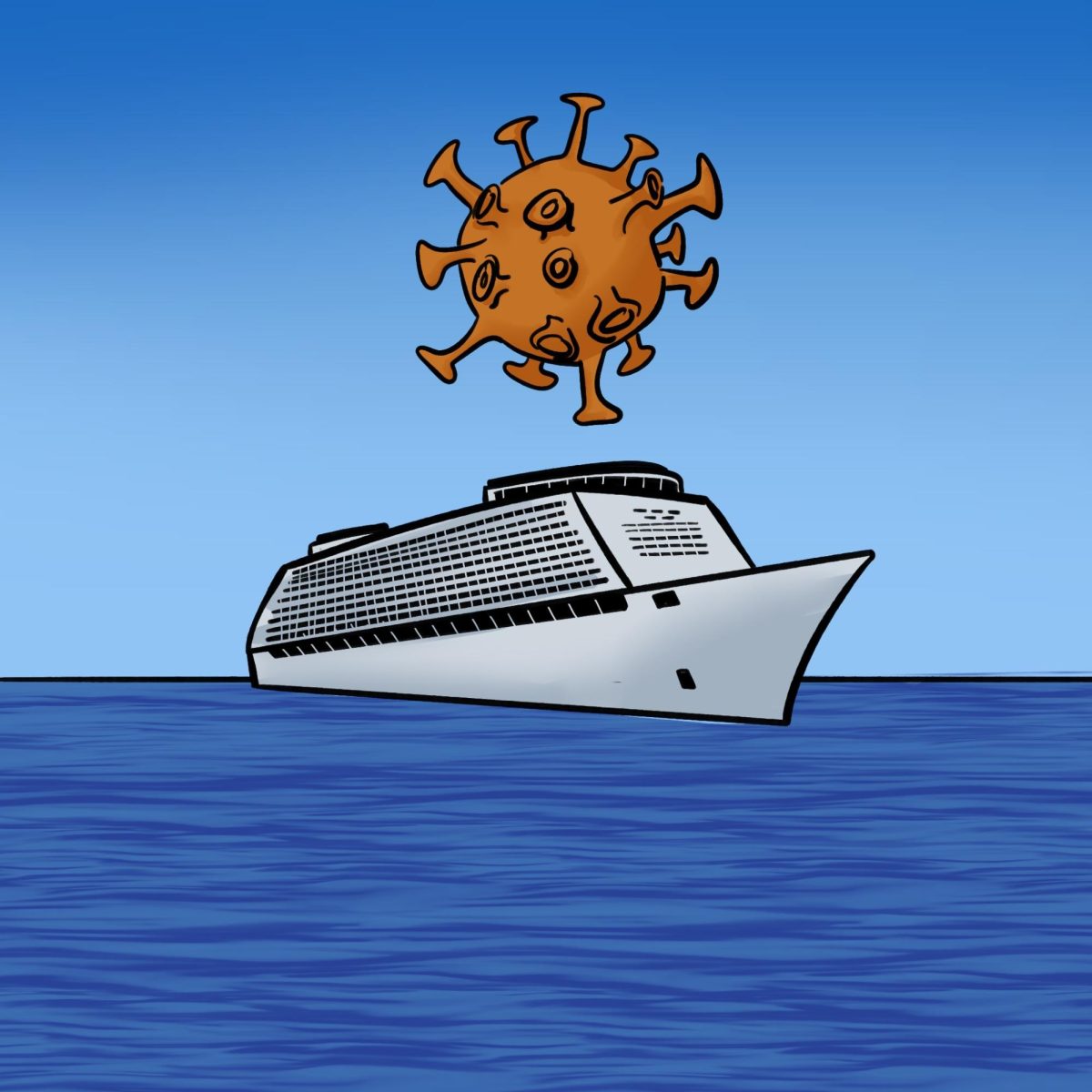
In the United States, each Hantavirus strain is tied to different rodent hosts, which explains why cases stay localized rather than spreading everywhere. For example, the Sin Nombre virus, a strain of Hantavirus, is most commonly found in deer mice in North America. Other strains are associated with species such as white-footed mice in the Northeast and cotton rats in the Southeast. Recent attention around the Andes Virus strain makes the picture more complex, as it’s the only type of Hantavirus known to be able to spread from person-to-person. This strain is associated with a rodent host known as the long-tailed pygmy rice rat in South America. However, even in these cases, transmission is usually limited to people with close contact with a sick person, including direct physical contact, prolonged time in enclosed spaces, or exposure to infected body fluids, as seen in an outbreak aboard the M/V Hondius cruise ship.
Hantavirus outbreaks are also shaped by environmental factors that influence rodent populations. Climate change is likely to alter the distribution of virus-carrying rodents. For example, warming temperature and rainfall variability impact where rodents can live; their inhabitants can expand into new regions as climate conditions change. “Hantavirus cases are on the rise in Argentina,” Carlos del Rio, a virologist and infectious diseases physician, noted, “and the main cause is that Argentina is becoming more tropical.” Nonetheless, completely eliminating wild rodent populations is impossible because these species are important in maintaining the ecosystem.
At the same time, cases of Hantavirus have existed for decades, but the development of modern media can emphasize isolated outbreaks. They create the illusion that the virus is more widespread than it actually is.
Health officials’ responses to Hantavirus show how they manage these cases through strict separation, hospital care, and monitoring. In France, a passenger with Hantavirus from M/V Hondius was hospitalized in an intensive care unit and placed under isolation to avoid potential spread. Even under this situation, health systems still acted quickly and managed to prevent localized cases. These responses indicate that while the virus must be treated seriously at clinical level, it does not require societal alarm.