




























![[ERROR]: Lack of Women in the Software Industry](https://theechohsmse.com/wp-content/uploads/2024/12/APC_0280-984x1200.jpeg)







You’ve got a doctor’s appointment at 6:00 p.m. Normally, you’d aim to show up ten minutes before, but it’s a new doctor and you don’t want to cut it close, so you arrive at 5:20 instead. You step in the elevator and press the button for the third floor, as you were told over the phone, but when the doors open, nobody’s there.
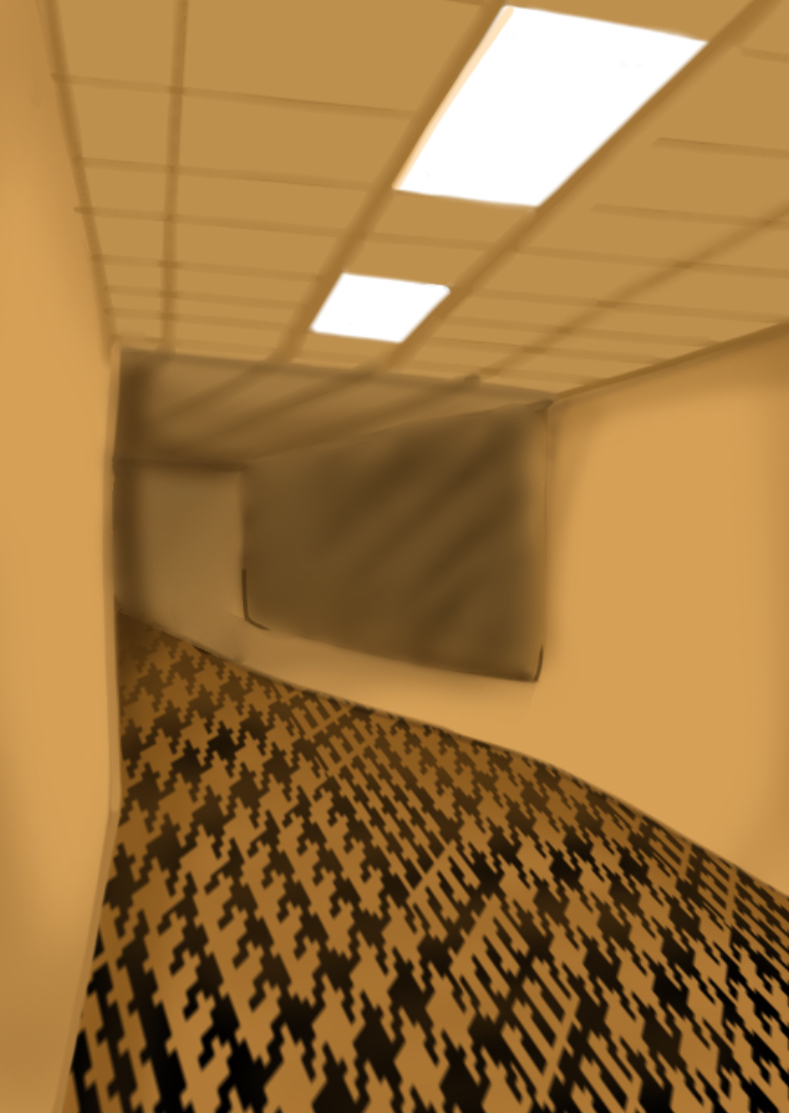
You step into a room with grey carpeting, cheap ceiling tiles, and beige walls. A single chair overhung by a fluorescent light sits in the corner, the room’s only sign of habitation. The only way forward is a hallway that stretches around a corner into an area you cannot currently see. You can’t describe it, but something about this room feels off. But what?
Many liminal spaces can be defined by the word liminal itself, which Merriam-Webster defines as “of, relating to, or being an intermediate state, phase, or condition.” Though liminality can refer to experiences that mark a new phase of life, such as moving houses or the death of a loved one, liminal spaces embody the concept in a way that is physically tangible. Because they are defined by transition, the existence of liminal spaces is antithetical: Space is meant to be dwelled in, yet that’s not what these spaces were designed for. They only exist because there has to be a space between where you are and where you want to be, a byproduct of purpose. When you linger in these spaces, your mind quietly recognizes that by choosing to linger in a space constructed for moving on, you have defied the very reason for its existence.
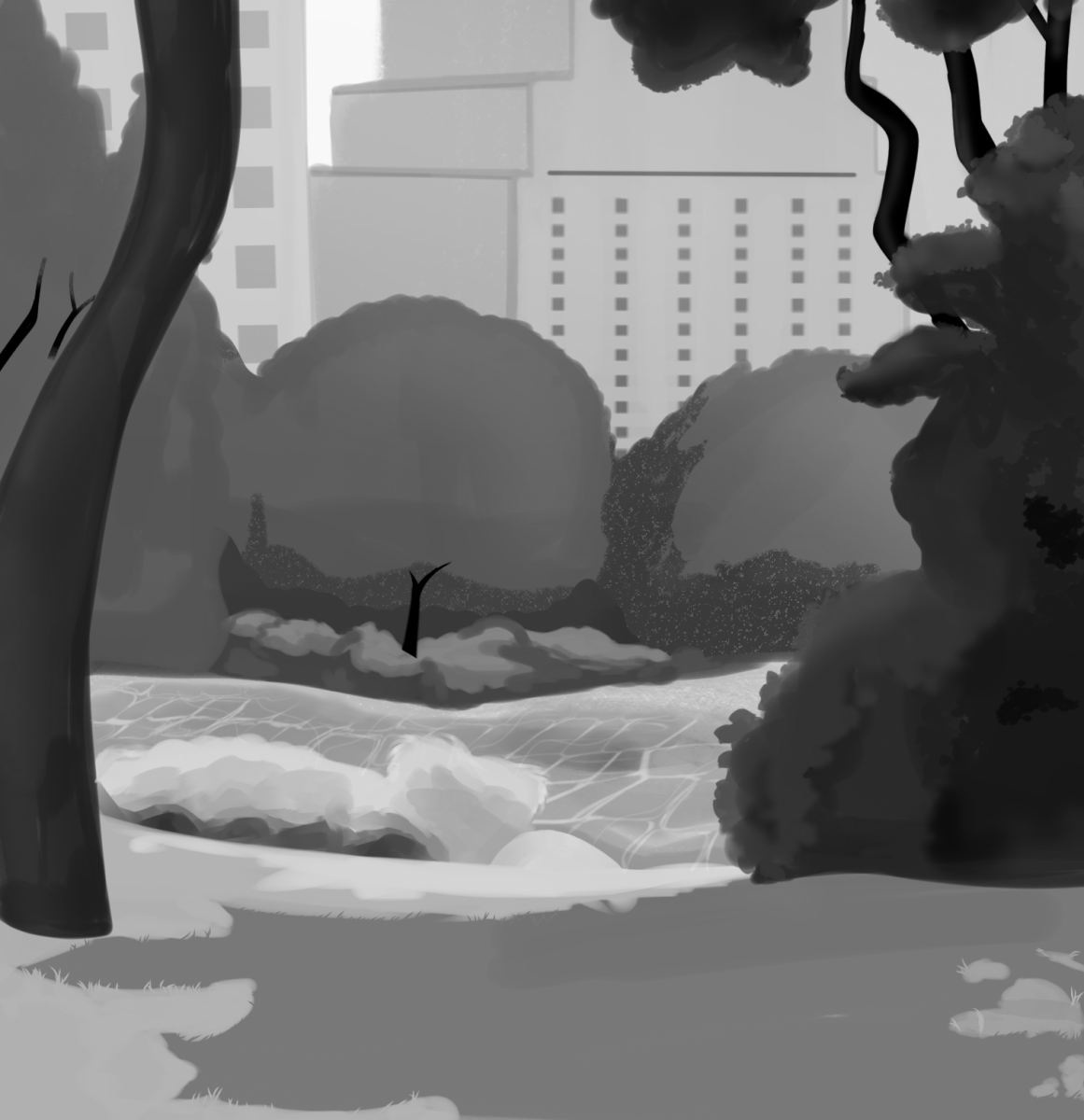
The emptiness left by the absence of human life is another feeling that pervades liminal space. This feeling is kenopsia, arising when a space built for humans is eerily devoid of intelligent life. The disconnect between past experiences and your current reality confuses the brain and contributes to that unique quality that liminal spaces possess. By appealing to the imagination, they become a world of their own where anything could happen—a blank slate, awaiting definition by the person residing within them. And by being, by definition, a transition space, they invite the idea that more spaces reside beyond, full of mystery and intrigue, waiting to be discovered.
Perhaps this emotional concept is why liminal spaces have seen a spike in internet popularity in the last decade. Many liminal space videos on YouTube have millions of views, and the Reddit community r/LiminalSpace receives 284 thousand visitors per week as of writing. (One Reddit user even says that “[liminal spaces are] like a rest stop for [their] overactive mind.”) Before their classification as an aesthetic, liminal spaces were just spaces that felt off, appearing on chat boards or public forums. The idea of liminal spaces as a concept first gained traction thanks to a 2019 post on 4chan that introduced the concept of the Backrooms, an internet-based horror concept that jokingly proposed the idea of a near-infinite expanse of empty office corridors.
Possibly as a result of this coincidence, the Backrooms are also one of the most well-known examples of liminal space as a main focus in cinema. Although many pieces of film include them in their cinematography, the Backrooms series by Kane Pixels on YouTube focuses on liminal spaces more intentionally than any other piece of popular media to date. With an A24-produced Backrooms movie grossing more than $100 million worldwide, the Backrooms’ popularity is evidence of the cultural niche that liminal space has come to carve out. They’ve evolved from a shared phenomenon into a defined style.
Exactly what that definition is, though, is highly debated. Many complain (especially in certain posts on r/LiminalSpace) that the spirit of liminal spaces has been lost, and that people will look at any empty photograph or old building and call it liminal when it fails to meet the standard. I will admit that I have been disappointed by some of these images myself; so many just picture mundane scenes or try to be overly mysterious and fail to encapsulate the feeling that liminal space creates. Not every photo of a hotel hallway or empty school is a liminal space; only some will give off that unique vibe. The exact qualities that make a space liminal can be hard to pin down since feelings are highly subjective, with many people feeling nothing at all when they see these spaces. But while the exact nature of liminal spaces may be up to interpretation, there are an awful lot of confused posters out there posting images that look like they’re merely impersonating a liminal space.
Liminal spaces are beautiful not because the spaces themselves evoke beauty, but because they allow the viewer to momentarily catch a glimpse of the unknown. They engage a deeper part of ourselves that we can’t consciously access, but are somehow drawn out by these odd places. And I don’t mean to wax poetic, but liminal spaces are a separate dimension and a half-remembered dream; they are the unexplained sense of longing and calm in those quiet moments in the night, manifested into a physical reality. So the next time you step out of the elevator, linger awhile. All is not as it seems.