






















![[ERROR]: Lack of Women in the Software Industry](https://theechohsmse.com/wp-content/uploads/2024/12/APC_0280-984x1200.jpeg)



The Golden Goose Awards: A Representation of the New Generational Potential
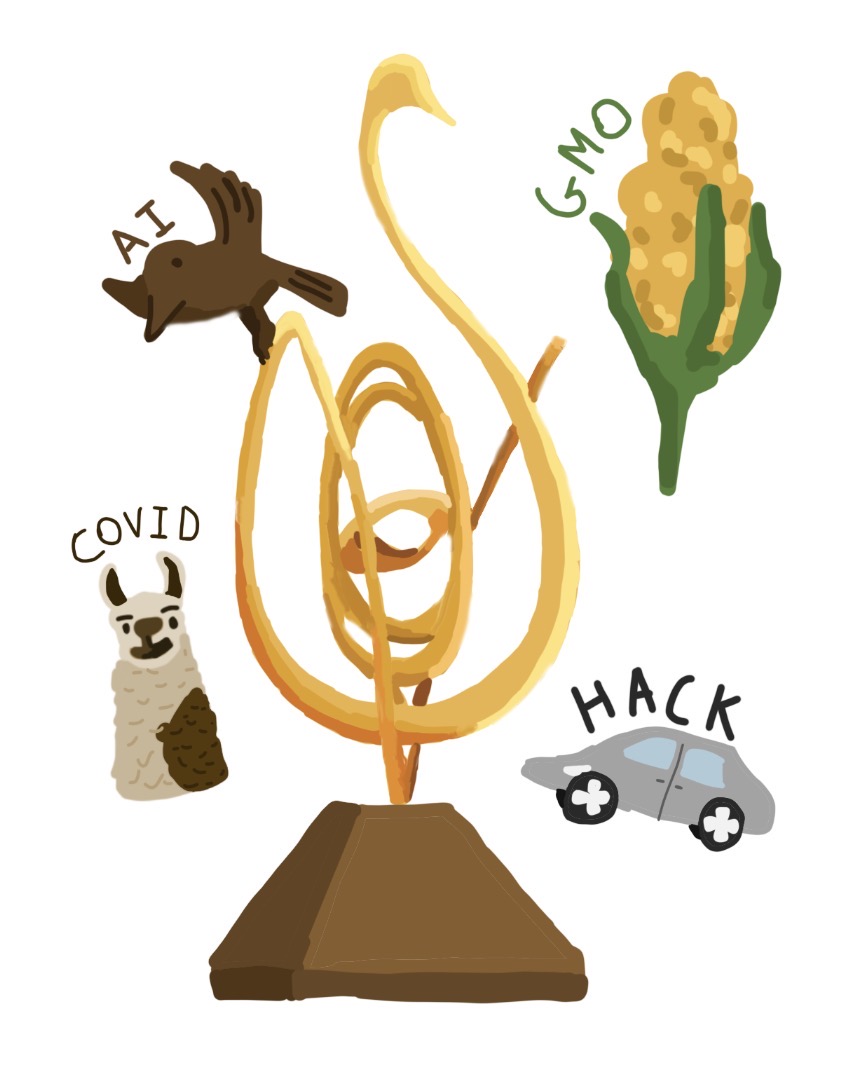
When most people think of technological breakthroughs, they think of decades of mathematical theory, millions of dollars spent on high-tech lab equipment, or masses of researchers collaborating to develop life-saving innovations. But what if human advancement lay in the random, seemingly obsolete subjects that a handful of curious researchers decided to study? In 2012, Congressman Jim Cooper created the Golden Goose Award to honor the modern heroes who decided to look into the quirky, overlooked parts of life—research that ultimately benefited society in unimaginable ways.
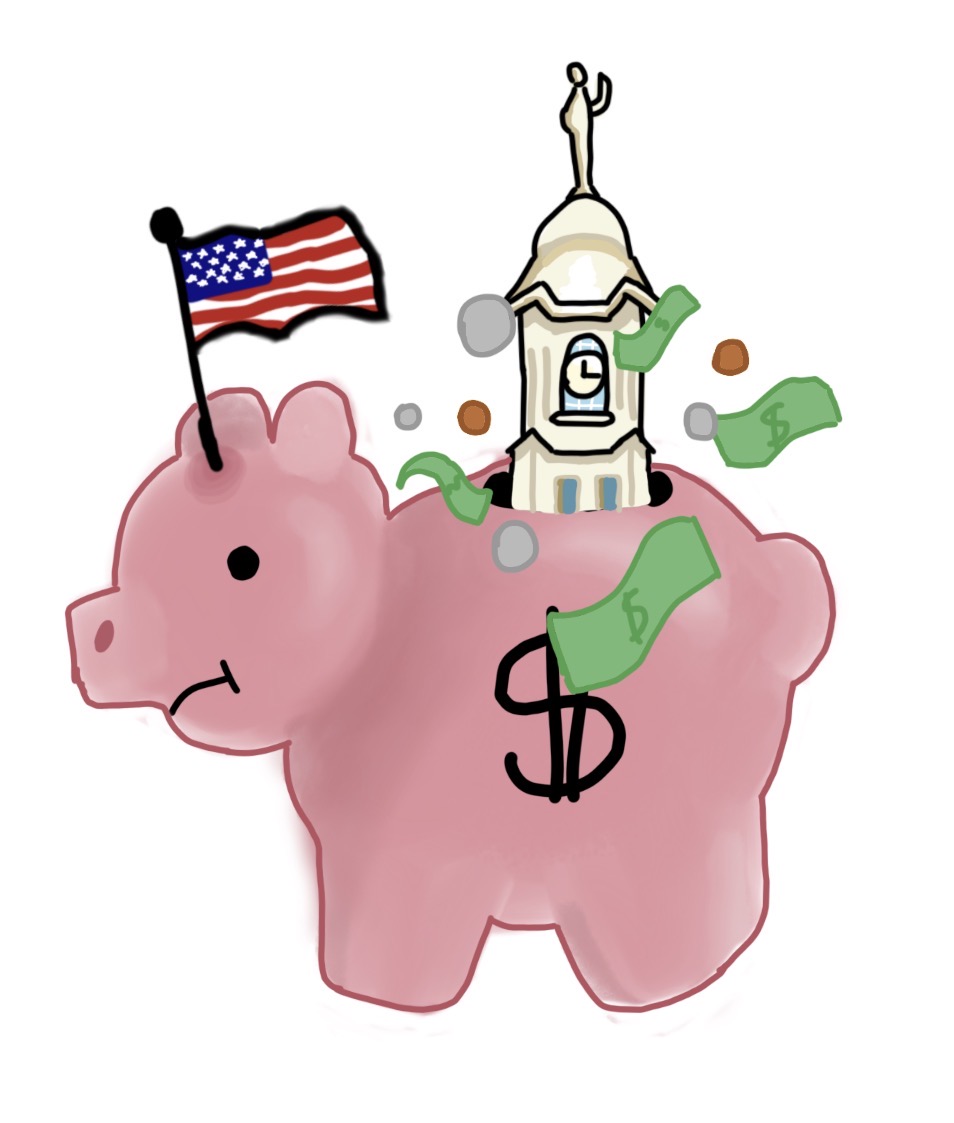
The Golden Goose Award is given to federally funded research that, although obscure, leads to massive breakthroughs and large societal impacts. The Golden Goose Award was created as a reaction to the previously given Golden Fleece Award. Created by Senator William Proxmire in 1975, it was a way of mocking federally funded research considered “wasteful.” The Golden Goose Award instead sends a message: Don’t dismiss unconventional ideas, because no one knows what they might become.
The potential of the ideals of the Golden Goose Award is endless, and there are countless examples of previous winners. Here are just a few of the most significant projects that have drastically changed how we live today.
How Tumor-Causing Bacteria Led to the Development of GMO Crops
Imagine walking through a forest and seeing a tree covered in lumps. While this might look normal because of how common it is, it’s actually an infection that ends up affecting up to 30% of trees in orchards each year. This is caused by Agrobacterium lumefaciens: a species of bacteria that enters a plant through wounds caused by insect feeding and pruning. As the bacterium infects the plant, it blocks the influx of nutrients and water, weakening or even killing the plant and creating tumors called crown galls.
Mary-Dell Chilton, a researcher at the University of Washington and one of the 2024 award winners, wanted to study how exactly this bacterium causes tumor growth, testing the theory that the bacterium actually transfers genetic material to plant cells. At first, the result was negative; they weren’t able to find pieces of the agrobacterium’s genetic material in the plant cells. However, they didn’t consider the bacteria’s plasmids would exist away from the plant’s chromosomes, and when they looked specifically for the plasmids, they discovered pieces of Ti (tumor-inducing) plasmids.
This was one of the first cases of genetic transfer between organisms, far preceding the discovery of CRISPR. Through this early form of genetic engineering, scientists were able to create pest-resistant crops that reduced insecticide use by 66% between 1994 and 2020, producing proteins that only killed one type of pest while leaving other organisms unharmed. The modified crops ended up having a much larger crop yield, making farming more profitable and producing more food for humanity.
We’ve all experienced AI in one way or another. Whether we’ve come across AI art, seen a subway ad about Devin.AI—an AI system that acts like an autonomous junior software engineer—(shoutout to the A train), or experimented with ChatGPT, AI has shaped our lives and modern world incredibly. While this technology can feel inevitable in hindsight, many of its foundations actually come from research that once seemed highly theoretical and far removed from practical use. At the same time, AI’s rapid rise is not without debate; while it has transformed communication and productivity, there are ongoing concerns about its environmental impact, its effect on the job market, and whether its long-term influence on society will ultimately be positive.
Few people realize that the foundation of today’s AI boom began with researchers asking what once seemed like an oddly philosophical question: How does the human brain actually learn? Well, the answer connects directly to the work of the winners of the Golden Goose Award in 2024: scientists David Rumelhart, James McClelland, and Geoffrey Hinton.
Before their innovative work, scientists believed our brains worked like a computer program, following fixed, step-by-step rules where information was treated like symbols or commands. However, this theory of symbolic processing struggled to explain human learning, adaptation, and flexible thinking in new situations.
An alternative view focused on the brain’s interconnected neurons. They believed intelligence came from many simple units working together rather than a single set of rules. Building on this idea, in the 1980s, Rumelhart, McClelland, and Hinton developed the Parallel Distributed Processing (PDP) framework, arguing that cognition comes from networks of simple connected units working together. During this period, researchers also developed backpropagation, a method in which a neural network adjusts connections after making errors to improve learning. This allowed for multi-layer neural networks and became the foundation for modern AI systems.
In particular, Hinton’s work significantly advanced fields such as image recognition and the AI boom. Today, technologies like ChatGPT, speech recognition, facial recognition, and self-driving systems trace their roots back to PDP and backpropagation.
Exposing the Weakness of Your Car’s Mechanisms
Your car is controlled almost entirely by a network of computers. Not just one computer, but dozens, all communicating with each other to make your car work properly. Now, imagine if someone hacked this system.
This was the goal of a team of researchers from the University of Washington and the University of California, San Diego. Led by Tadayoshi “Yoshi” Kohno and Stefan Savage, this 11-person team aimed to shine light on the safety risks surrounding your car’s software by hacking into the system. It wasn’t as hard as one might expect—or hope.
All the researchers had to do was learn the car’s “language.” The team ran a series of tests to see how the car would respond to certain commands, until, eventually, they had “cracked the code” of the car. Savage says: “Once you find a flaw, it’s game over…You control everything.” The team could now make the car do nearly whatever they wanted: honk the horn, lock and unlock the doors, and even control the brakes.
They presented their findings to General Motors, the company making the car they had hacked. While they had hacked one of their cars, they wanted to make it clear it was not a GM problem, but a problem with all cars on the market. Companies hadn’t put much thought into securing the cars, but their findings showed that it was an issue. Because of this, most modern cars take cybersecurity much more seriously, and we’re all safer because of it.
The Golden Goose Awards prove that paying attention to even the seemingly least important details in our daily lives can save lives. Curiosity rewards humanity in the long run. Even though most of the time it might not end up significantly changing society, without people taking the risk to test out the silliest, most unpredictable theories, we would not be where we are today.