







































![[ERROR]: Lack of Women in the Software Industry](https://theechohsmse.com/wp-content/uploads/2024/12/APC_0280-984x1200.jpeg)







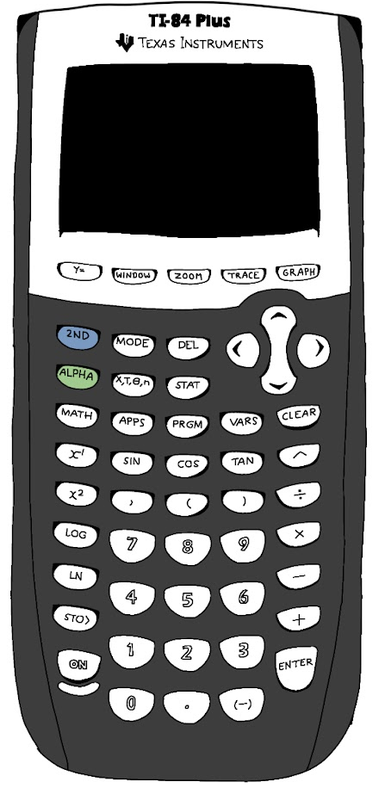
Just this year, Texas Instruments (TI) came out with a brand new calculator upgrade, the TI-84 Evo, with high processing power, better graphics, and an app-based interface which makes navigating menus more convenient. It will be easier than ever to solve problems through simpler navigation for less button-pressing. Go pick one up now for the low, low price of $160! Wait, $160? That’s about 50% more costly than the TI-84 Plus, and 30% more than the TI 84 Color Edition (CE)! Along with this absurd price, it is legal on tests such as the Regents, SAT, and AP exams. But with seemingly stellar advantages, is the Evo providing an unfair level of support for users?
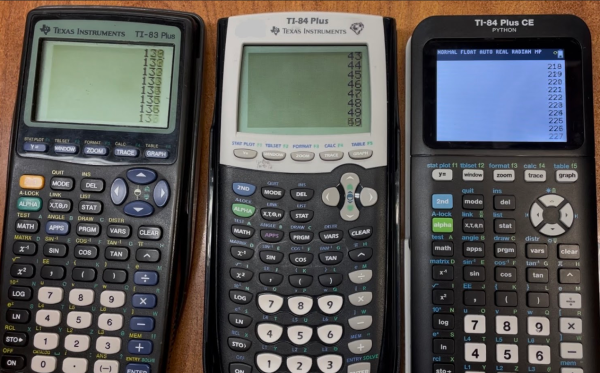
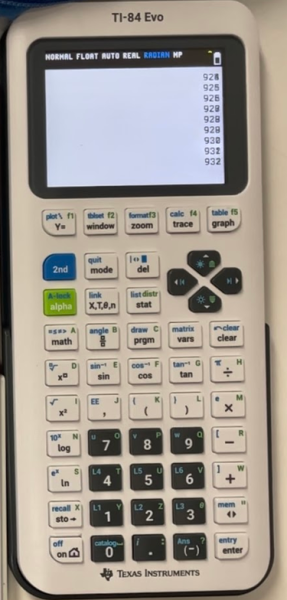
Remy Hertzberg (‘28) acquired the calculator in April, and has already felt the advantage it has provided. “[During a test], I used it for a system of equations that I didn’t want to solve [myself]. On the TI-84, that would have been more annoying to do.” As Remy expressed, on the Evo, there is a homescreen page that allows the user to easily traverse through nine different “apps,” all of which may be heavily used throughout high school mathematics.
Texas Instruments, the company behind most of the calculators we use today, is headquartered in Dallas, Texas. TI doesn’t only make calculators; they have sparked many other tech innovations. During World War II, their previously-developed technologies which were used to find oil through seismographic technologies were employed to track submarines. This convinced TI that they could exploit the need for military electronics. Over the next ten years after expanding into this sphere, TI gained $43 million in sales from 1946–1956.
Students shared their experiences with The Echo, voicing concerns over many subjects. “I don’t think [the Evo] is fair because it is limited from so many people who can’t afford it,” Tim Stratikopoulos (‘27) says. Even complaining about the base model, Xavier Meinke (‘28) voiced concerns, saying “you should be able to get the [TI-84 plus] for $60 now that the new one is out.” Other students disagreed. “The price is pretty reasonable,” Tenzin Dhondup (‘28) said. “If you don’t lose [it], they literally last you a lifetime.”
Up until the 1960s, Texas Instruments was much more focused on the military electronics discussed previously but in 1967, they invented the first ever handheld electronic calculator, which was only able to perform basic math functions. Still, this was a revolutionary invention whose usage in school was often frowned upon at the time. Over the next 15 years, TI kept developing further and
further advanced calculators including the scientific calculator, but in 1990, their first graphing calculator was put on the market: the TI-81. But this was not the first graphing calculator. The first graphing calculator was invented by CASIO, a different electronics company, five years earlier. But Texas Instruments was still improving their formula, developing their graphing calculators, creating the TI-82, 83, and in 2004, the popular TI-84 Plus. This calculator we use in our classrooms was developed over 20 years ago, hasn’t changed, and still costs the same price that it was launched at, often being sold for $110 new.
Texas instruments has about an 80% monopoly on the graphing calculator market, and has slowly controlled our classrooms. They have exercised many techniques to gain control of our classrooms. One way they did this was through their involvement in studies about the effects of graphing calculators in schools, including a 2002 published study including 40+ eligible experiments, and compiling all of the data. The study states, “There is considerable evidence that students use handheld graphing technology when quick and accurate graphs will aide in their problem solving.” Not only did this document provide hundreds of pages supporting graphing calculators in schools, the implication of the studies was funded by Texas Instruments themselves. This study was part of many conducted before graphing calculators or even calculators were used in the classroom environment, and contributed to their slow integration into tests and curriculums. Only half of the interviewed students could name another physical graphing calculator brand, CASIO, and the few who could name it mentioned that it was an older, irrelevant brand today.
Students also mentioned how integrated these calculators have become into our education, and how our learning in math revolves around it. “In a classroom, calculators are useful in science classes like physics and chemistry…but in a pure math field, problems in a classroom at [a highschool] level shouldn’t require any sort of calculator,” says Dashiel Finer-Regn (‘27). “As for the price, personally I recommend anyone who is buying a calculator to get one used because they’re basically the same functionality for one third of the price, if even.” Dashiell is a junior on the HSMSE math team, in which calculators are not allowed.
TI and graphing calculators overall have weasled their way into the education system and a monopoly, so now their calculators are so integrated in our educational system that it would be hard to achieve or even imagine school without them. TI seems to rely on their relationships to earn their unique status, which is why they are so integrated into our schools today. The main concern surrounding the Evo compared to the Plus should be focused on the absurd price, which is irrational for a calculator developed so long ago.