






























![[ERROR]: Lack of Women in the Software Industry](https://theechohsmse.com/wp-content/uploads/2024/12/APC_0280-984x1200.jpeg)







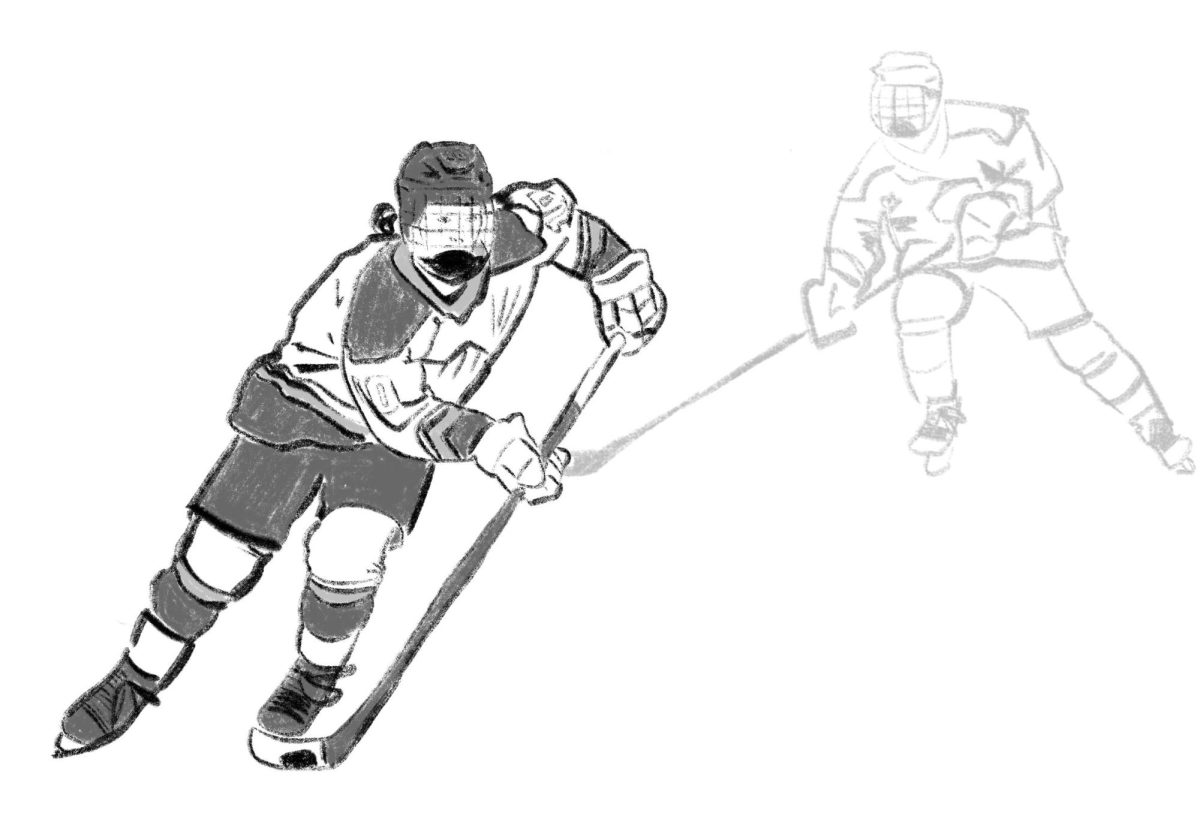
If you’ve ever competed in a sport like cross country or soccer, you’ll know the feeling of utter pain, which begs the question, “Why am I doing this?” However, when you remind yourself of how you felt, you feel a new sort of euphoria. In running terms it’s called the runner’s high, characterized by its calm-after-the-storm feeling, making us continue to do the sport, knowing that it won’t be easy. So why exactly do we do sports? Are we just chasing that feeling of runner’s high, or are there other motivating factors?
Sports make up a large part of human society, dating back around 3,000 years to ancient Greece. Originally, sports were created as sources of training for war and hunting. Now, people often do sports simply to get fit. Since sports were first invented, there has been a great increase in sport diversity, from endurance sports like cycling to team sports like basketball. Different sports work different parts of the body and are categorized into different groups. Endurance sports like cross country provide aerobic exercise, which helps strengthen the body. Sports like wrestling or boxing help improve muscular strength, and endurance, which helps with flexibility, weight management and stability.
Sports improve people’s health by being a source of physical activity. Doing physical activities can reduce the chance of diseases such as heart disease, stroke, some cancers, and infectious diseases. Exercise keeps the body in motion, reducing the chance of getting a chronic condition. Another way physical activity strengthens the body is by strengthening bones and muscles. Oftentimes, athletes will do one sport as training for another, for example, a soccer player might want to run during off-seasons to improve endurance. But sports also affect someone’s health in another way.
It is scientifically proven that exercise is a great way to improve one’s mental state. By doing a sport, you are able to take your mind off of stress factors. While you are doing a sport—especially a team-based one—you become so entranced in the moment that you are unable to think about things that are worrying you. Endurance sports also help relieve stress by providing a catalyst for self-reflection. You are forced to focus on your own body and how it is feeling, which helps you to come to terms with things that have been on your mind. Sports help your body to become in tune with itself, and movement helps to limit fight or flight responses.
As mentioned, while exercising, the body will respond to pain by creating a sense of euphoria. When the body is doing sports it releases chemicals called endocannabinoids, which is a biochemical similar to cannabis. However, endocannabinoids are a natural substance and do not show harmful side effects. Endocannabinoids move freely throughout the body—going past the blood stream and into the brain. They can help the body gain a sense of joy from a painful activity. On the other hand, endorphins—another chemical that helps improve the body’s response to exercise—do not affect the brain and instead work on healing the body, helping to prevent muscle pain. It is important to note that not everybody receives these chemicals during exercise and that not everybody gets the same joy from doing any sport.
Another major aspect that keeps people doing sports is its competitive nature. Evolutionarily, competition was a way to gain resources and survive. But now, competitiveness stems past the ideas of Darwinism. Competitiveness serves as a way for people to improve themselves, but also as a way to prove oneself. People will feel better completing a challenge they thought they couldn’t complete beforehand. However, competitiveness can have the inverse effect, where instead of being motivated to work hard people can become demotivated. Competition can increase stress in those who feel they have a certain expectation to meet, which is why it is important to find a proper balance.
Sports come in many different sizes and intensities and there is bound to be one that is just right for you. They don’t just have to come in the shape of competition, and a club sport or lower-intensity sport can help to ensure the positive effects of exercise are not overridden by stress. Sports are a vital part of one’s day to day life, from mental health to physical health. So, whether you are doing a sport because you want to stay fit or because you want the thrill of the competition, it’s good to keep at it nonetheless.