





























![[ERROR]: Lack of Women in the Software Industry](https://theechohsmse.com/wp-content/uploads/2024/12/APC_0280-984x1200.jpeg)





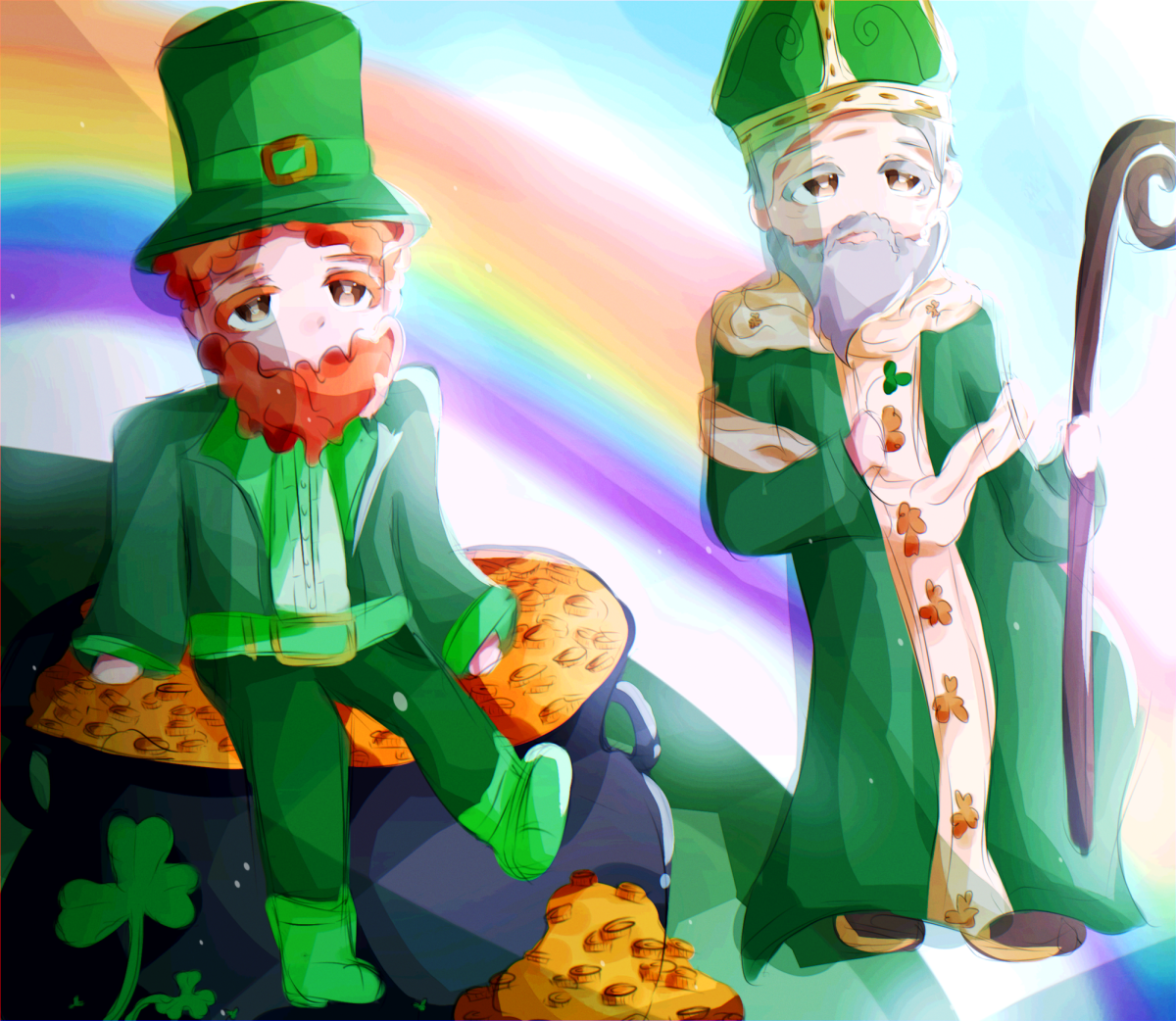
Have you ever seen four-leaf clovers, leprechauns, or a rainbow leading to a pot of gold? Though you can’t easily find these in real life, there’s one day when all of them come together: St. Patrick’s Day! It’s a holiday that’s widely celebrated among the Irish community, from the US to Ireland itself. But who is Saint Patrick, and how is his holiday celebrated?
St. Patrick, the namesake of the holiday, is well known in Ireland for converting the island to Christianity, but he wasn’t actually born on the island. He was born in Scotland, and only stepped foot in Ireland at age 16, when he was captured as a slave. While in Ireland, he learned the Irish traditions language, worked as a shepherd, and turned to religion for guidance. He managed to escape back to Scotland after being a slave for six years, but went back to convert the Irish to Christianity. Even though he managed to convert the Irish, he was never canonized by the Catholic Church, meaning that he isn’t actually a saint.
Although we tend to associate St. Patrick’s Day with being from Ireland, the first modern incarnation of the holiday (or parade) was hosted in the US—New York, specifically—when Irish soldiers within the British Army hosted the first St. Patrick’s parade in 1762. But the holiday only caught on in the US because of increased Irish immigration to the US as a result of the Irish Famine. These new immigrants faced harsh working conditions, which made them form a common identity based around Irish nationalism. This in turn made St. Patrick’s Day a symbol of Irish identity for those who established the holiday in the US. Today, the holiday is no longer just religious, but rather a festival dedicated to all things Irish, such as corned beef.
But what are the short little men that we call leprechauns? The idea of them stems from pre-Christian Irish mythology, where they were presumed to be the descendants of the Tuatha Dé Danann, a mythical race of gods who fled to another world after a battle with people attempting to settle in Ireland. Within Irish folklore, they are well known for being mischievous beings who play tricks on those who attempt to find them, but would grant three wishes, like a genie, if someone manages to catch them. This is how the idea of them being associated with luck and wealth was born, as you need luck to extract wealth from the leprechauns.
Today, the holiday is known for parades, food, and the like, but it is important that you keep in mind the surprising history behind St. Patrick’s Day.