










![[ERROR]: Lack of Women in the Software Industry](https://theechohsmse.com/wp-content/uploads/2024/12/APC_0280-984x1200.jpeg)




What makes a story? What drives a plot? Why have humans, for the last century, turned to motion pictures for entertainment? The answer to all three is conflict. We turn to fiction to better understand issues in our own lives, and while the conflicts that shape our interpersonal dynamics cannot be perfectly symbolized by those in film, great movies can use conflict to articulate what we may feel when coexisting with each other. Next question: What is the key to creating conflict? Answer: an antagonist. Let’s explore how, and through which films, antagonist archetypes have changed throughout cinema history.
The most classic, universally known example of an antagonist in a movie is the Wicked Witch of the West in The Wizard of Oz (1939). Her scenes, and the rest of the movie, are quoted so often that people, generation after generation, know her as “the classic antagonist.” She seems somewhat two dimensional to those watching 86 years after the movie was released, likely because her crispy cackle and long, pointy fingers, along with her other defining characteristics, became the blueprints for subsequent antagonists, like Dr. Evil in Austin Powers: International Man of Mystery (1997), Emperor Palpatine in the Star Wars series, Jafar in Aladdin (1992), and Hades in Hercules (1998). Although she does not have an origin story (excluding Wicked) or complex intentions, her external character is essential to films, and her impact shall not be forgotten.
The first time audiences saw a bad guy who wasn’t always a bad guy was in Citizen Kane (1941). Charles Foster Kane, based on real-life media tycoon William Randolph Hearst, starts out as a wealthy little boy who becomes corrupted via his influence and power. His transformation into a controlling and power-hungry villain speaks to how innovative the movie was, because nobody before Orson Welles had thought to turn a normal person into a villain. Now, filmmakers did not have to have set roles or archetypes for their characters, and the audience’s impression of a character could change over the course of the movie.
Not as influential, but nevertheless captivating and freaky, is Alfred Hitchcock’s Vertigo (1958). John Ferguson falls in love with a woman, and after her supposed suicide, tries to get another woman to transform into the one he lost. It is a key tale of obsession and a man trying to hang onto lost love, which is a desire that people often experience. So, when an audience is introduced to Ferguson, they recognize the darker part of themselves in him and feel a deep connection to the movie.
Considered by many as the greatest film of all time, The Godfather Part II (1974) shows what taking over a mafia empire did to Michael Corleone. He killed all his adversaries and weakened his own interpersonal relationships, leading to his transformation from heir to the mafia throne to a cold-hearted king of killers. He is another example of a good man who was corrupted by an overwhelming amount of power, and this movie is arguably more poignant than Citizen Kane because the audience gets to know the people he isolates in both the first movie and the sequel, so the detachment is even more heartbreaking.
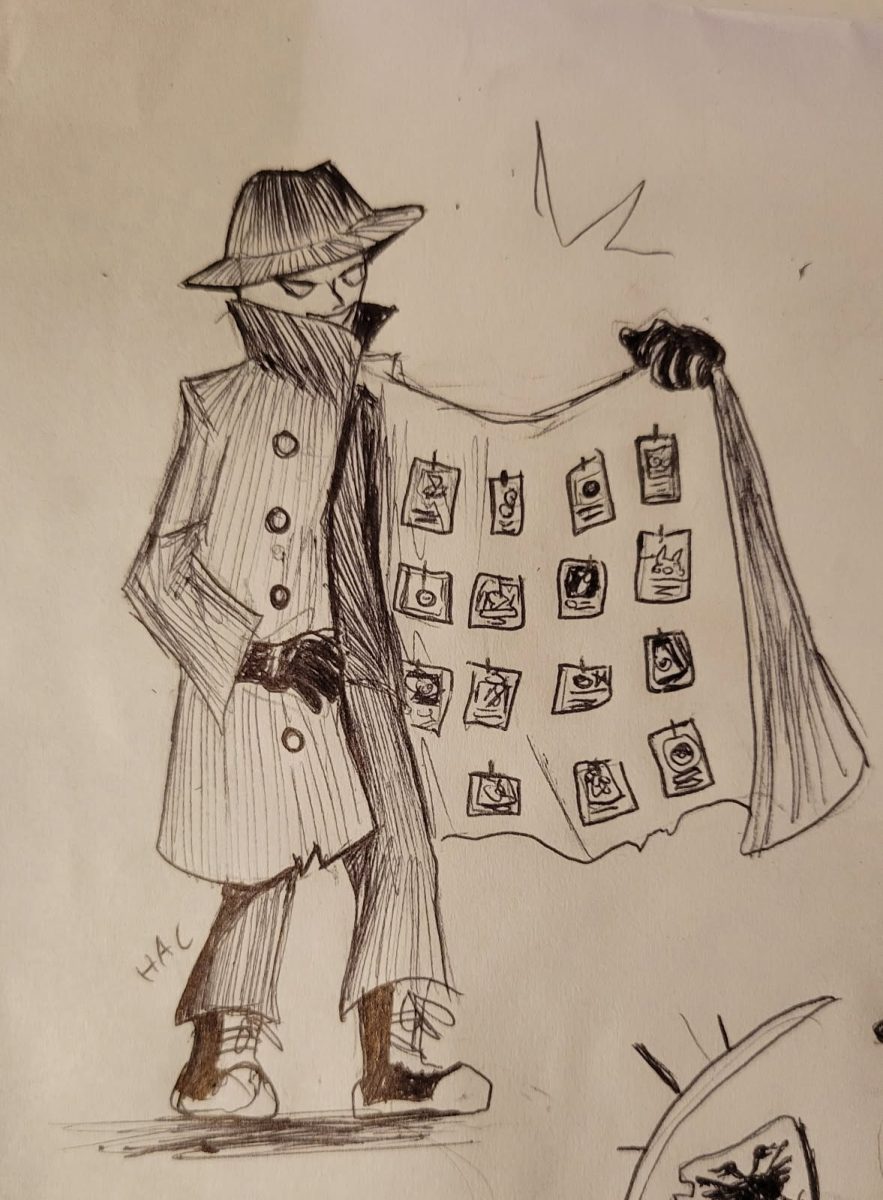
Perhaps the most way-paving movie, in terms of antagonists, is Taxi Driver (1976). Travis Bickle, a taxi driver in New York City, is plagued by isolation and a job that does not yield him many friends. Like in Vertigo, he becomes obsessed with a woman. His frustration with her rejecting him, combined with his developing insanity, leads to his assassination attempt of Charles Palantine, the man running for president that the woman is campaigning for. Although the movie is conceptually similar to the ones mentioned above, Martin Scorsese’s direction takes it to a darker note, because he isn’t teaching any lesson to the audience. He instead delivers a dry, gritty, and concerningly real portrayal of 1970s New York City, and what can happen when someone is lonely in the midst of it. The movie is not saying “Don’t Be Lonely,” it is just showcasing what happens as a result of unmitigated loneliness.
Next up are supervillains, like Lex Luthor in Superman (1978). Yes, he wanted to blow up California and kill Superman, but he was also devilishly charming, to an extent that had not been previously considered by filmmakers. Even though we had already seen the humanity in villains, there was something very fresh and enjoyable about Gene Hackman’s entertaining charisma. Villains could now be human without it being the whole plot of the movie or some profound character exploration.
In the ’90s and 2000s, antagonists started becoming unhinged. Jonathan Demme’s The Silence of the Lambs (1991) started this theme, with Hannibal (The Cannibal) Lecter. Most people who have seen the movie can only recall his chilling first line, “Hello, Clarice” (which was actually never said in the movie), but the memorability of his performance is rooted in his madness that is hiding below the surface. You can easily tell that Hannibal is unstable, but it’s because of his terrifying and mystical personality (e.g., his intent stare and calm mannerisms), not because he just acts crazy.
Finally, we arrive at the most exciting villain of the twenty-first century: the Joker. Specifically, Heath Ledger as the Joker in The Dark Knight (2008). Like Hannibal Lecter, he is a psychotic villain, but there isn’t anything “delightful” about him. There’s an argument to be made that this lack of devilish excitement in his eyes makes the character better. He’s more realistic, but he always retains his insane essence in the subtleties of his personality.
Before we go, I want to look at some themes and aspects of a good antagonist that we keep seeing. The first is corruption: when a character has too much control for his own good and loses his soul or his morals as a result. The second is obsession: when love for another character drives a normal person deep into a villain arc. The third is charm, which makes an antagonist both incredibly likable and incredibly infuriating to the audience, because we hate how much we love the character. The fourth and final one is insanity: when a character’s harmful choices are influenced by his deteriorated mental state, but he is still a functioning individual. I’m excited to see whether new themes will take form in the next decade or two, and what general innovations will take place in the filmmaking industry. For now, keep watching movies, and keep seeking conflict.