






















![[ERROR]: Lack of Women in the Software Industry](https://theechohsmse.com/wp-content/uploads/2024/12/APC_0280-984x1200.jpeg)




“Congress shall make no law … abridging the freedom of speech,” proclaims the First Amendment. Free speech is an integral part of America’s identity and a point of shared pride. At a surface level, free speech seems like a necessary, natural right. However, as history shows, it is more complicated in practice than it is in concept. When information appears harmful, should that information still have a right to be shared? I looked to the example of Wikipedia for answers.
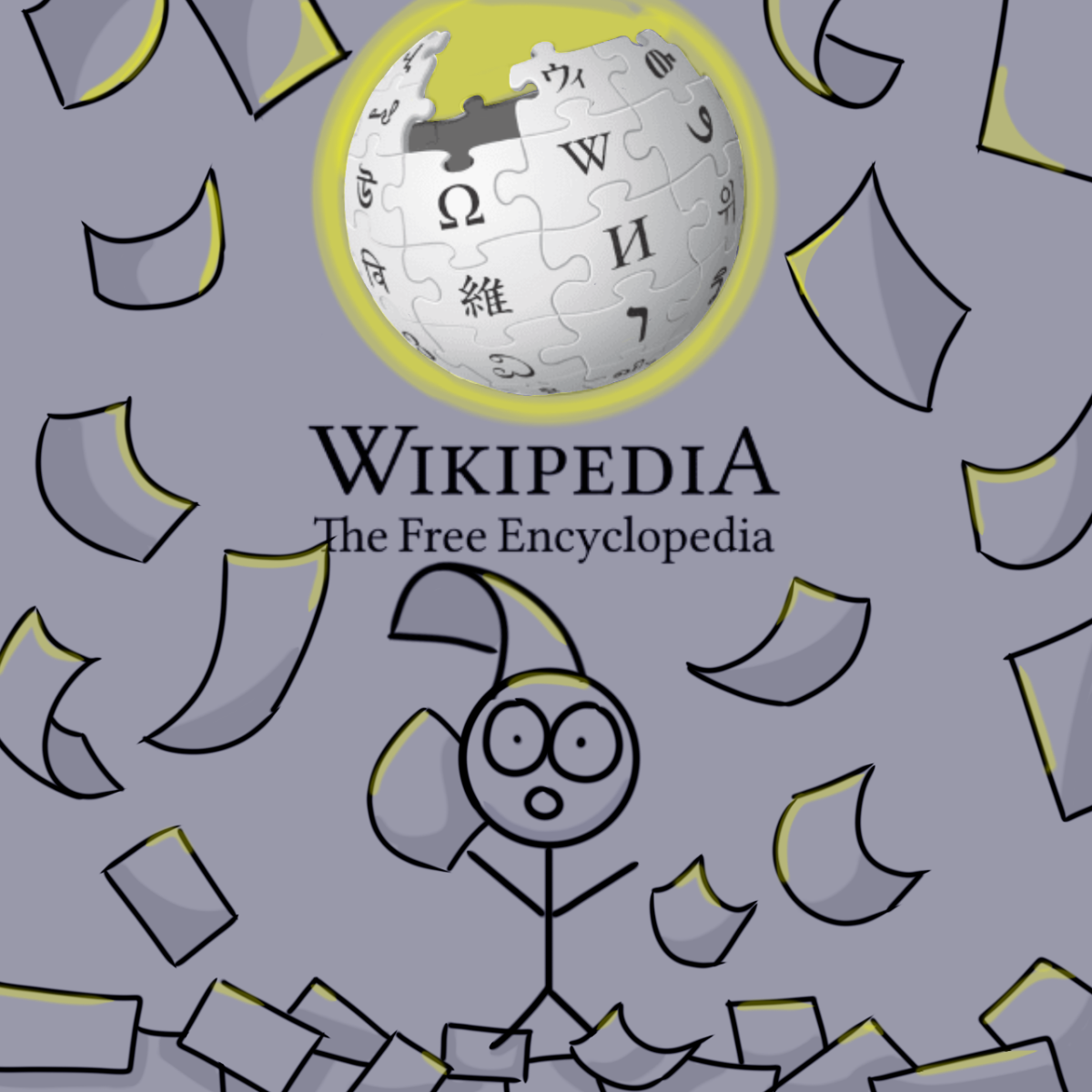
Wikipedia is a vast network of online articles—all written, edited, and maintained by the general public. As the seventh most visited website worldwide, it broadcasts information to a larger audience than any other direct source. However, more importantly, Wikipedia also has a larger number of potential contributors than any other source because, as is well known, anyone can edit Wikipedia. While this is usually noted as a cause of unreliability, I believe Wikipedia’s accessibility is its greatest asset.
Information always has the potential to be helpful or harmful. A website can misinform you, as can your friend. Freedom of speech is the right to broadcast information, whatever it may be. However, free speech also requires the constant verification and rethinking of information. If your friend is spreading harmful beliefs, you would want to disagree with them and convince them otherwise.
Wikipedia facilitates these disagreements and discussions on a worldwide scale. This incredible multitude of perspectives can only be a good thing for the pursuit of truth. Wikipedia’s accessibility makes it the embodiment of the successes of free speech.
Harmful information still makes its way into Wikipedia. The system is too vast for this to be avoided. A famous example of this is Wikipedia’s unfortunate history of Nazi glorification. Across hundreds of articles on WWII, misuse of sources and subjectivity has been used to glorify the Nazi party. But what matters is what is done about this information. Ksenia Coffman, a dedicated contributor, has made thousands of edits to these pages with the goal of eliminating bias.
Sure, we will never be able to catch all the misinformation out there. However, I believe Wikipedia’s base of contributors—the whole world, that is—will come to the right conclusion more often than they will come to the wrong one.
Let’s compare Wikipedia to social media. While this may not seem obvious at first, Wikipedia and social media are similar in many key ways. On social media, just like on Wikipedia, anyone can say anything they want. On both types of platforms, these pieces of information pile up and overwhelm, until it’s hard to tell fact from fiction. However, Wikipedia and social media have several key differences that make it crystal clear why one is much more reliable than the other.
For starters, most social media platforms are run by for-profit companies, while Wikipedia is fundamentally a nonprofit. Platforms make most of their money through targeted advertising, using the data they collect on users to deliver ads that are more likely to draw attention. Of course, the more time users spend on the platform, the more ads can be suggested and the more money is made. So platforms want users to spend as much time as possible on them. To increase this viewer retention, platforms will give you two kinds of content: extreme-sounding information that draws your attention and information that you agree with, to satisfy you. But Wikipedia isn’t interested in extreme views or what you agree with. It’s just interested in the truth. In fact, Wikipedia’s editors are constantly searching for information they disagree with and want to correct. While these disagreements lead to more open conflict, they also spark more critical and nuanced conversations.
This would be a different story if social media platforms were using proven fact-checking algorithms on their content. But this is not the case anymore. Since purchasing Twitter, Elon Musk has removed guardrails preventing the spread of misinformation. Among many changes, he implemented paid “blue check” accounts whose posts are prioritized by the platform’s algorithm. However, X’s main verification system comes in the form of its Community Notes feature, which uses a very similar mechanism to Wikipedia. Dedicated users are able to write notes on posts addressing and correcting content they deem misleading.
In January 2025, Meta announced that they were replacing third-party fact checker software on Facebook and Instagram with a similar community notes feature. Mark Zuckerberg said that the third-party fact checkers were “too politically biased,” though many accused the decision as being a way to improve relations with the incoming President Trump.
In any case, while these community notes features are similar to the system Wikipedia has in place, they give the individual editor less power. Being able to comment on a misinformative social media post carries much less influence than directly and immediately editing a Wikipedia article.
No, Wikipedia is not the most reliable source out there. For school projects and research papers where absolute reliability is required, peer-reviewed academic sources are the way to go. But Wikipedia still has a lesson to teach us about how we as society decide on the truth. Think about how edit history and comment history are publicly available on all Wikipedia pages. Wikipedia wants us to know not just the truth, but also how we got there.
We are lucky to live in a country where free speech is a fundamental right, where we can express what we believe is the truth not just to those around us but to the entire world. Doing so gives our discussions one more perspective, one more piece of evidence for the truth. So go edit a Wikipedia page. Comment on a social media post. Maybe even join The Echo. Try to add your voice to the world’s conversations.