

























![[ERROR]: Lack of Women in the Software Industry](https://theechohsmse.com/wp-content/uploads/2024/12/APC_0280-984x1200.jpeg)





For me, every single roll call goes the exact same way. The teacher takes attendance, going name by name through the list, checking off each student, until finally, after every other person in the class has been called, my name is reached. “Yalli Zussman.”
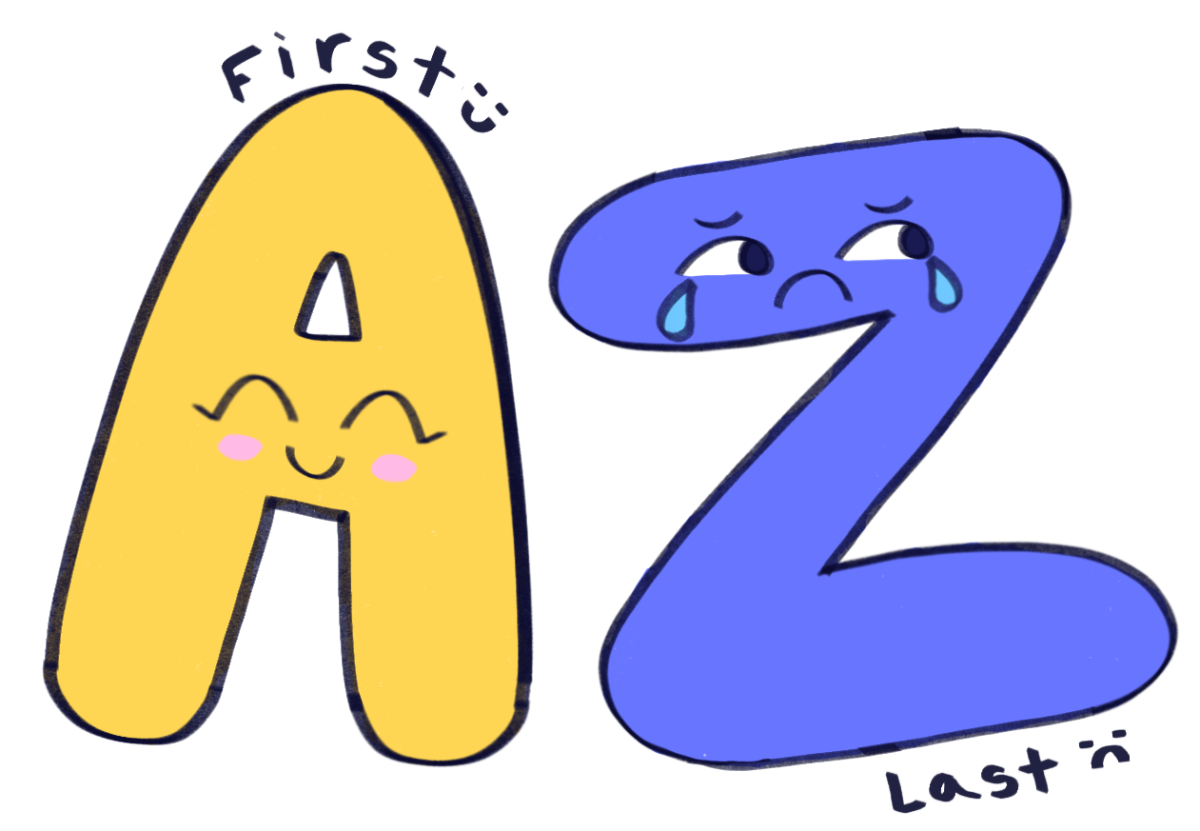
For as long as I can remember, I’ve been placed last because of my name. “Yalli” is somewhat manageable. Sure, Y is the second to last letter, but there’s plenty of Zekes or Zachs out there to provide a reprieve. “Zussman” is a different story. “Zussman” starts with the last consonant in the alphabet, which is followed by the last vowel in the alphabet. In all my life, I’ve only ever met one person with a last name after mine (Zweig if you’re wondering). Put those first and last names together, and you’ve got a recipe for perpetual alphabetical suffering. You may be wondering, “What’s so bad about having a late last name?” If that’s the case, allow me to show you just how much of our world is built on the tyranny of the alphabet.
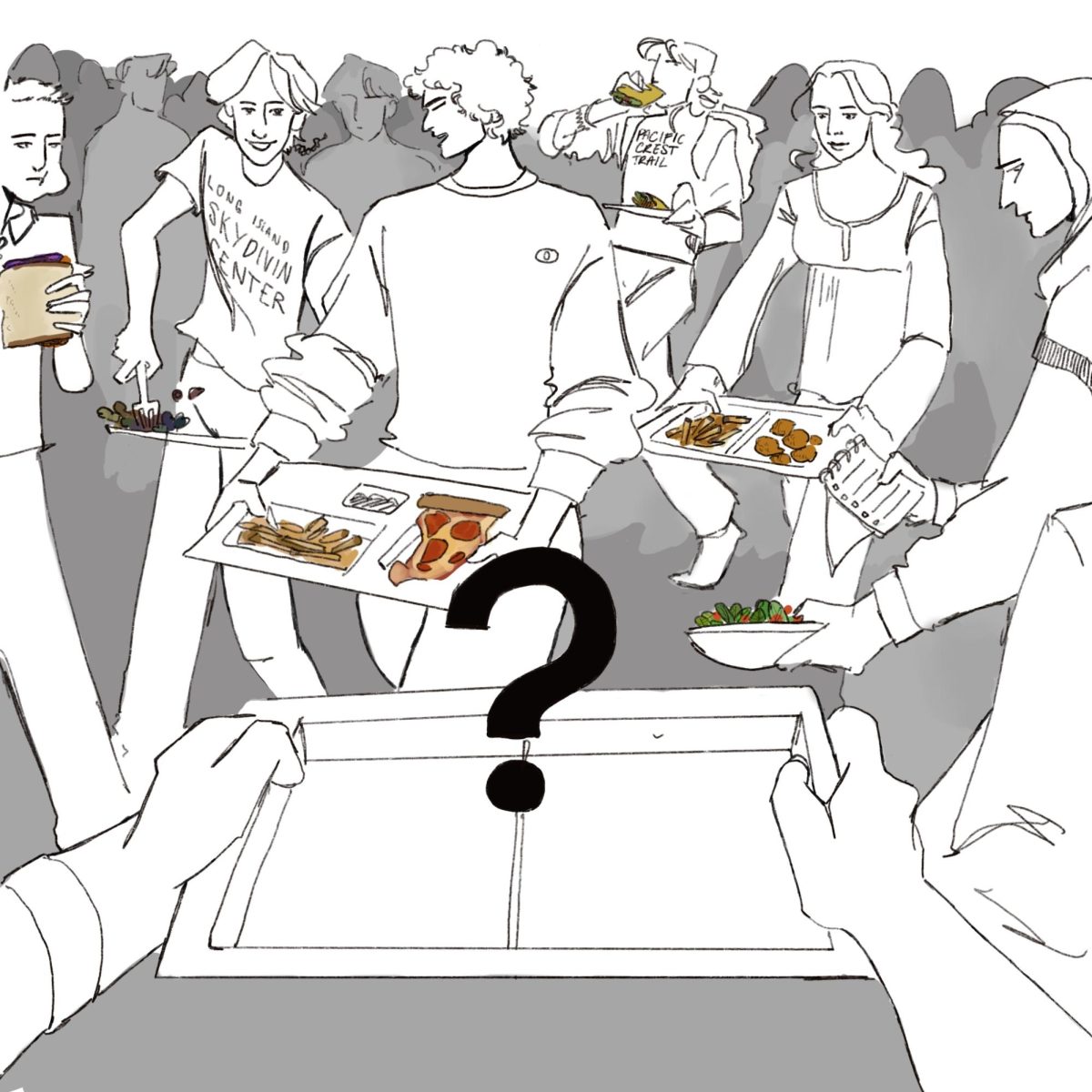
The problems began early. In elementary school, whenever we had to line up to head to other classes, I was always placed in the back. When teachers give assigned seats based on alphabetical order, I’m always placed in the back of the classroom, where it’s hardest to see and hear. When they grade work in alphabetical order (more teachers do this than you might expect!), I’m left in stress and suspense for the longest out of anyone. Now, you might be thinking, “Aren’t those all just minor inconveniences?” To that, I ask what life is, if not getting unreasonably upset about minor inconveniences. Besides, the problems go beyond simple classroom organization. According to a study by Professor Jeffery Zax (who admittedly, may not exactly be an unbiased source) and his graduate student, Alexander Cauley, at the University of Colorado, Boulder, “The probability of being [described as] an outstanding student [by their teachers] drops by about 10 percent for a 10-letter gap. “If you’re a Clark, you’re maybe 10 percent more likely to be identified as an outstanding student than your twin who happens to take on the last name of Norton.” said Zax. Zax and Cauley dub this discrepancy “alphabeticism,” a term that I will undoubtedly be making regular use of in my day-to-day life. Additionly, a 2011 paper from the Journal of Consumer Research found that people with later last names are more likely to impulsively make purchases on limited-time offers. The authors hypothesize that this hastiness may be people compensating for a lifetime of going last.
The grass is always greener on the other side however, and people with early alphabetical names have their own share of complaints. “It gives me anxiety,” said Arantza Alvarez (’28). “I never have time to mentally prepare myself for anything. Especially presentations … I’m always the first or second person to go.” Maybe I’ve been taking too negative a view of my name. After all, there are plenty of benefits to having such a late initial. I can always reliably find myself on attendance sheets or on big lists. Plus, it’s an interesting and memorable thing about me. I know that if my last name was Johnson, I certainly wouldn’t have written this article.
Regardless, if you’re a teacher, maybe next time you’re taking attendance or grading an assignment, start from the bottom of the list. Or maybe make the process more random, such as by spinning a wheel to determine who presents first. People throughout the alphabetical spectrum deserve to see how others experience life, and we should make an effort to increase their opportunities to do so. The path to ending alphabeticism is a long one, but it starts with each of us, as individuals.