























![[ERROR]: Lack of Women in the Software Industry](https://theechohsmse.com/wp-content/uploads/2024/12/APC_0280-984x1200.jpeg)





*Disclaimer: Please note that this is an opinion piece and anything said should not be taken as medical advice.
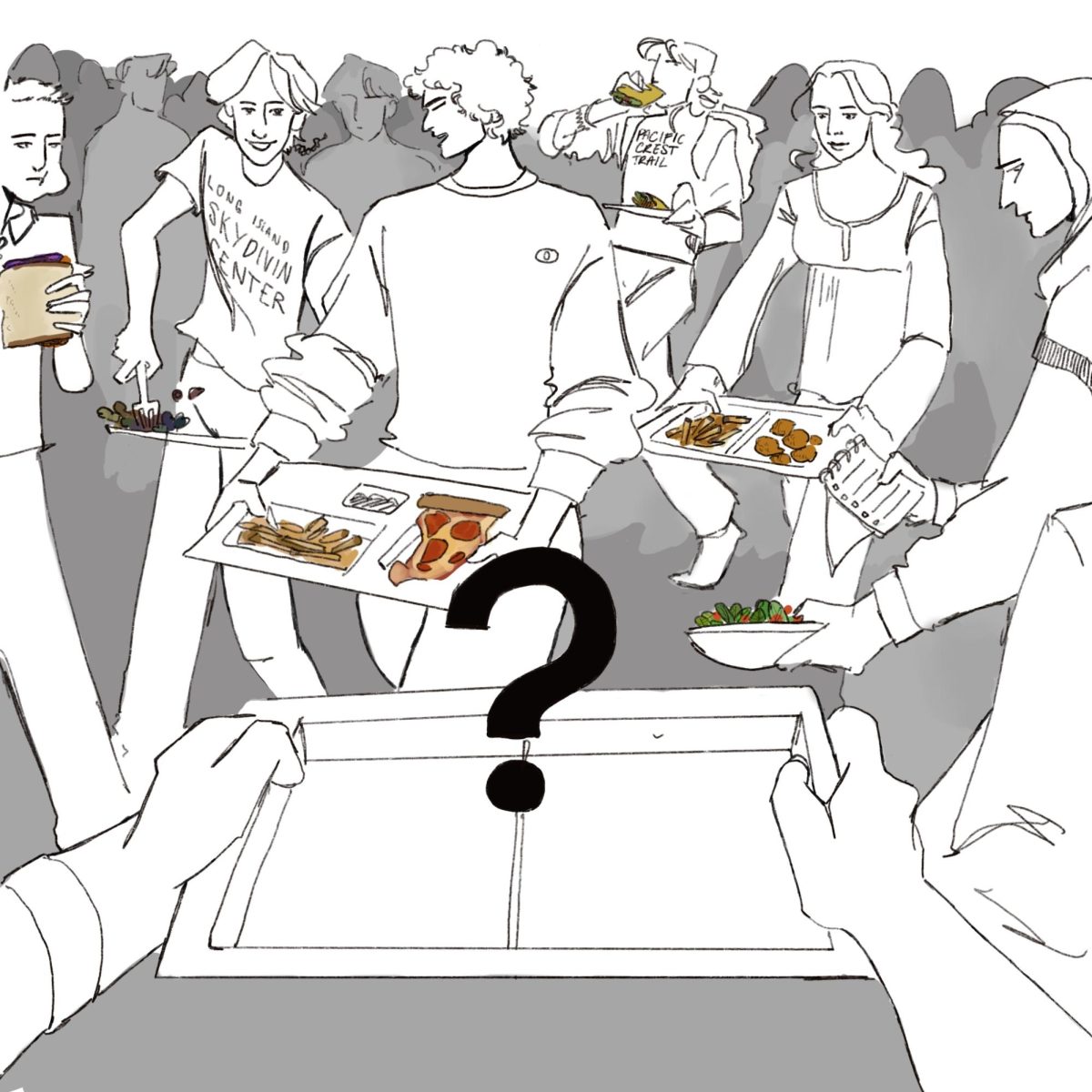
Whenever I find myself feeling hungry, I assess the options that are available to me. I wonder: What should I eat right now? What would fulfill me the most? Mainly, I like to rely on whatever food I’m craving, but what can I get that will allow me to continue on with my day?
As teens, most of us socialize and go out with friends to get food, whether it is to a fast-food restaurant, a deli, a bakery, or even a cafe. These moments give us joy in our daily routine. Quick foods like sandwiches tend to give us the sustainable energy we need to get throughout the day before it ends and starts all over again. They are also often a delight on our tastebuds. Yet some of the foods we usually get from these places give us “low-premium fuel” (which can come from processed or refined foods).
Mr. Diunte, a P.E. and health teacher at HSMSE, said, “[When we eat] high-sugar foods that spike our insulin … there’s a resulting crash of our blood sugar and that’s where we get that tired feeling … our body [is trying] to get back to homeostasis, [which causes] it to go back down even [lower] than it was earlier.”
These “low-premium fuel” foods can have an impact on our mental and physical health, too. In “Nutritional psychiatry: Your brain on food,” Eva Selhub, MD, said, “Multiple studies have found a correlation between a diet high in refined sugars and impaired brain function—and even a worsening of symptoms of mood disorders, such as depression … If your brain is deprived of good-quality nutrition … consequences are to be expected.” As we can see, picking our foods carefully can help counteract these negative consequences and give us a more positive look on the foods we add to our palate.
Alongside the mental risks in intaking less nutritious foods, we also cannot ignore the potential physical impacts. In “How Your Eating Habits Affect Your Health,” the author wrote, “Nearly half (45%) of deaths in 2012 from the [heart disease, stroke, and type 2 diabetes] [were] associated with too much or too little of these 10 dietary factors [vegetables, fruits, whole grains, fat-free or low-fat dairy products, lean meats, poultry, fish, beans, eggs, and nuts],” highlighting the importance of a balanced diet. It is also essential to try new foods; many foods can give us the nutrients we need if we give them a chance.
Furthermore, Mr. Diunte said, “in regards to diabetes—when we’re talking about high energy foods and high-calorie foods—a lot of them are high in simple sugars [and] simple carbohydrates. Those tend to cause insulin spikes in the blood. Long-term exposure to high-sugar food causes insulin resistance, and when our body becomes insulin resistant, we’re at greater risk for type 2 diabetes.”
Food may be complex as a topic in general, but as a whole, it is something we consume every day because it is part of our daily needs. We show up to get it because it is advertised to us on a daily basis and we always want to try new things to get out of our comfort zone.
As we can see, being healthy can be a challenge. We all have unique bodies, each one with different needs. So, for the big question: How can we manage getting nutritional foods while balancing them with what we want?
Especially as teens, we are growing and our bodies are developing. One comment Mr. Diunte had was that as “[teenagers], we should be trying a lot of different foods and experimenting and learning our palate[s], and that’s going to evolve as we get older … Some of the habits that we make now may stay with us long-term, so we’re really trying to find that mix of things that we enjoy but also [keep] our bodies [fueled] for the entire school day.”
Ms. Boylan, an English and gastronomy teacher at HSMSE, said, “[creating] habits takes time. A conscious willingness—doing things with friends. Trying new flavors and tastes with friends as a group. Saying ‘Okay, I’m going to try a new snack this week … and I’ll try to make something new and I’ll bring something for my friends to try.’ … It’s in that communal, joyful, pleasurable aspect that you can start to recreate memories attached to the food. Taste is ultimately connected to our memory [banks] in our brain. … It’s in that pursuit of joy that you might actually uncover something that you like to do.”
A term I hear almost every day is “junk food” (which is similar to low-premium fuel). The foods in this category tend to have few of the essential nutrients our body needs, but are high in calories, salt, and sugar—which are bad when we get too much of them. Ms. Boylan said, “They’re engineered to hit the things we were evolutionarily programmed to desire—like sugar. Sweetness is a sign of calories in nature—salt and fat, these are [nutrients] that have sustained us through our hunter-gatherer days and they were rare in those days. Now … so much of [food] is designed [for] this bliss point of flavor, of sugar, of salt, of crunch and texture …so it’s hard for us to resist.”
But, in order to push the boundaries of this term, we have to consider the fact that “junk food” is also food that is often most enjoyable. It’s a refreshing release from the boundaries of the healthy food we should eat.
Plus, as teens, we are always on the go and don’t often have time to prepare meals. Mr. Diunte says, “I think it’s just having a better idea of: ‘Are there any whole-grain options, whole-wheat options? Can I find a bit of leaner meat? Is there a way I can get vegetables in?’ Even if I’m at a food truck and I’m like: ‘Hey, can you put some extra salad in this?’ We’re just trying to get some stuff that’s gonna provide us with vitamins, or minerals—you can start small there.” Mixing what we eat in our daily lives with something more nutritious can have a beneficial impact on our bodies, even if it’s small. Sometimes the results of what we eat can change if we decide to go for a healthier option, instead of something that we might usually go for.
Food is an important part of our lives. We eat what is offered to us, or what would most satisfy our taste buds. If it’s something that we don’t like, we push it away and go onto the next food that we could potentially like! Food gives us memories that stay with us for a lifetime. Some people even make traditions involving them—especially Thanksgiving, a holiday that’s celebrated throughout the United States and Canada.
While we shouldn’t force ourselves to eat the things we don’t want, we should try foods that could help keep our body healthy. Even as we teens grow, we have a lot of time to try new things. For example, Ms. Boylan’s gastronomy class tries a ton of different foods that provide them nutrients! Giving new food a try also gives our bodies a chance. Eating different foods helps with different aspects of our life and there are so many dishes that could be our next favorite. So, the next time you see a new dish, why don’t you give it a try?