
































![[ERROR]: Lack of Women in the Software Industry](https://theechohsmse.com/wp-content/uploads/2024/12/APC_0280-984x1200.jpeg)







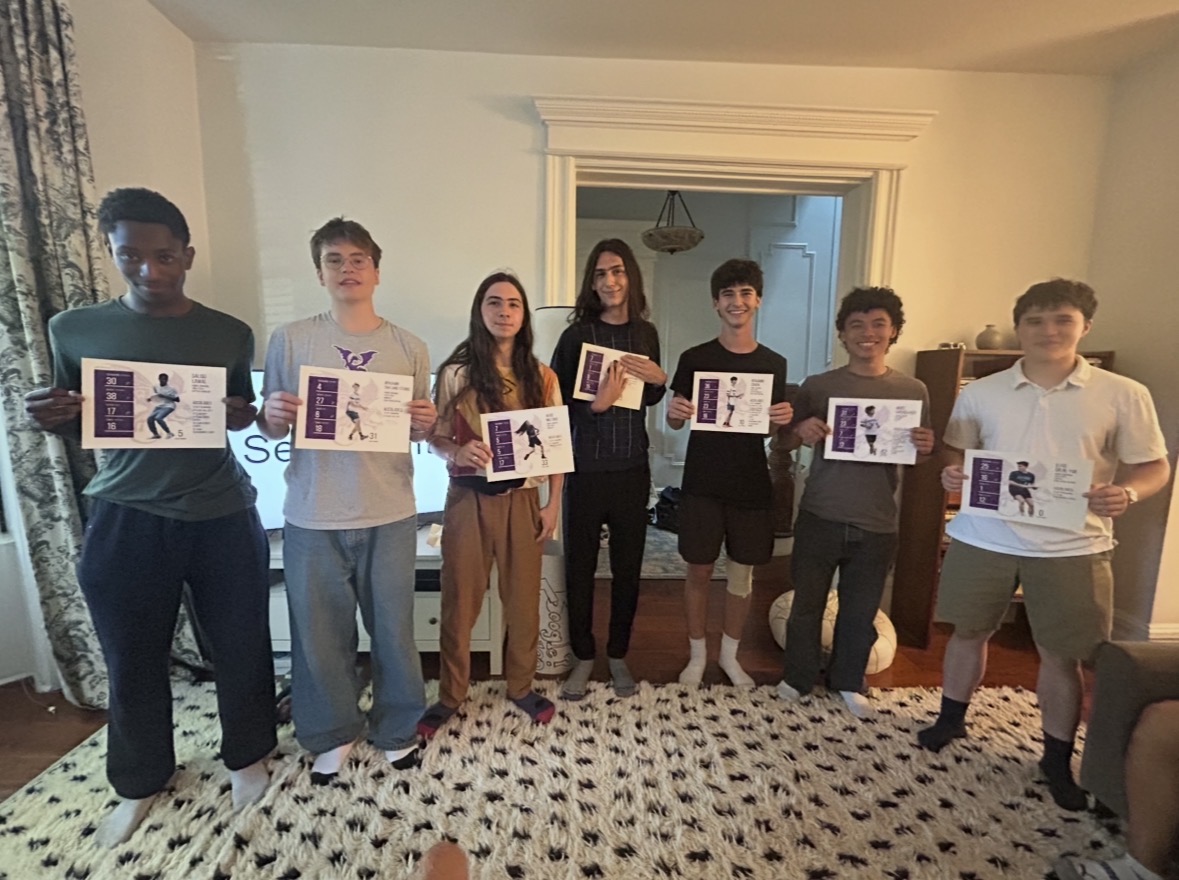
Civil engineering. It’s a growing field that’s expected to jump by 5% over the next ten years. Despite this fact, civil engineering has not been spoken about much at HSMSE. It’s virtually never mentioned in either Drafting or Architecture and isn’t quite within what we think of as STEM. Meanwhile, turn towards room B5, known to most as the architecture room, which has a club dedicated to civil engineering. It meets weekly on Wednesdays. Any field as important as civil engineering deserves some light shined upon it, so I interviewed Juliette Carson (’27), who is the president of the Civil Engineering Club, to discover a new perspective on civil engineering.
So, what is civil engineering? Juliette describes civil engineering as “the focus on how infrastructure, such as bridges, tunnels, skyscrapers, and even sewage pipes, are constructed.” Essentially, civil engineering is the field that figures out how to make the construction go from a blueprint to existence. This includes finding a way to circumnavigate barriers to construction, like building a tunnel underneath mountains, finding an alternative place to construct something, or even inventing something new.
Civil Engineering influences life for communities. To Juliette, “A single building orchestrates how people move and how they interact with each other.” That means that civil engineering, the field which helps create infrastructure, has the ability to completely dictate your life with infrastructure itself. And although some countries use that property to fulfill political objectives (e.g. Singapore), Juliette ensures that her club makes models that benefit the average person the most.
However, Juliette isn’t just pursuing infrastructure plans. In her words, her club “enact[s] sustainability and technological innovations and implement[s] [them] in our surrounding communities.” Her civil engineering club has won numerous awards from competitions, including the Futures Cities Contest, and the designs that she makes for these competitions are often also used as solutions to issues within the surrounding community. She hopes that her club will be able to collaborate with the Red Cross club at HSMSE, at least in next semester.
But how? Her club takes inspiration from real life experiences. What she sees happening in NYC is how she “create[s] ideas to improve society.” Her club’s latest submission to the Futures Cities Contest involved arranging a city in the form of a snowflake, which was adopted from how the shape of a snowflake can be used to easily interconnect areas of a city to a central downtown area, since snowflakes are made from water freezing on a path away from the center itself.
Well, why would she make this club to begin with? Juliette recalls that “In middle school, I was [part of] a competition with my class [about civil engineering], and I wanted to do something similar in high school.” But in order to actually do that, HSMSE needed a coach and a club. So she made a club that, according to her, “helps individuals be more interested in buildings [and civil engineering].” The small, busy club in room B5 defines the very embodiment of HSMSE: bold, ambitious, creative, and full of email spam.
Civil Engineering is truly an important field within STEM, and this presents an opportunity for the US. Our infrastructure is dated from the 1960s and needs to be replaced with designs that can better handle the stresses of today. This is where civil engineering comes in. Civil engineering can help us solve some of the world’s biggest issues and develop a better, more just American society. What we need to do is to give civil engineering more attention.