
































![[ERROR]: Lack of Women in the Software Industry](https://theechohsmse.com/wp-content/uploads/2024/12/APC_0280-984x1200.jpeg)







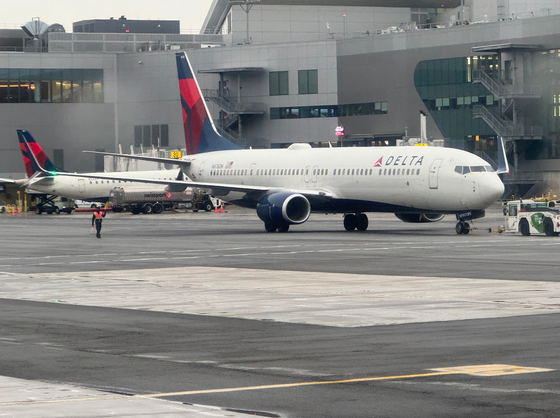
I do not support the 737 MAX or the poor engineering choices Boeing made in designing it.
Remember last year, when an exit door fell off of a plane on Alaska Airlines Flight 1282? The incident occurred on a Boeing 737 MAX 9. The 737 MAX is one of the most infamous aircraft in the aviation industry. After two fatal crashes in the late 2010s, major questions were raised about the plane’s safety. In the case of the door incident, many were quick to blame Boeing’s design. However, the malfunction was not caused by a design issue, but rather poor quality control and maintenance. Although Boeing was certainly at fault for the 2018 and 2019 crashes, they have been wrongly blamed for many incidents since then, receiving a disproportionate amount of media attention.
Let’s start with what caused the 737 MAX crashes. The new engines used on the 737 MAX series required the Maneuvering Characteristics Augmentation System (MCAS): new software to prevent the aircraft from stalling. Boeing failed to include this feature in documentation for flight crews. About a year after the 737 MAX 8’s first commercial flight, a fatal crash occurred. On October 29, 2018, a newly delivered MAX 8 operating as Lion Air Flight 610 crashed into the Java Sea, leaving no survivors. The pilots did not know about MCAS due to Boeing’s omission of the feature in the documentation. A faulty sensor fed the MCAS false information (caused by maintenance issues), causing the nose of the plane to pitch down and causing the crash. The pilots did not know what was causing the plane to pitch down and could not control it. Following the first incident, Boeing did not change anything about the 737 MAX’s design, instead issuing guidance to airlines on the 737 MAX. Just four months later, another MAX 8 crashed six minutes after takeoff in Ethiopia. The incident’s similarity to the Lion Air incident resulted in grounding all 737 MAX aircraft worldwide. After software updates and updated requirements for pilots, the 737 MAX was allowed to fly again in 2020, but Boeing’s reputation was severely damaged.
Since the 737 MAX grounding, people have quickly blamed Boeing for incidents such as the door incident, and some have assumed that all Boeing planes are inherently “bad.” However, Boeing’s reputation has not always been poor. Let’s go all the way back to 1999. The Boeing 757–300—a variant of the beloved, efficient 757-200—had just entered service, having completed its first flight with Condor Airlines on March 19, 1999. The 757 replaced the Boeing 727, providing a twinjet aircraft with much higher fuel efficiency compared to the older trijet design. Not only does the 757 have great efficiency and versatility; it also holds one of the best safety records in the industry, with a fatal-event rate of just 0.22 fatal events per 1,000,000 flights. Two years earlier, on December 17, 1997, the first 737-700, a member of the Boeing 737 Next Generation family (737 NG), completed its first commercial flight with Southwest Airlines. The 737 NG is the third generation of the 737, preceding the 737 MAX by 20 years. It is one of the most reliable commercial aircraft ever built, with a fatal-event rate of 0.07 fatal events per 1,000,000 flights. If you’ve flown on mid-distance domestic flights before, chances are you have flown on a 737 NG. Even newer Boeing planes, such as the 787 Dreamliner, have excellent safety records and continue to be popular with airlines around the world. Additionally, Boeing has continued to create innovative aircraft designs: the 777X, the successor to the original 777 family, will be the longest plane in the world when it enters service, at 76.7 meters long.
Since the 737 MAX crashes in 2018 and 2019 and the subsequent grounding of 737 MAX aircraft worldwide, there have been no fatal incidents involving the 737 MAX—resulting from Boeing implementing software updates to fix the MCAS and the increased training required for 737 MAX pilots. This contrasts with the way McDonnell Douglas, another aerospace company, attempted to fix the problems with their DC-10 aircraft in the 1970s. The DC-10, created to fly overseas with higher fuel efficiency than the four-engine Boeing 747, incorporated an outward opening cargo door intended to enlarge cargo storage, thus making more money for airlines and McDonnell Douglas. McDonnell Douglas’ design for this lock system did not work, and on June 12, 1972, a cargo door blew off of American Airlines Flight 96, causing extensive damage to the plane (luckily, the pilots were able to land safely). Even after several other crashes and an internal warning from one of its engineers, McDonnell Douglas did not incorporate a full solution to the major issues with the DC-10 until the plane was grounded in 1979. Boeing, however, provided a full solution to the 737 MAX problems, which has resulted in the 737 MAX not having been involved in any fatal incidents since the 737 MAX crashes.
While Boeing made many bad decisions in designing and releasing the 737 MAX, they should not be blamed for incidents that are not clearly caused by design issues. Many Boeing aircraft—such as the 757, 737 NG, and 787—have excellent safety records and are valuable contributions to the aviation industry. Additionally, Boeing handled problems with the 737 MAX in an appropriate manner, and ensured that their planes were completely safe before they were allowed to fly again. As students at an engineering school, it is very important to learn about how to handle issues with the designs we create effectively and responsibly. We can learn lessons from both McDonnell Douglas’ and Boeing’s issues with their designs and learn how to create designs that prioritize safety over profit.