


























![[ERROR]: Lack of Women in the Software Industry](https://theechohsmse.com/wp-content/uploads/2024/12/APC_0280-984x1200.jpeg)




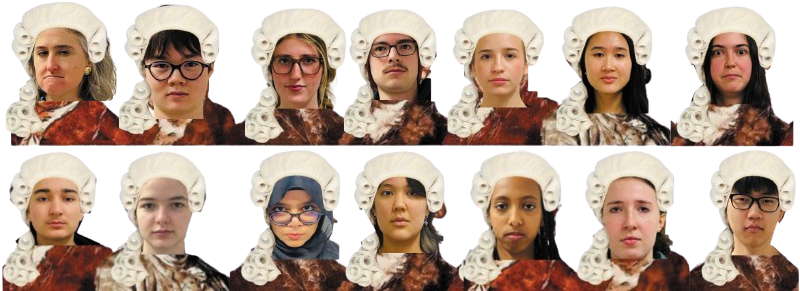



History class might often be synonymous with “nap time”—but not with Ms. Gin. Over the past five years, her structured, no-nonsense AP World History classes emphasize history’s transferable skills: critical thinking, research, cultural awareness, and a broad understanding of different eras and their key elements. But who is Ms. Gin? What does she think of the study of history as a whole?
This interview has been edited for concision and clarity.
LH: How did you become interested in teaching history?
AG: When I was younger, I enjoyed reading biographies [and learning] about [people’s] lives. In high school, I really enjoyed and gravitated towards social studies classes because there was such breadth available and an emphasis on scholarship. The study of history is transformative and can have the most direct impact on understanding your life. I’ve always liked school and … learning, and because I liked history, [teaching] was a natural fit.
LH: What skills do you want your students to have?
AG: How to be more aware of yourself and your surroundings, responsibility, accountability, critical thinking, [and] respect … Those are skills that get you greater agency over your own life. Being responsible and coming to class on time, … [being] reliable so other people can trust you, and [deciding] between different options. Working hard. If you can build those skills while you’re here, you can help navigate the world on your own terms.
LH: What do you enjoy most about teaching?
AG: When kids acquire those skills, or get anything of value in the class: making a friend, learning how to do something better, understanding something new, or having a greater appreciation for history. People tend to think history is just facts, but it’s more than that. It’s how you recall that fact and how you study. As a student, what do you know about yourself? How do you make sure you deliver? And I think that’s all about figuring yourself out.
LH: Do you think history should focus more on individuals or on societies and systems?
AG: You can’t have one without the other. You want to be wary of hero worship. You look at people to study them as a guide or a case study, but if you only do that, then you lose what is really going on in any time period and other people who don’t get studied.
LH: Do you think by gathering enough subjective viewpoints, you can have an objective standpoint on history?
AG: I don’t think you can be solely objective about evidence itself. You try to collect as much as you can, but the interference comes with the subjectivity of the evaluator and whether they have the tools to be objective. It’s difficult to be objective about history, especially if it’s tied to your identity or your own history.
LH: What are the tools to be objective?
AG: Being able to look at other sides and removing yourself from the emotional weight that you may carry, which is hard to do. People view things through a certain lens, and there are other voices that they’ve dismissed because they have a predisposed worldview. That doesn’t mean you’re right or wrong.
LH: When you’re in the classroom, how do you try [to] emphasize that removal?
AG: By looking at multiple perspectives. What is missing from here, and how will we find that information? Do they have a bias? Why? Does that affect the history they’re presenting to us? Ideally, students apply those analytical skills to their own behaviors.
LH: What do you think a shift in popular perspective reveals about how we understand history?
AG: That education is a social movement. You’re responding to outside forces, and are accountable to those forces. I’ve kind of been teaching the same way, [and have] seen more of a shift outside of school [in] standards and practices. [Different people] have different ideas about what makes education better for students. It depends on who’s implementing what: who’s politically in power, who gets to decide what should be in schools. For AP World it’s just a matter of how you bridge what you want your students to know with what outside entities such as College Board require for you to teach them.
LH: Do you think history repeats itself?
AG: History repeats itself because humans repeat themselves. They use what they know about the past for better or for worse. Humans are creatures of habit. We create new things … but creation itself is not new. It’s just what’s created that’s new. The way humans respond to what is created is telling.
LH: Do you think human behavior has a specific default, in that sense?
AG: I mean, what makes us “bad” is what makes us “good.” So when history repeats itself, people repeat the bad and the good. [Ultimately], human actions drive results.
LH: In general, does teaching history make you more cynical or hopeful?
AG: I’m a realist. I don’t think you can really address any issues unless you really understand what’s really going on. There’s always going to be adversity at every turn, but I also think the human spirit is enduring.
LH: Awesome! Thank you so much!