













![[ERROR]: Lack of Women in the Software Industry](https://theechohsmse.com/wp-content/uploads/2024/12/APC_0280-984x1200.jpeg)
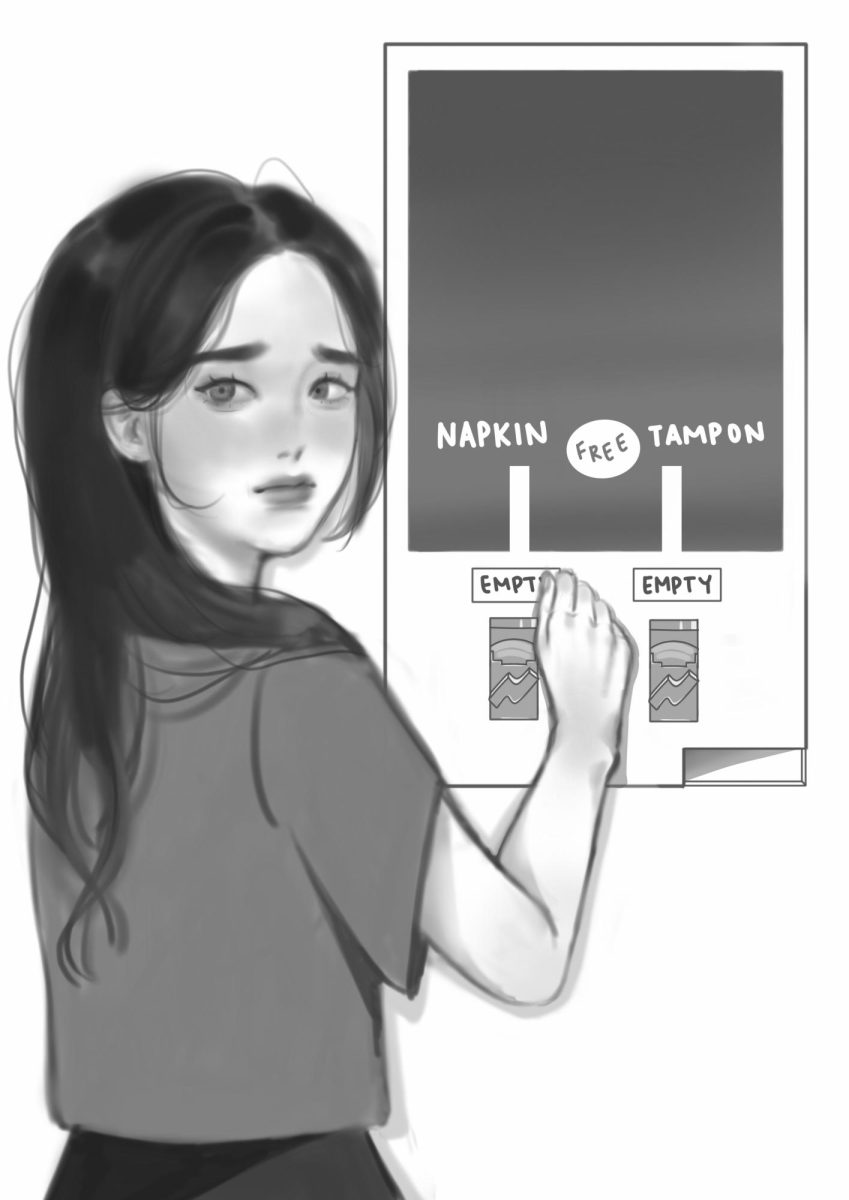

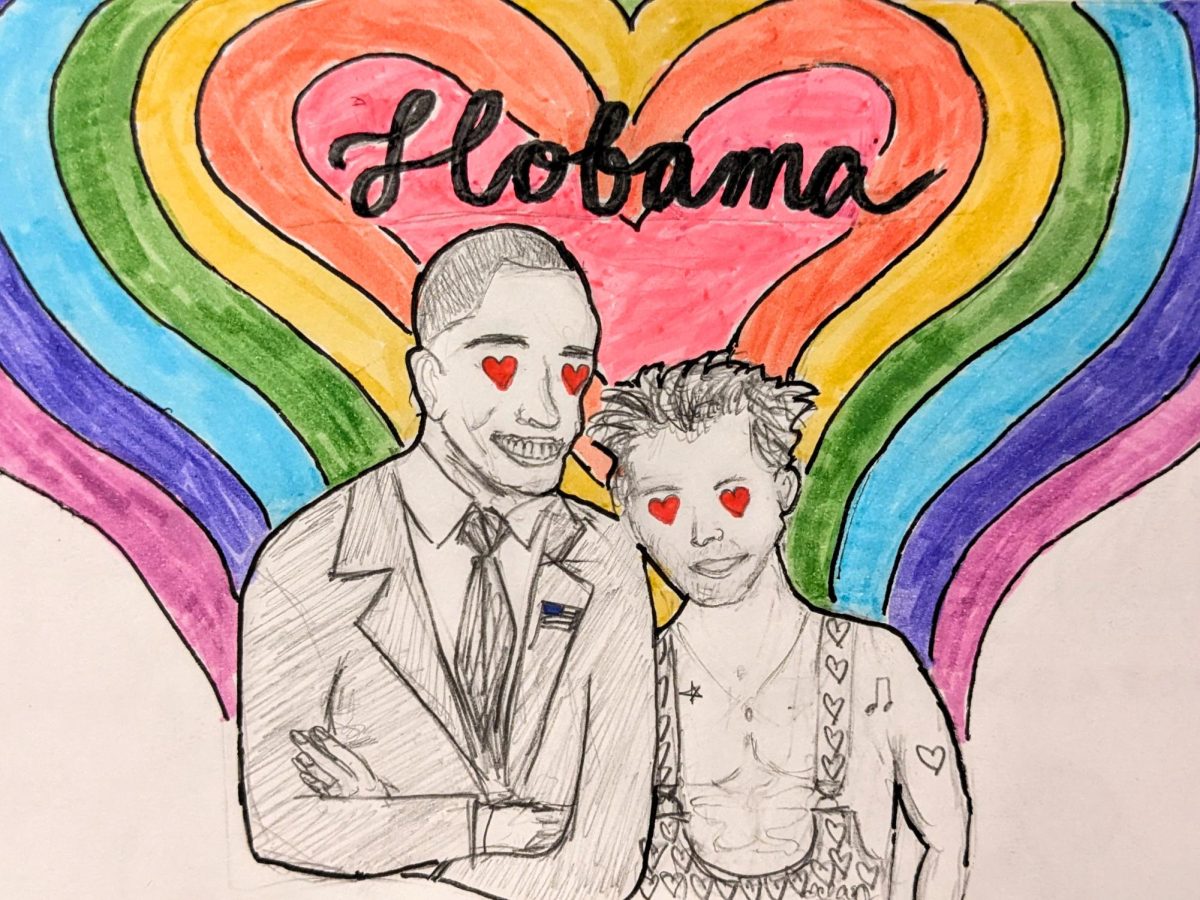
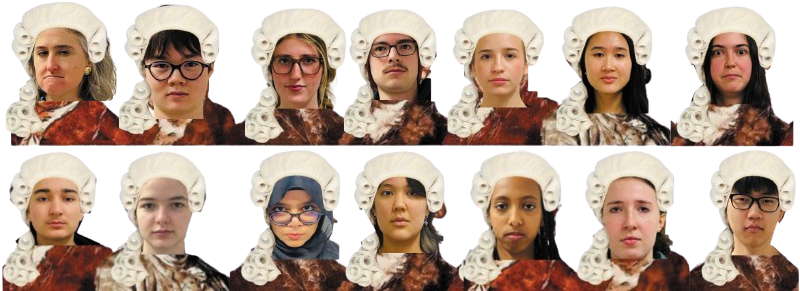


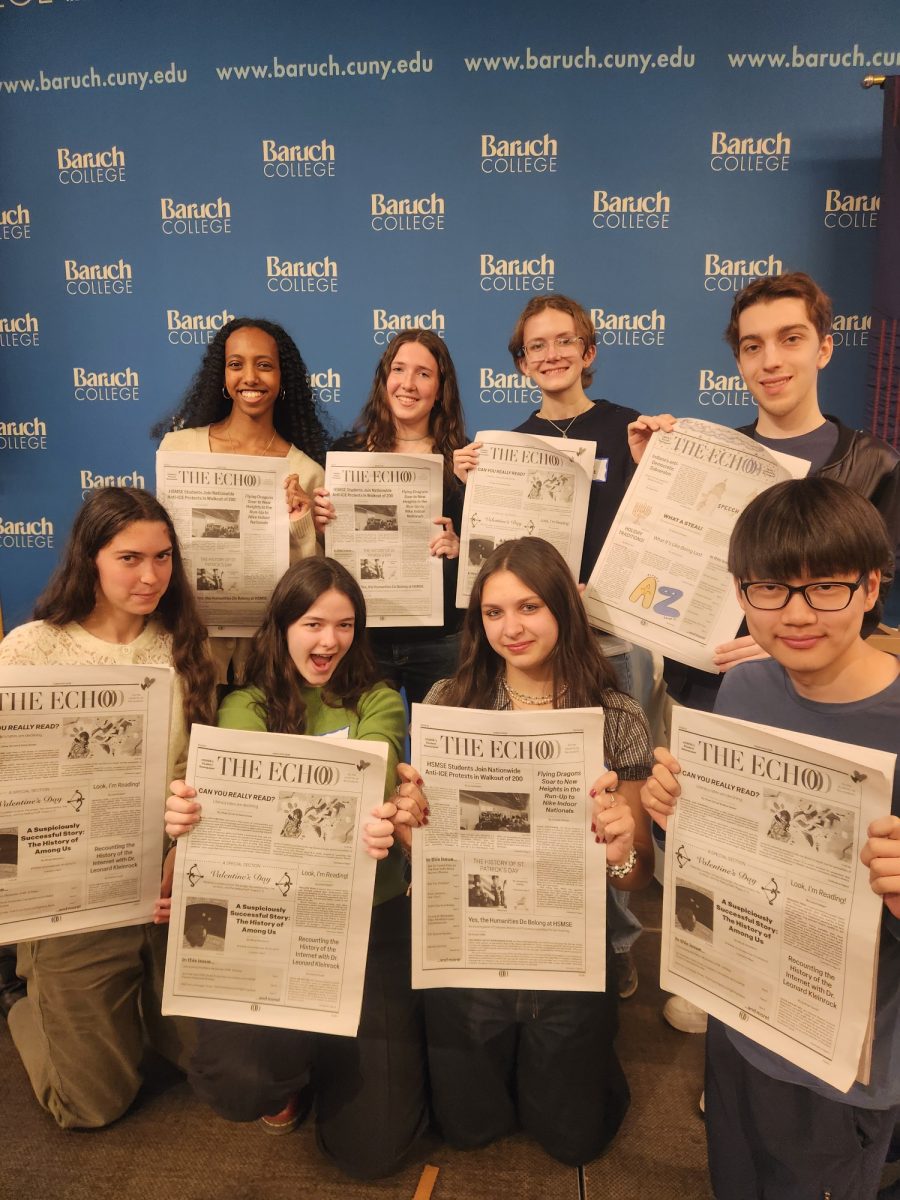
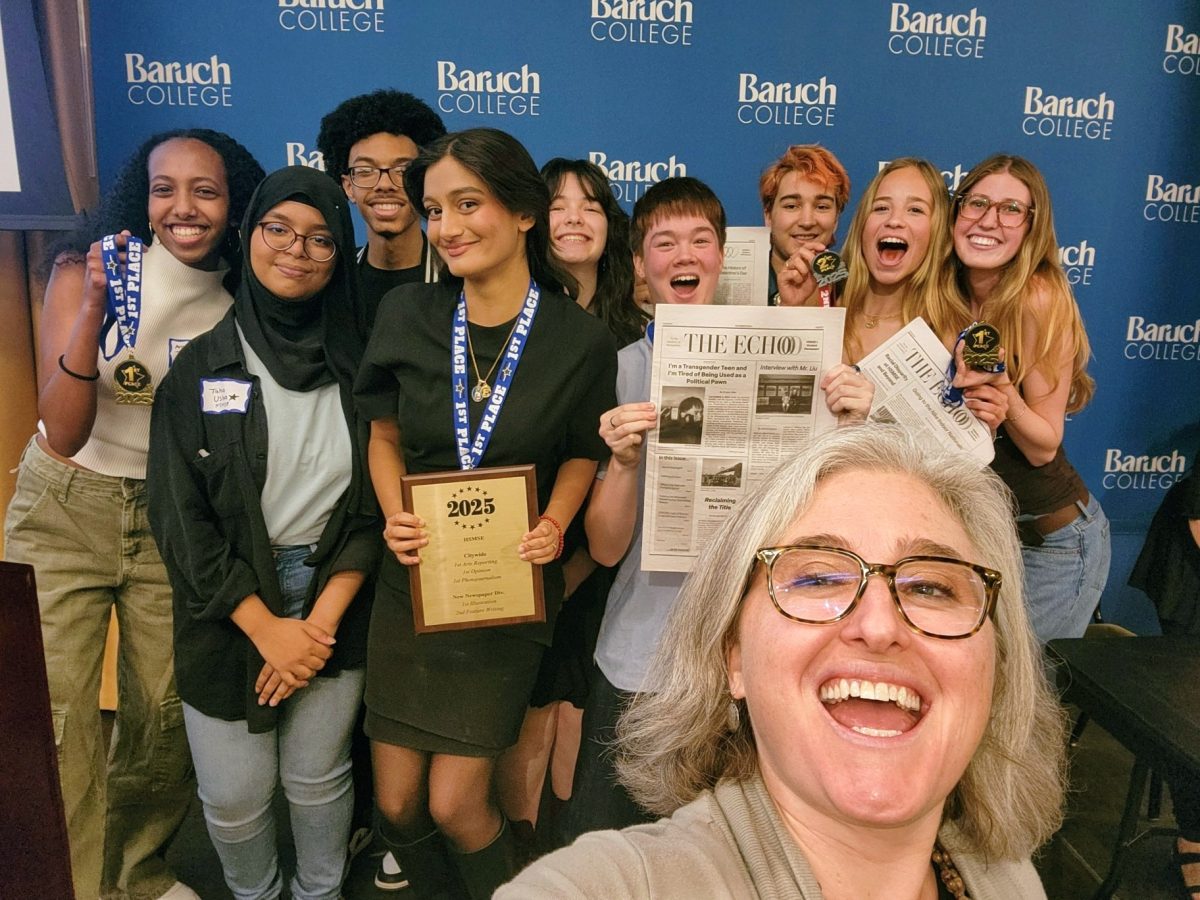
On April 24, 2026, members of The Echo had the exciting opportunity to attend Baruch College’s annual high school journalism conference and the subsequent “Newsies!” awards. At the ceremony, the Newsies! recognized two of our submissions of student journalism.
Esther Gould (’27) and Eli Gologanova (’25) won second place for feature writing in the new newspaper division for their article “The Eternal Life of Jeff Buckley.” They expertly examine the life and significance of the musician Jeff Buckley, including by interviewing his friend Jessica Liebman. This article also won the George Polk Award for feature writing.
Ella Devi (’25) won second place for photojournalism in the new newspaper division for one of the photos in “‘Power to the People, No One is Illegal’: New York City Reacts to Trump’s Inauguration.” This article covered a protest against President Trump on his inauguration day in 2025; the award-winning photo spotlit a person in a pickle costume holding a sign stating “America is in a pickle; let’s dill with it.”
The day kicked off with a plenary session on journalism and AI with Jeremy Caplan, the Director of Teaching and Learning at CUNY’s Newmark Graduate School of Journalism. Caplan discussed the different ways that AI is changing and affecting journalism in terms of the technology’s potential expansion of journalistic capability. He supported using it for analysis of documents and data collection that would be impractical for humans. “I was interested in some of the examples he gave for how journalists did use AI,” Ms. Hesseltine said. “But then, later, some of the things he said, like, ‘human first, AI in the middle, and then human last,’ I’m just skeptical of … We’re not just overseers who come up with the general idea and then sign off on the final product.”
In the conference “Event Coverage that Pops!” the presenter, Katina Paron—the training and curriculum leader of Journalism for All for Newmark Graduate School of Journalism (CUNY), talked about covering school and community events, which included council and club events, protests, and sports games. School newspapers represent their communities and should try to unite their student bodies through shared experiences, Paron said. She explained the importance of an article’s lede: the first few words and sentences of the article. This is the part that either hooks or sinks the reader, so it’s important to keep the reader engaged—through humor, rich details, and of course, something surprising! The lede should be interesting while telling the reader what is interesting about the article, Paron said. Lede’s were also discussed In the conference “Lightning Ledes,” where the presenter, Jere Hester, went over the six main elements of lede writing: the who, what, when, where, why, and how. The goal is to write all of those out in the first sentence or two of the article—all in 25 words or less. This way, the reader knows the content of the article, but is still left wanting more. Some other tips Paron shared were to make the article rich in details, look out for events through social media and school calendars and, if the notable part of an event is only that it occurred, then simply take a photo and attach a caption rather than a full length article.
In the conference “Scripting Your Podcast,” the presenter, Lindsay Armstrong, a teacher in the journalism program at Baruch College, talked about the differences between a topic discussed in print and in audio format. One advantage of having an audio format is the low barrier to entry, as a cheap microphone and a cheap audio program such as Audacity is all it takes to start an audio news program. Another advantage of a podcast is immersion: Journalists can use background sounds based on the location where something happened. For example, if you want to talk about a road being fixed, you can start off with light car sounds to set the scene. You can also use a podcast to do quick audio vox pops (street interviews). This allows for even further immersion into the topic.
In the conference about photojournalism, Adi Talwar discussed how to take the pictures themselves—including specific techniques—but also focused on ensuring that journalists are being respectful. He emphasized the importance of not making people uncomfortable while still getting the shot. A photojournalist must plan ahead and be prepared so that they can shoot the best possible photos, and they must ensure that while taking photos, they are visually reporting and not creating a moment. For instance, one should not have people re-enact a scene, but instead capture candid shots. He advised capturing action shots in order to capture the viewer’s attention and to fill the frame to make someone stop and pause to look at your photo.
In the conference “From Story Idea to Publication,” Echo Wang taught aspiring journalists about the mechanisms of journalism. She explained that cold calling and cold emailing are helpful techniques to support your article, even if they may seem daunting at first. People are usually very open to talking to and helping student journalists, which can often lead to very interesting interviews, Wang said. She also discussed the different timelines of newspaper publications; some breaking news stories have a very fast turnaround time but still must have very accurate information.
In the conference “Story Ideas,” Amy Zimmer and Alex Zimmerman of Chalkbeat taught attendees about how to effectively brainstorm and write about article ideas. They discussed the differences between a topic and a story: A topic is an overall issue that exists, while a story has to be timely and relevant, whether it’s focusing on a statistic, a new development, or a call for action. The speakers taught about how to narrow down article ideas and to really find the substance of what a journalist is trying to convey. In addition, they gave helpful advice for how to find and advance news stories, including through public data, School Leadership Team meetings, and building relationships with sources.
Finally, the conference “Using Data for Journalism” discussed how to effectively enhance an article through the usage of data, including by surveying students or finding publicly available data that is relevant to the story. The speaker, Beth Fertig, a former WNYC journalist and the executive of Press Pass NYC, gave useful advice for how to find good sources for data, including at the Census Bureau, city agencies, and the resources at Press Pass NYC. She also described the importance and efficacy of visualizing data to make it more digestible and understandable for readers so that they can gain a more accurate view of what you’re attempting to convey.
The Echo is grateful to Baruch College for inviting us to participate in this conference and improve our skills and knowledge as journalists. Congratulations to our winners this year for their incredible achievements and hard work. You can find all their articles and more on our website. Thank you to Ms. Hesseltine for making trips like these possible, as well as to Geanne Belton of Baruch College for organizing this event. The Echo is excited to incorporate what we have learned from this conference, both from speakers and other schools, into growing and evolving as HSMSE’s school newspaper.