





















![[ERROR]: Lack of Women in the Software Industry](https://theechohsmse.com/wp-content/uploads/2024/12/APC_0280-984x1200.jpeg)




What is the news? To some people, it’s something very mundane, something that they’re only aware enough of to hold small talk with a stranger when necessary. But the news is a necessary part of everyone’s life. At its best, the news is the truth, and it’s a way for someone to gain insight into their surroundings. Whether or not everyone has access to the same truths is a different question entirely, but in its simplest form, the news is information about the world.
The first commercial radio station began broadcasting in the 1920s and grew incredibly popular throughout the ’20s and beyond. This was the first time the United States was connected by a national communication network. The news became accessible in a whole new form. Instead of news being a privilege to those in power, the average American had access to networks that were sharing current events, the hottest new trends, and the latest music. This increased national awareness of events outside of one’s local region. The evolution of news continued with the television and news stations, and later the internet and websites.
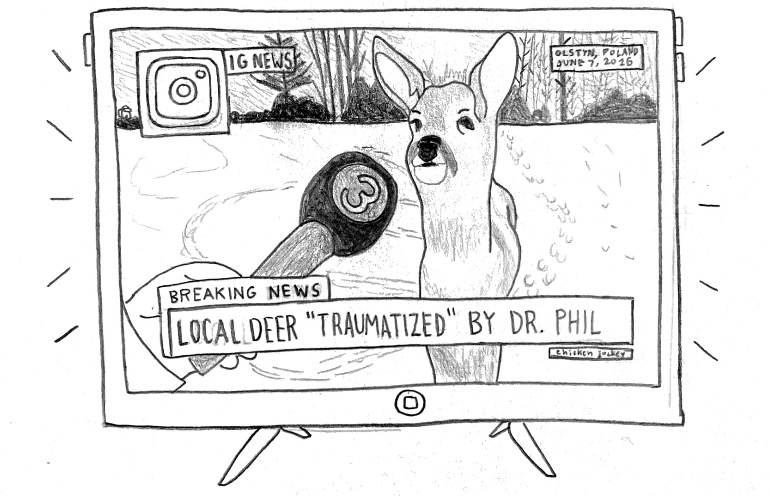
Finally, the newest form of the news: social media. Social media was originally invented to foster communication between friends through photo-sharing and messaging. As time progressed, the introduction of large corporations made social media more commercialized, allowing users to follow their favorite brands. Since the pandemic, a whole new type of job gained popularity, centered on the idea that people rely on content creation for all of their information. Content creators and influencers continuously post about anything and everything on social media platforms to engage followers and continue profiting and producing. Now, many creators are news sources as well. Because of this, the news has to compete with so much other content and force users to pay attention. TikTok is the fastest growing network and is used for news by 17% of people globally as of June 2025, and according to the Pew Research Center, 41% of Instagram users reported regularly receiving news on the platform in 2025. The news has become similar to a game of telephone where it now passes through so many people before it gets to the reader that we can’t know how much information has changed along the way.
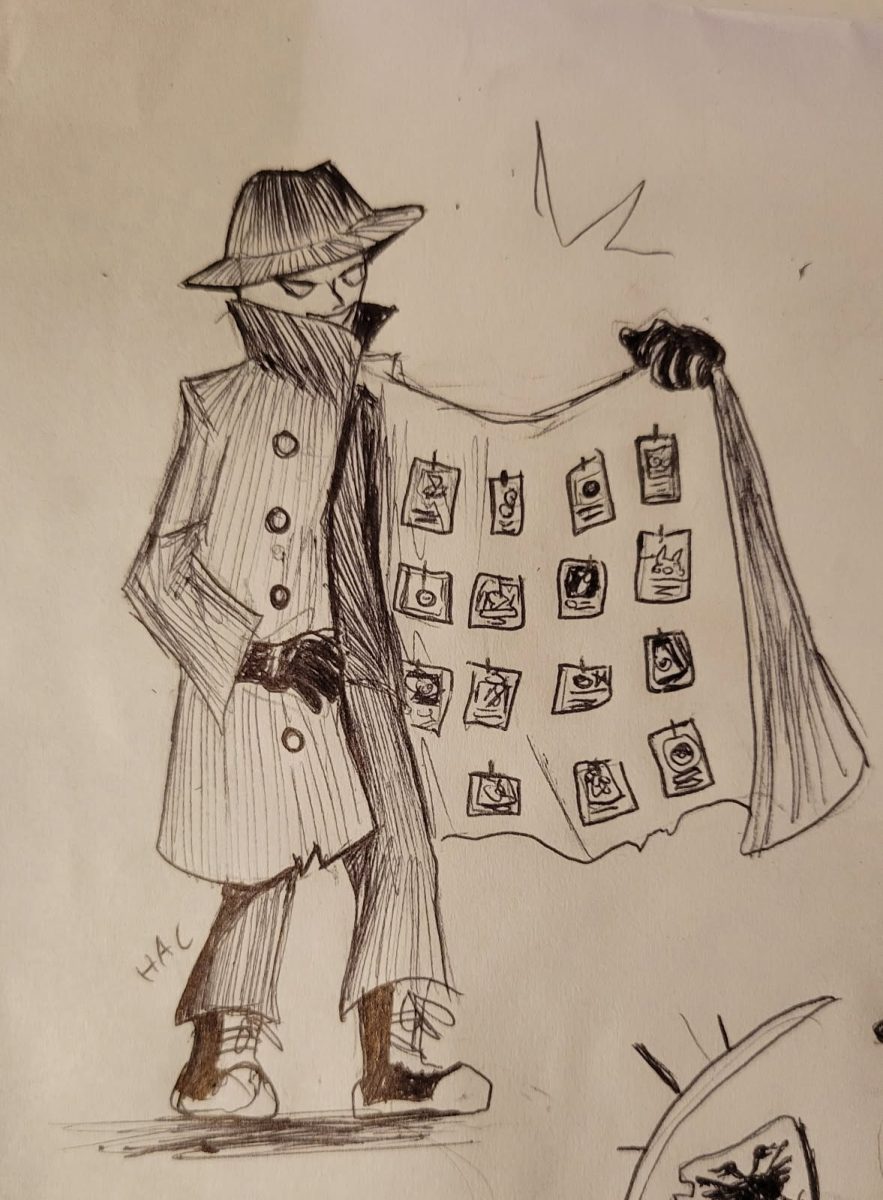
So today, “the news” can mean so many things. We have late-night news shows that blend humor and news to captivate an audience. There are even new-age late-night hosts who use similar humor to create interview-based, one-on-one videos about celebrities’ lives and personalities. Even bloggers and Instagram pages dedicated to spreading the news have bigger followings from the younger generation than established news sources do. One example of this is Shit You Should Care About, a blog-style media company that shares information via TikTok, Instagram, podcasts, and newsletters. With millions of followers on each account, CEO Lucy Blakiston reaches a large portion of the younger generation and shares news about current events and pop culture. She uses funky, stylistic graphics, but still shares valuable information with eager followers who might not have learned it elsewhere. On one hand, social media has normalized downplaying the news while profiting at the same time. On the other hand, more people have access to important information about current events.
Either way, “I read that in the news this week” has become “I saw that in a TikTok this week.” After the pandemic, we trained ourselves to have a natural reliance on a device that provided a more remote and transportable way to receive any and all necessary information. But has it allowed a larger group of people to stay informed, or stopped an entire generation from receiving real reliable news?
Social media as a concept doesn’t actually stop anyone from receiving real news, it just redirects a viewer’s attention, often leading to less time spent on reliable news coverage. But many credible news sources actually have accounts on these platforms in addition to blogger accounts, which may be a key factor in keeping the younger generation updated. “I get everything from The New York Times’ Instagram,” mentioned Anna Keh (’27), an HSMSE student, in conversation about where she receives her news. When news sources post on social media, it allows people who would not otherwise seek out news to view the information on a platform they do actually spend time checking, so in this way social media could arguably be the best way to spread news, especially to reluctant viewers.
This short-form content has made news more accessible to a wider audience, and allowed new companies to flourish too. One example is Vox, a well-respected media company that takes full advantage of social media, as well as other forms of media such as podcasts and videos, to share news more often than in written form. However, an account such as The New York Times is very different from a blogger source in terms of viewer perception. Large-scale news sources write for a general audience with a main goal of sharing current events in the most neutral way possible. Furthermore, large organizations that already have credibility from their papers or television networks can maintain the credibility even if they move to social media. “If The New York Times posted something in my Instagram feed I would be inclined to believe it,” said Ms. Hesseltine in an interview about her relationship to news and social media, even though she says she often would not trust other social media news. On the other hand, many news-sharing accounts have lots of bias and cater to a very particular audience who have the same values they do. “It feels almost like you’ve got a friend in your feed,” describes Ms. Hesseltine. Posts often feature fun graphics and these creators have mastered the art of an eye-catching and appealing layout as a way to draw in more followers. Though many of these accounts are not factually accurate, the existence of this type of media and its potential to spread information to mass amounts of people in a short period of time still allows teenagers and others who don’t actively seek out news to gain an understanding of the world around them and hopefully interest them enough to prompt their own research to further what they learned from the post.
In Ms. Hesseltine’s tenth grade literature class, she teaches about lateral reading, a form of analysis that forces the reader to consider multiple sources on the same topic and read “horizontally,” as in between tabs in a computer window. Comparing sources is an important skill that has also been lost to social media’s popularity, but even more necessary with the greater amounts of false information.
According to a BBC article written in June of last year, social media news is also preferred by politicians and those who would have traditionally been interviewed by television networks. Citing a report by Nic Newman, the article says “politicians around the world are ‘increasingly able to bypass traditional journalism in favour of friendly partisan media, ‘personalities,’ and ‘influencers’ who often get special access but rarely ask difficult questions, with many implicated in spreading false narratives or worse.’” This ideology is what creates false narratives and encourages fast, inaccurate content that only exists to benefit the creator. “All of us have to push ourselves more to be uncomfortable and sit with information that doesn’t immediately confirm our world view,” advises Ms. Hesseltine.
Though modern values and advancements in technology have forever changed how society receives its news, traditional trusted news sources are far from gone. Most news bloggers or social media influencers rely on these organizations for their own information and would not be able to function without their content. Younger generations may treat news differently, but even with their attention directed towards different forms of media, they can still trust traditionally credible news sources, even if they are used less often. Though we must be mindful of our media consumption, especially when it’s our source of news, we must continue to encourage news coverage and engage in media that supports the news.