














![[ERROR]: Lack of Women in the Software Industry](https://theechohsmse.com/wp-content/uploads/2024/12/APC_0280-984x1200.jpeg)


Stop anyone on the street—old or young, male, female, or non-binary—and ask them what shape DNA is. Chances are, they will say it’s a double helix; while this is true, if you ask them to explain how this crucial discovery was unveiled, they probably wouldn’t be able to tell you the answer. If you stop someone who knows more about biology, they might tell you about Watson and Crick, but even this explanation falls short of the true story of the double helix.
The structure of DNA was officially discovered in 1953, when James Watson and Francis Crick published their discovery in the scientific journal Nature. They worked fervently for approximately two years, used cardboard models to look at all different possibilities of the shape, and took advice from fellow professionals in their field until they finally reached their conclusion. Today, the shape of DNA may not seem to be important, but during the mid-to-late 1900s, it was one of the most debated mysteries; if scientists were able to uncover its shape, then they would be able to decipher how genetic information is stored and passed down from parents to offspring.
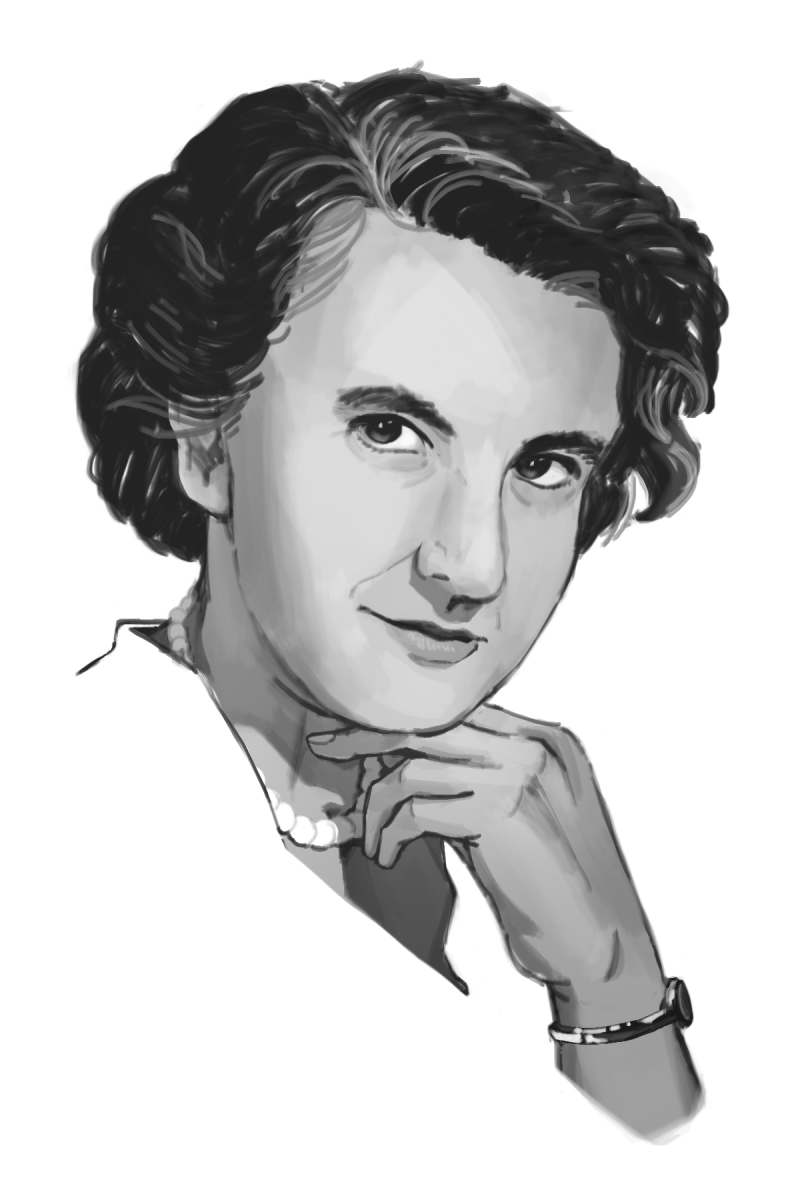
But what most people don’t know is that an important piece of information that Watson and Crick needed for their discovery was taken without consent from a female scientist named Rosalind Franklin.
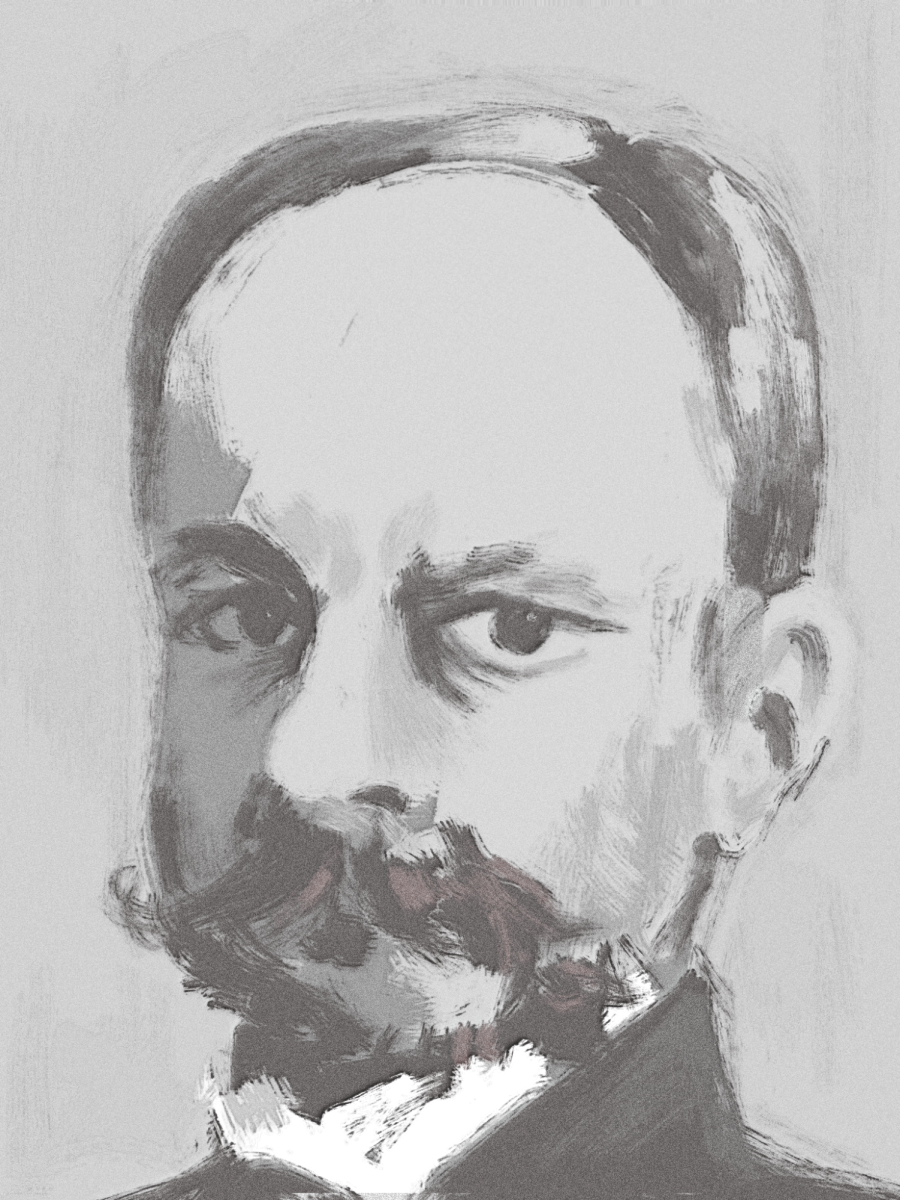
Rosalind Franklin was born on July 25, 1920 into an educated Jewish family. However, her father often discouraged her from pursuing science because he believed it was not a proper career for a woman. Regardless, from a young age, she was described as exceptionally clever and someone who enjoyed fierce intellectual debates—this trait often caused her to be described as standoffish and difficult to work with. Franklin attended Newnham College at Cambridge University.
After receiving a bachelor’s degree in physical chemistry, Franklin’s excellent exam scores gave her a scholarship for further research. However, she faced prejudice from her supervisor, Ronald G.W. Norrish. He often gave her work below her abilities, most likely due to her gender, and he “became most offensive” once she had confronted him about the nature of the research. Eventually, this caused Franklin to completely leave the laboratory and start working for the British Coal Utilization Research Association (BCURA) in 1942. Her research was ultimately recognized by Cambridge, which awarded Franklin her doctorate in 1945.
After receiving her doctorate, Franklin began a research position in Paris, where she would learn the essential skill of X-ray crystallography. This technique involves shooting X-rays at crystalline samples and noting the shapes that emerge as a result of the beams’ diffraction around the object. The marks that diffraction leaves behind reveal key points about the atomic structure of various proteins, and if combined with mathematical calculations, they can be used to discover the structure itself. Franklin learned how to apply these techniques to amorphous substances—materials that do not have a crystalline structure like salt or diamonds—and to her previous work with carbons. She made several discoveries in this field that later led to the discovery of carbon fibers, but more importantly, they established her reputation internationally as a dedicated and capable scientist. In 1951, following her success in Paris, Franklin was accepted to a fellowship at King’s College in London—where she would eventually make her most significant contribution to science: Photo 51.
One of the first major problems Franklin faced in her research on DNA was her relationship with her peer Maurice Wilkins. When Franklin first arrived at the lab, Wilkins assumed that she was an assistant who was hired to help him with his research—most likely because of Franklin’s gender. Additionally, Wilkins and Franklin had very differing personalities: Franklin was more assertive and preferred discussions to sort out issues; on the other hand, Wilkins was shy and reserved. As a result, Franklin often worked alone in the lab, her only companion being a PhD student named Raymond Gosling.
In 1952, Watson and Crick proposed their first model of DNA: a three-strand structure with the nucleotides facing outwards. This model was based on data that Franklin had asserted during a talk in London that Watson listened to. However, Watson misremembered important measurements, which Franklin noticed immediately. Franklin then wrote a notice about the disaster, which humiliated Watson, Crick, and the institution they were working at—Cambridge University. Ultimately, Watson and Crick were banned from working on DNA, and they were forced to work on their research in secret.
During the same year, Franklin was able to make her breakthrough in X-ray crystallography. She worked with Gosling for 62 hours to develop a single photo of DNA. This photo was named Photo 51 because it was the 51st photo Franklin had developed. To the untrained eye, it just looked like a dark and blurry X-shaped figure. However, in January of 1953, Wilkins took Photo 51 without Franklin’s permission and showed it to James Watson. This photo contained the physical evidence he needed to prove DNA was a double helix, instead of a triple helix, as he theorized earlier. Franklin was also able to deduce the structure, although not the finer details. Regardless, the main factor that differentiated the two discoveries was the order they were published in.
In the same issue of Nature in 1953, three different articles were published about DNA in this order: The first was by Watson and Crick, which mainly consisted of more theoretical work; the second was by Wilkins and various other scientists; and the last was by Rosalind Franklin—the originator of the data. This organization led many people to believe that Watson and Crick had come up with the idea on their own, and the two other articles only showed scientific support. Additionally, Watson and Crick did not give Franklin her proper credit before she passed. At the end of their article, they mention that they were “stimulated” by Wilkin and Franklin’s unpublished experimental data, but there was no explicit mention of Photo 51. In fact, the initial image Watson painted of Franklin was in his memoir, The Double Helix, where he refers to Franklin as “Rosy” and portrays her as an antagonistic lab assistant who was argumentative and difficult to work with—a description that does not match up with other scientists’ accounts. However, it should also be acknowledged that in the epilogue Watson gives a more fair and accurate account of Franklin. Regardless, many readers and critics have noted that Watson’s memoir is filled with historical inaccuracies.
Ultimately, Franklin never received any acknowledgement about her contribution to the structure of DNA. In 1953, she moved her lab work to Birkbeck College, where she researched the structure of plant viruses. After she stopped working on DNA, Franklin was highly respected in her field, but she still did not have proper job security, pay, or recognition. Franklin often struggled to receive funding or equipment for her work, and was rarely given the salary or the title she deserved. However, she remained determined and was able to collaborate with other scientists at Birkbeck and secure funding from the United States’ National Institutes of Health.
In 1956, Franklin was sadly diagnosed with ovarian cancer, which led to her death in 1958—the day before she was meant to present her models on the structure of viruses at the Brussels World’s Fair. Four years after her death, Watson, Crick, and Wilkins were all awarded a Nobel Prize for their discovery of the structure of DNA. Unfortunately, Nobel Prizes are not awarded posthumously, meaning that Franklin was not eligible to receive it.
Although she may not have been given the respect or honor she deserved while alive, her contributions to science have not been forgotten—both as an exceptional scientist who demanded the most out of herself and everyone around her, and as a woman who carved the path for those today who follow in her footsteps of scientific discovery. One thing is certain: Female HSMSE students, or anyone who feels that they don’t belong in science, can look up to Rosalind Franklin as a person who never let her gender stop her from making her mark on history.