










![[ERROR]: Lack of Women in the Software Industry](https://theechohsmse.com/wp-content/uploads/2024/12/APC_0280-984x1200.jpeg)


You’ve likely heard an impression of Dustin Hoffman’s famous line from Midnight Cowboy: “I’m walkin’ ’ere!” You probably thought, “New Yorkers don’t actually talk like that,” right? Well, once upon a time, they did. New York City has an incredibly rich history of accents, largely shaped by its immigrant communities, but the iconic “New York accent” is rapidly changing—something you’ve probably witnessed. Yet, New York only ranks 12th in regions losing their distinct regional slang, according to a survey by The Word Finder.
In the age of the internet, everything is interconnected and, for the first time in human history, people can interact with one another across cultures without long periods of travel. This means that traditions, global news, and information travel quickly. But what does it mean for our accents?
Accents and slang both form primarily due to mimicry; as children, we mimic the tone and inflection of our caretakers, and, as we get older, we begin to do the same with our peers. The use of accents and slang can help distinguish between social “in-groups” and social “out-groups” because people feel more comfortable around those who sound familiar. A study on regional accents in Germany determined that having an out-group accent led to increased discrimination and even influenced the economic behavior of the other party. “Accents are one of the last truly local things we carry with us, but they are also the first to be trimmed when people want to blend in,” says linguist Praveen Latchamsetty. These in- and out-groups are formed to fit in and shape a shared identity, which is why you likely find yourself picking up words your friends use a lot—or words you see online. The interconnectedness of the internet, combined with the human tendency to mimic, has led to debate over whether regional dialects are fading out. Some linguists theorize that dialect leveling (the merging of dialects into a common, standardized form) is rapidly occurring on a global scale, while others claim that regional accents are simply shifting, not merging but rather strengthening.
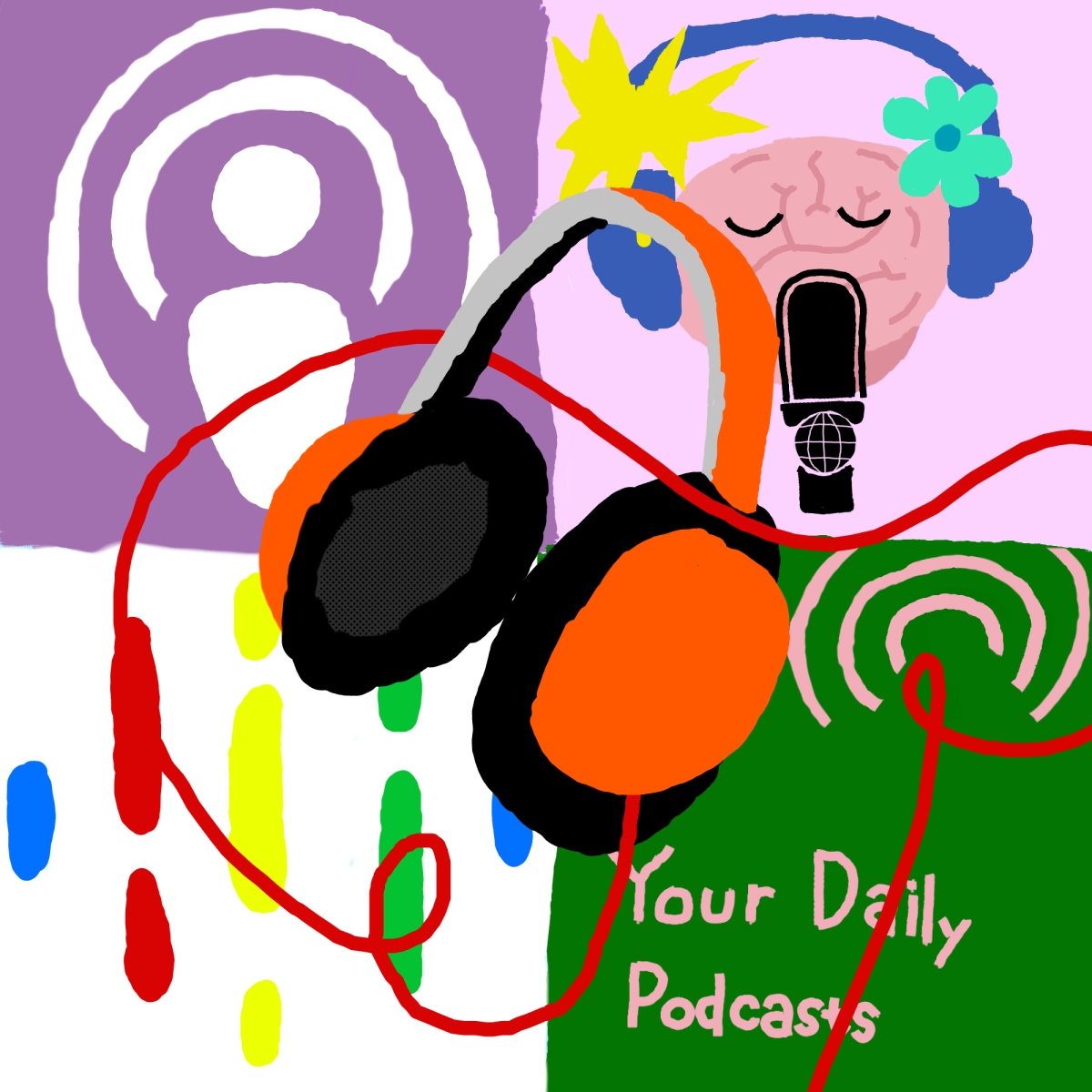
In fact, some linguists argue that the internet is even creating new accents. You may have noticed many influencers all using similar speech patterns. Online creators have begun using frequent uptones, vocal fry, increased tone modulation, and exaggerated emphasis in their speaking, in what is colloquially known as the “influencer accent.” For many creators, this was a strategy to increase viewer retention—uptalk, in particular, increases watch time as it makes the viewer feel as though something important is about to be said, so they wait to see what it is. For others, this influencer accent is a way of building community and connection with their audience, who are already very familiar and comfortable with the style of delivery. For others still, the accent is an unconscious expression of mimicry. There are even instances where the influencer accent shifts across different niches: A true crime YouTuber, for example, will speak at a softer volume than a makeup YouTuber, who would typically have the more common, bubbly influencer accent.
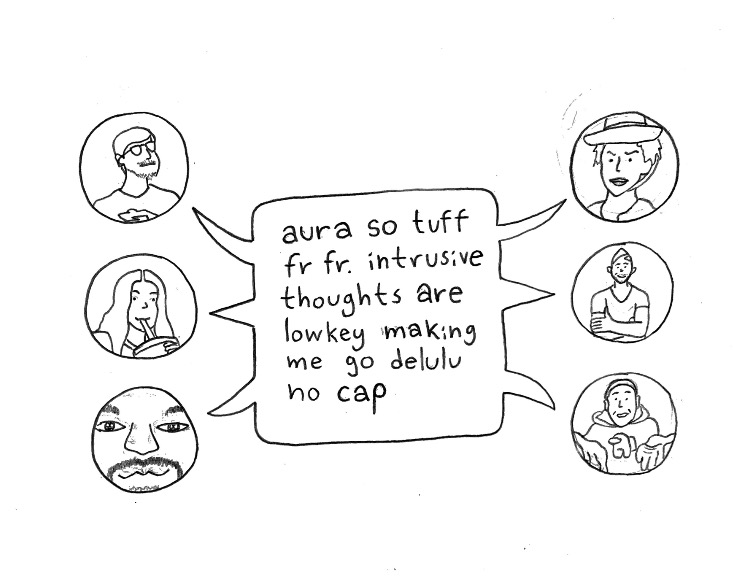
Of course, there’s more to how we speak than pronunciation. One of the most notable ways that social media affects speech is through internet-specific slang. Terms like “67,” “rizz,” and “demure” rapidly rise and fall in popularity. Of course, slang has always shifted with generations, but in the era of online micro-trends and niches, it’s changing faster than ever.
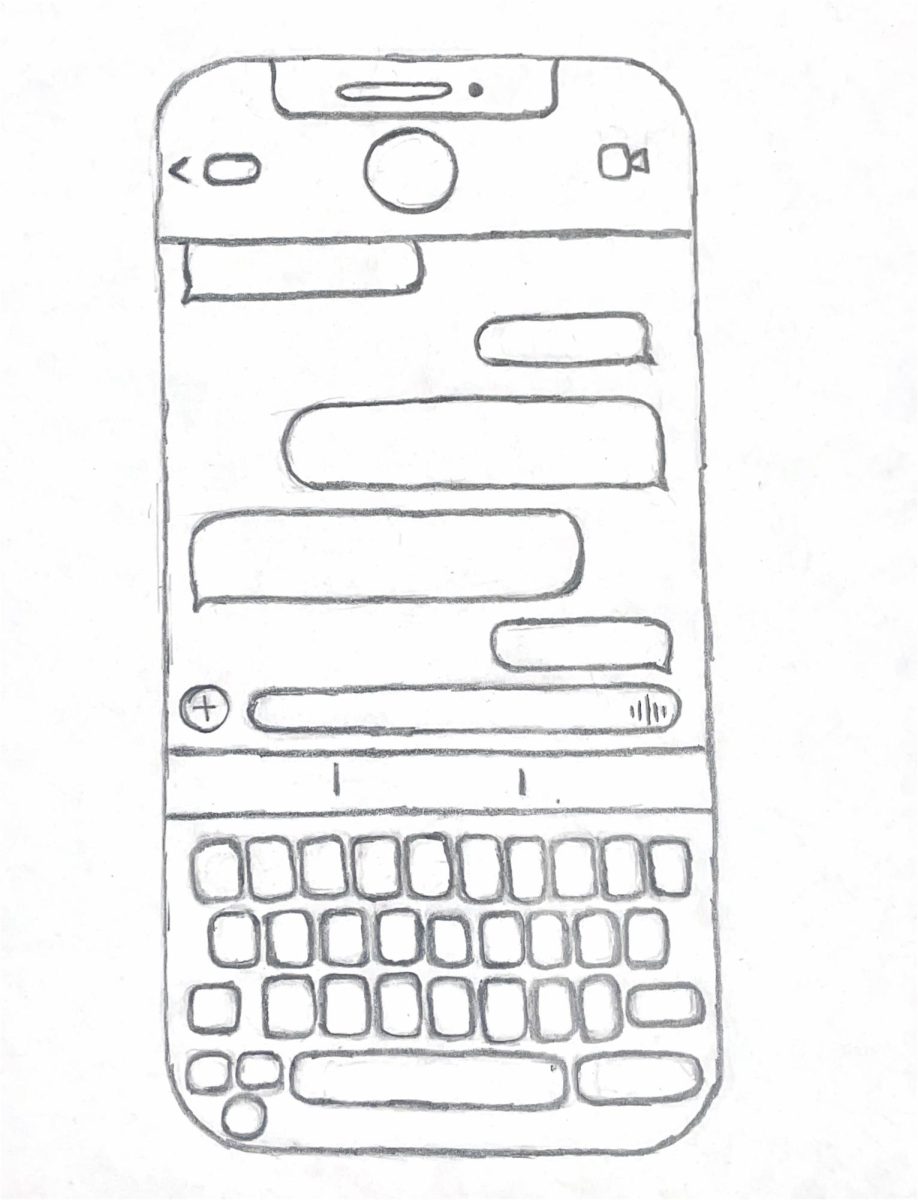
This rapid shifting of language does not come without issue. People often encounter these slang terms through short-form content, with a lack of understanding of their history and nuance. This can lead to semantic bleaching—when a word or phrase loses its initial meaning or intensity. Terms like “gaslighting” and “intrusive thoughts” are perpetuated online with memes like “I let the intrusive thoughts win,” yet, as a consequence, the word’s severity is lost when referencing legitimate abuse or mental illness. “The [intrusive] thoughts have the possibility of being some of the most vile and disgusting acts and descriptions,” says journalist Ashika George, explaining the difference between silly impulses and the debilitating nature of intrusive thoughts she experiences as a result of OCD. “My OCD brain may tell me to take a kitchen knife to stab a family member. But I do not want to hurt a loved one … None of this aligns with the amusement and quirkiness [depicted online].”
The lack of understanding can also lead people to co-opt, and often misinterpret, slang with cultural significance to groups they are not a part of. Recently, the word “twink” (used to describe a queer man who is skinny, young, and effeminate) has been the subject of much controversy for that very reason, with some arguing that it has been co-opted by non-queer people online to describe people who do not fit the mold, which is ignorant to the word’s history and disrespectful to the queer community. AAVE (African American Vernacular English) has been similarly misused and adopted by non-black individuals. One SNL skit titled “Gen-Z Slang” from May 2021 became widely mocked online for its consisting almost entirely of AAVE terms and deeming it trendy TikTok slang. This is, however, something that does occur regularly on social media. It seems every month or so, a new AAVE term is “discovered” and co-opted by non-black internet users, most recently with terms like “unc” and “tuff.” This misinterpretation of the dialect as “silly TikTok terms” exacerbates its tendency to not be taken seriously. Tasha Wilson, a computer engineer who graduated with a 3.9 GPA, says that “her resume practically becomes nonexistent the moment she begins to speak.” She laments that Black American culture is often simultaneously sensationalized online while being shamed in other spaces. Journalist Adia Ayanna writes, “The more AAVE is reduced to ad slogans, the more respect for Black culture is kept in the box of fads instead of a functioning culture.”
Accents and slang both shift with time; no one in the 2000s spoke with an old-timey transatlantic accent. Understanding why we speak the way we do is vital to communicating our ideas, backgrounds, and interests—whether in person or online. Perhaps the internet isn’t killing language, maybe language is just changing. The value of speaking with care and nuance, though, never will.