










![[ERROR]: Lack of Women in the Software Industry](https://theechohsmse.com/wp-content/uploads/2024/12/APC_0280-984x1200.jpeg)
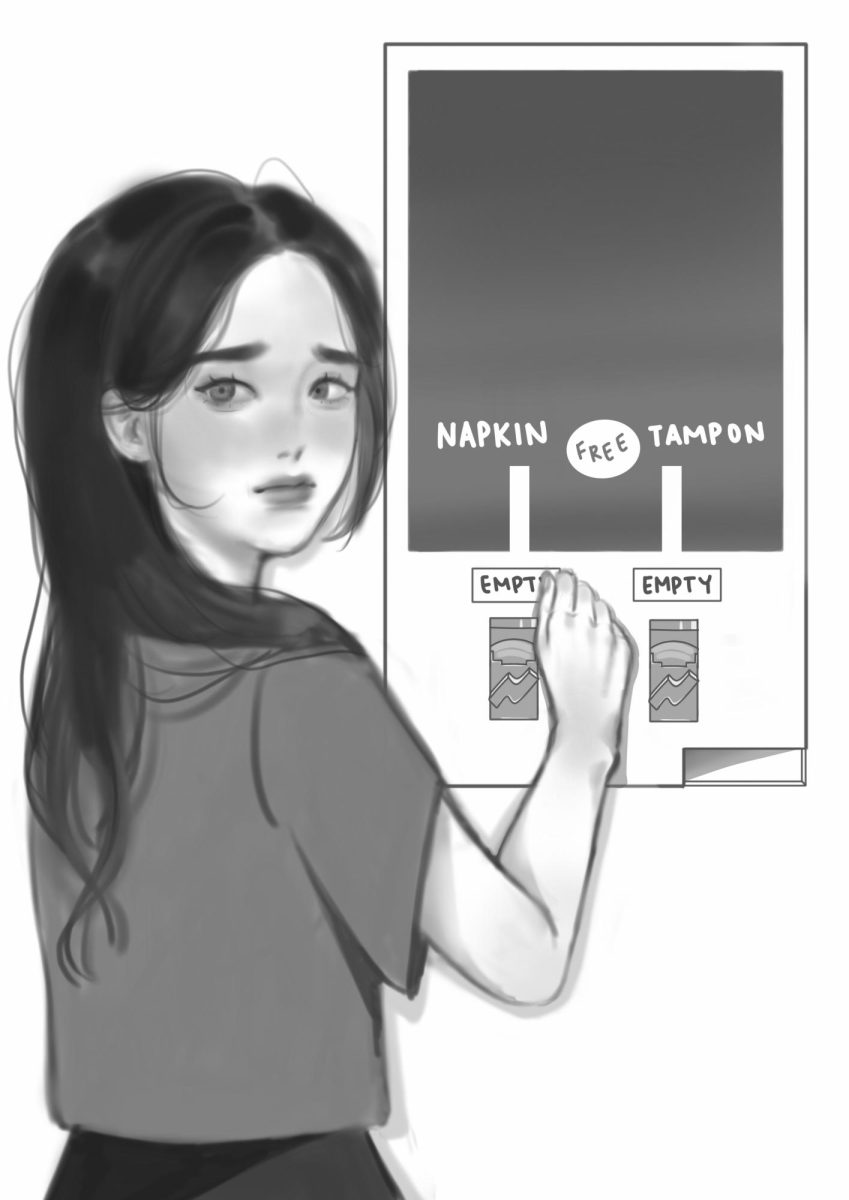



Dr. Dragon is HSMSE’s first—and only—school magazine targeted towards STEM! They’ve covered a variety of topics, stemming from neuroscience to engineering. Today, we will be talking to the President of Dr. Dragon, Amatoullahi Diallo (’26), and asking her some questions about the magazine.
The following interview has been edited for length and clarity.
Fiona Louie: Tell us more about Dr. Dragon [and] the history of the magazine.
Amatoullahi Diallo: The first issue of Dr. Dragon was released in June of 2012. It’s still available for viewing on our website in our issue archive. Dr. Dragon was founded by a student named Hajin Yang, who also acted as editor-in-chief (we didn’t have the head editor role back then). R. Choi, our former drafting teacher who left the school a couple years ago to live in Germany, was the advisor for the club back then. It was started because there was a need for HSMSE students to explore research topics in areas that interested them and discover information beyond their classes at MSE.
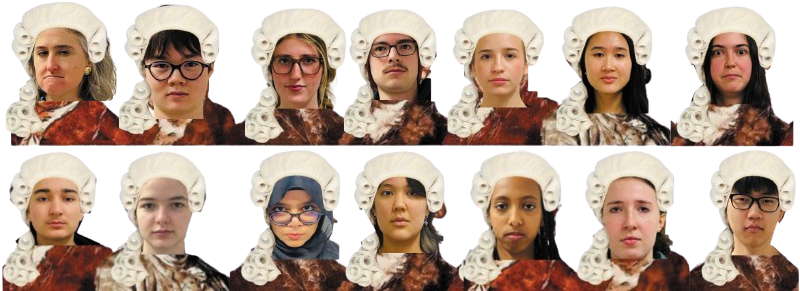
Who is on the old position board: me as president, Winnie [Huang (’26)] as head designer, William [McKernan (’26)] as head editor, Isaac [Kim (’27)] as treasurer, Sawyer [Dufresne (’27)] as secretary, Cessarina [Choo (’26)] as social media/marketing manager. [The] new board (just elected) [will consist of] Isaac [Kim (’27)] as president, me as vice president (Dr. Dragon has a tradition where the former president becomes vice president to help the new president transition into their role), Sawyer [Dufresne (’27)] as head designer, Esther [Gould (’27)] as head editor, Soleil [Francois (’27)] as treasurer, Khadija [Kamara (’27)] as secretary, [and] Esther [Gould (’27)] as social media/marketing manager.
FL: What are your personal favorite articles?
AD: “Gene Circuits” by Alua Zhanuzakova (’24) (Spring 2025 Issue)—I love both the design and the content of the article. It particularly stood out to me because she introduced the topic by talking about electrical circuits that we learn about in physics to help us better understand this foreign concept of a “circuit” in biology.
“Cellular Suicide” by Rhone Galchen (’25) (Winter 2024 Issue)—His article discusses apoptosis and the system that cells have to destroy themselves when something goes wrong. This is a topic that really fascinated me when I was learning about it in junior year through Sinai, so I was excited to see that someone had turned this topic into an article before.
Both of these articles were written by students in the Sinai track. The fact that these students were inspired to write about topics they learned in their molecular biology class is truly a testament to how great Hossein is as a teacher in the way he’s able to make his students passionate and interested about the topics although they may be hard to understand.
Also “Endometriosis” by Orlena Fella (’24). Ever since I started interning at a gynecological cancer lab, I’ve realized how little women’s health issues are actually addressed. I appreciate how she took time to spread awareness about this condition that causes millions of women pain on a daily basis.
FL: What impact does Dr. Dragon have on HSMSE?
AD: I think Dr. Dragon [brings] something unique to the school. Although there is a track system for math, science, and engineering, they don’t really allow people to learn more about other tracks and STEM subjects outside of them. Dr. Dragon provides an opportunity for people to research into other STEM topics like neuroscience or whatever relates most to their personal life. Some articles I wrote for Dr. Dragon were based on topics that I covered in Mt. Sinai.
FL: How does the club work?
AD: We are a virtual club. We meet every Thursday at 6:00 p.m. through Google Meet. Our process with each issue begins with brainstorming topic ideas (each writer brainstorms three), which get reviewed by the president and/or head editor to ensure no ideas overlap, give feedback on how to make the topics more specific and exciting, etc. Writers then create an outline followed by a first draft. At each step, they’re provided with examples of past work to help guide their structure. Drafts undergo three rounds of editing. For the first two rounds, writer’s articles are matched with an editor from our editing team who adds suggestions and comments, which are then addressed by the writer. The final round of review is done by the head editor. Once articles are finalized, the design team finds high resolution images that correspond with the article topics and design the format and look of the article in the actual magazine. This step takes the most time. After a final proofreading of the final PDF, the magazine issue is sent off for printing. Once we receive it, we sell copies at open houses and other school events like C-Days. We also display all past issues on our website.
FL: What are your plans for the future?
AD: Our newly elected president, Isaac [Kim], has expressed that he aims to improve the website as well as our overall club visibility through marketing. Since we’re a virtual club, we have gone through stages where the club has lost interest or some people at HSMSE just don’t know the club exists at all. We want to get more people involved and bring back previous ideas. As a graduating senior, after our elections a couple weeks ago, I know the club is being left in good hands and I can’t wait to see what they’ll bring to Dr. Dragon.