



























![[ERROR]: Lack of Women in the Software Industry](https://theechohsmse.com/wp-content/uploads/2024/12/APC_0280-984x1200.jpeg)




Disclaimer: The content of this article should not be taken as nutritional advice, as neither the writer nor the interviewees are nutritionists. Please consult a medical professional for guidance on healthy eating. Also, eating disorders are mentioned. If you or someone you know is struggling, please reach out for help. HSMSE has a robust support system available to students; if you ever need to utilize it, you can speak to Ms. Dylan, your guidance counselor, or another trusted adult.
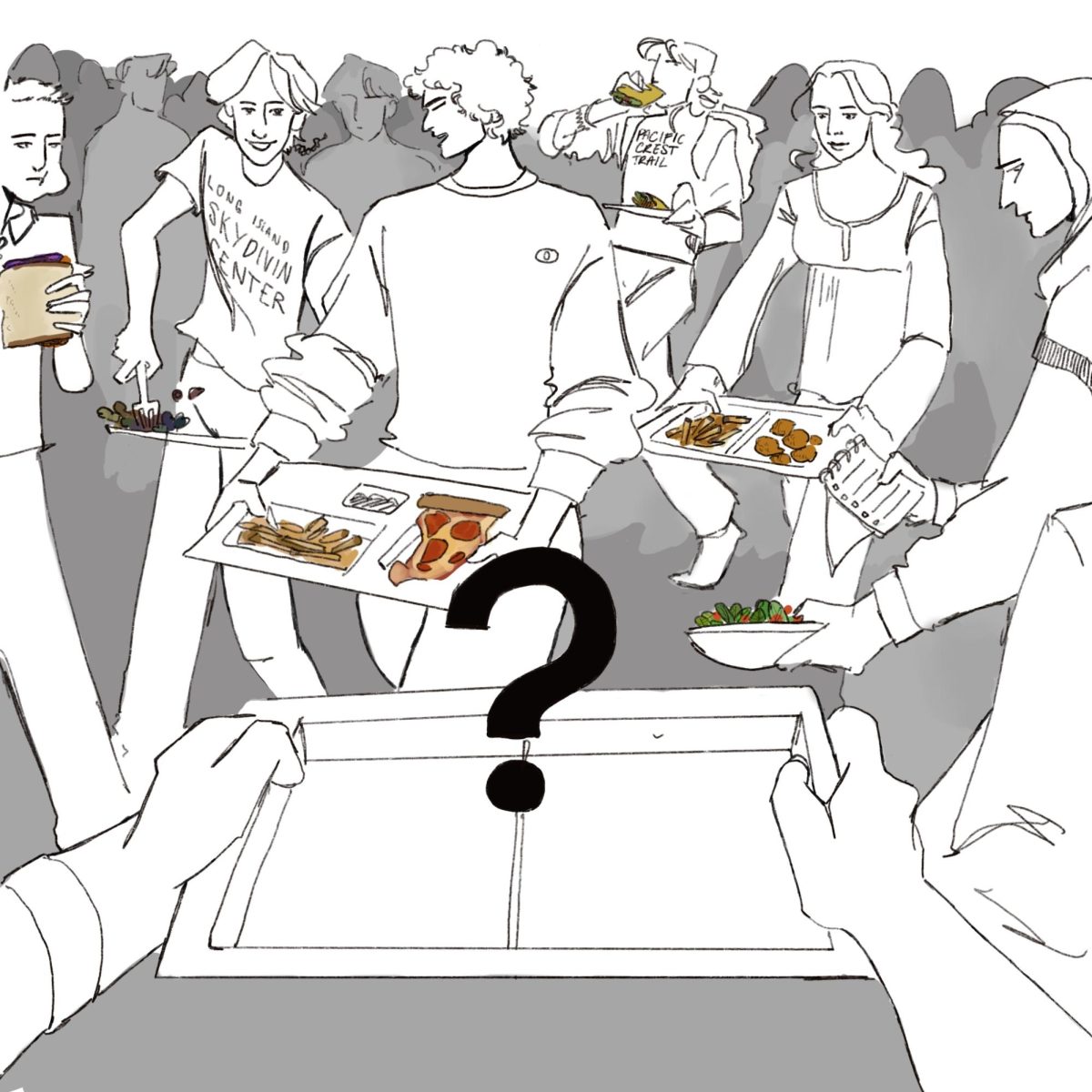
You’ve probably heard this phrase before: “You are what you eat.” Now, with the rise of diet culture, what you eat is becoming your public image. Everyone is judged by their appearance, and people assume that our appearance dictates who we are and what we do. Diet culture praises thinner body types, among others, over others and is often associated with disordered eating. With the rising popularity of social media, our public appearance has become a greater priority. Now, more than ever, people are easily finding outlets for self-comparison. Social media encourages people to change their appearances to gain public appeal, and a quick solution claiming to help your appearance might be appealing. That is the premise of fad diets: short-lasting trends on social media that tend to promote a certain way of eating. But how influential are fad diets? And what effect do they have on the HSMSE community?
For many generations, food culture had been influenced by the communities in which people lived, reflecting the spheres of culture throughout the world. But now, social media is creating a new food culture that is prioritizing what we eat and its effects on appearance, rather than its pleasure. Diet culture aims to target people who are uncertain about their own body, oftentimes seeing themselves as “fat.” HSMSE student Kathryn Lee (’28) describes what she sees in her own feed: “[Yes], there is a lot about weight on [social media], [and] it is definitely contributing to insecurity in the teen population.” Many social media influencers correlate being fat with being unhealthy, unattractive, unfit, or incapable of basic tasks; however, this isn’t always the case. People can be overweight and healthy, and subjecting people to just a number is limiting.
What this does is prevent people from enjoying themselves in basic human pleasures. Self-judgement can take away your ability to enjoy eating or participating in activities such as exercise and eating. Focusing solely on your weight and body shape can lead to the development of eating disorders, serious health conditions that disrupt people’s eating patterns. “A lot of people have eating [disorders] solely because of social media,” Kathryn said.
As with many online fads, not just those related to dieting, the goal is typically to gain views by following major trends. Diet fads are significant because their suggestions claim to improve one’s physical health, while actually damaging one’s physical and mental health. Many diet fads are not factual.
Oftentimes, social media influencers do not have any nutritional background and do not know whether what they are posting is truly healthy. Other times people post about diet on social media in order to gain views. Diet fads are appealing to people because of their quick weight loss claims. However, Jarvis McCarthy (’28) of Brooklyn Latin notes that in his experience, such ads promote “a lot of unrealistic body standards, causing a lot of people to want to diet themselves, expecting super unrealistic results,” People will post about a certain diet as being the only real way to lose weight. But oftentimes they will avoid giving information on the downsides of that diet. Social media influencers don’t always have ill intentions, and sometimes think that they are helping others to also achieve a healthier life. But what might be healthy for one person might not be for another.
Many fads aim to prioritize the intake of a certain nutrient and weed out the rest, such as the carnivore diet, paleo diet, or Atkins diet. These diets help you lose weight quickly by dropping your overall calorie intake; however, over time, your body will become accustomed to your diet shift and lessen the diet’s potency over time. The main issue with these diets is that they prioritize ignoring a certain nutrient, even though all nutrients are important, in moderation. No one food, even a superfood—which has many kinds of nutrients—will give you all the nutrients you need. Finding a balance is important.
Similarly, “cleanses,” also referred to as “detoxes,” are a type of diet aimed to rid the body of any sort of toxins. However, a lot of “toxins” that these treatments seek to remove are necessary for the body. For example, carbohydrates and fats. The issue with cleanses and detoxes is that they are not as sustainable in the long term, your body will suffer from the lack of a certain necessary nutrient. The body already does a good job of ridding itself of any toxins. Cleansing may seem to help you lose weight, but it is actually the loss of water in your skin which makes you feel lighter.
Another kind of fad diet is volume dieting. Have you ever seen a video comparing the amount of calories you can eat in a pack of chips compared to something like strawberries? This is volume dieting, where the amount of calories is compared to the volume of a certain food item. For example, there are 32 calories in 100 grams of strawberries, but there are 532 calories in 100 grams of potato chips. Although this calorie difference seems daunting, eating 100 grams of strawberries would be very hard, and eventually you’ll get tired of only eating that food.
Social media uses dieting in an unhealthy way; most social media posts try to improve one’s body image without thinking about how it will affect their wellness. Influencers are effective at luring people into their trends by being eye catchy—through idealized body images—and providing a simple solution to one’s problems. Diets and fads also have impacts socially. Food is a way to connect with people, but diet food culture removes the pleasure from food, “I go out to eat a lot with my friends, so [food] is decently important socially,” Jarvis said. Food provides an excuse to meet up with people and a source of connection with people who you can relate with.
Diet culture removes the aspect of pleasure from eating; it might cause us to avoid eating the food we like, because it’s deemed unhealthy. Sometimes, allowing yourself to eat what you want when you want can make you feel better about yourself. HSMSE student Abigail Ting (’28) states, “Since I’ve been consuming a lot of anti–diet culture food, it has made me more confident in myself.” This is the definition of intuitive eating, where you rely on your body to tell you what feels good for you, not on social norms.
What we eat is of such importance to our everyday life. After all, we wouldn’t be alive if we didn’t eat. Being able to understand what is healthy for you and what brings you pleasure, without any guilt, will help you stay in tune with your body. Social media influencers don’t know you and therefore don’t know what’s best for you, so you have to rely on yourself, or a trusted adult who knows you, to tell you what is right for your body.