




















![[ERROR]: Lack of Women in the Software Industry](https://theechohsmse.com/wp-content/uploads/2024/12/APC_0280-984x1200.jpeg)




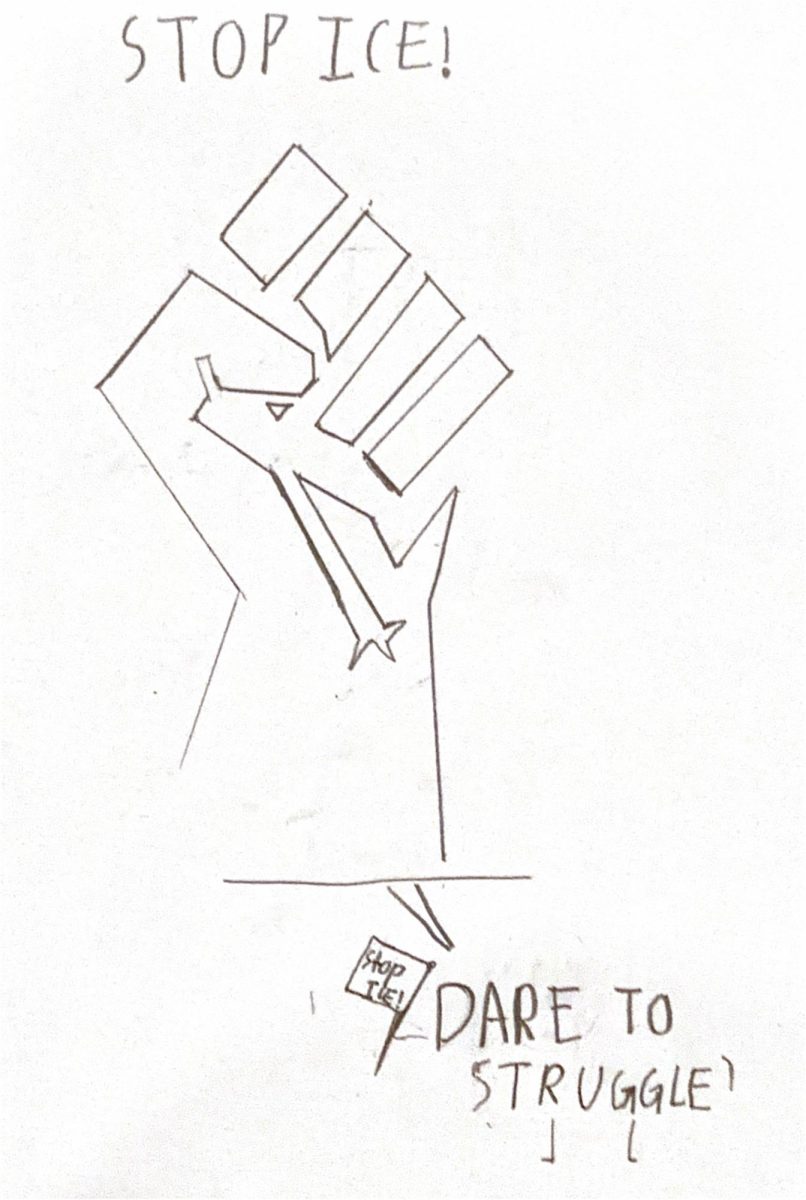
HSMSE students are growing up during a tumultuous time in American politics, with ICE arrests and massive protests all across the nation. On January 30, HSMSE students staged a walkout in protest of ICE to have their voices heard and to challenge federal policy. They are not alone in the fight against ICE. Organizations such as Dare to Struggle (DTS) fight the efforts of the current administration alongside students, advocating for immigrants, people of color, and other oppressed groups intersectionally, according to their website. In this interview, Liam, a member of Dare to Struggle who asked to be identified only by his first name, addresses the organization’s approach to student activism, grassroots organization, and, of course, the challenge against ICE.
This interview has been edited for length and clarity.
IK: How would you define Dare to Struggle? Are you an activist group, community defense group, or something else entirely?
L: Dare to Struggle is … a multinational organization that is open to anyone who wants to resist and stop injustices … We want to open things up to people who are affected by these issues … so that they can struggle with us.
Regarding the Goal of Dare to Struggle
L: Our [goal is] not about representing. Our [goal is] about actually seeking organizational forms of power … We’re coming in and saying, “We want to struggle with you. We want you to lead your struggle and we want to work in the context where you’re at the helm.”
IK: Lobbying politicians, unfortunately, is the only way to get politicians to listen … how would you sway public opinion [without it]?
L: Can I trust to work with the enemy [politicians that don’t have the best interest of the underdeserved] to get my own liberation? … We think it’s a dead end to be shaking hands with the person who’s trying to, at the same time, stomp you down.
These [kinds] of institutions [lobbying/NGOs] are specifically limited because they have to work with a certain set of rules that limits their thinking to what they see as possible. You know, that possibility, that horizon becomes very narrow.
IK: How would you sway public opinion in order to stop a federal organization like ICE?
L: Our goal, we look to inspiration from revolutionary organizations of the past, like the Black Panther Party, like the Young Lords … coming out of a revolutionary tradition of organizing with masses of people.
We don’t chase social media fame. We don’t seek careers or corporate sponsorship to activism.
Where do we have to compromise our politics to have this confined within the bounds of what’s acceptable by NGOs or by legality? … That compromise just means more violence, more death.
Our orientation is that people make history, the masses make history, and … to go about this, of course, you have to organize with those masses and specifically confront the standing powers that be to seek real change.
On Student Walkouts:
L: We see the struggle of the students as a righteous struggle … but repression is a real thing. Alex Pretti and Renee Good were murdered for struggling against ICE, but at the same time, migrants have been dying in detention centers regardless of whether people [are] struggling or not.
Repression and violence, even if you’re protesting legally … it is a condition that happens. You don’t need to be protesting to be killed. The state justifies these murders as legal or lawful. This [fear] is coming into the schools whether or not students are protesting. It’s weighing on their minds.
2025 was the most deadly year for ICE operations in two decades, with 32 people reported dead in ICE custody.
DTS reflects the common frustration with government: It is often bloated and fails to meet the demands of the people due to political risk. Therefore, people need to unify and come together, understanding the perspectives of those who struggle most under this government in order to effectively make their voices heard and to cultivate the real change that politics never can.
As ICE operations increase in NYC by 212% (according to a January report by Documented), DTS argues that real change does not happen from politicians, but rather is caused by the masses. The message from DTS to students is clear: They must look beyond trying to have politicians generate change and instead recognize themselves as the catalysts.