




























![[ERROR]: Lack of Women in the Software Industry](https://theechohsmse.com/wp-content/uploads/2024/12/APC_0280-984x1200.jpeg)








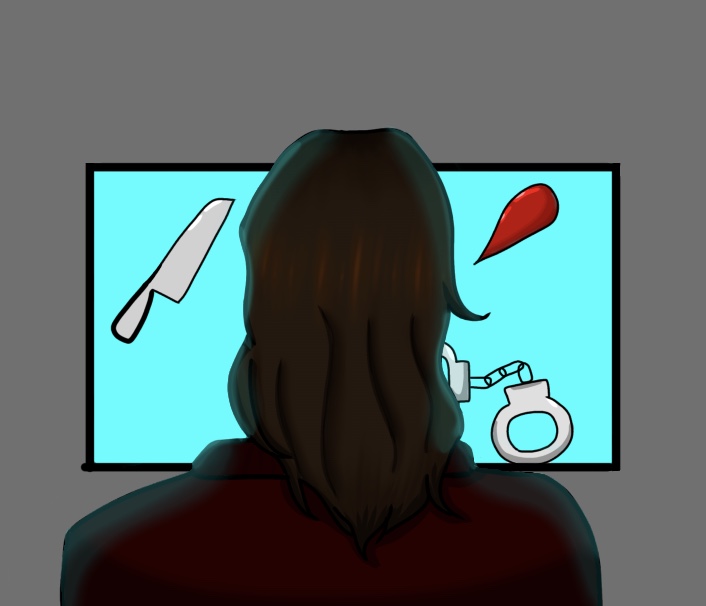
Gambling. It is one of the most lucrative businesses of all time, and is projected to reach 663.54 billion dollars in 2025. However, gambling is a serious problem, often leading to mental illness, suicide, diversion of investment from essential goods and services (leaving people in poverty), and a breakdown of relationships. In fact, the American Psychiatric Association even added “gambling disorder” to the list of substance disorders in 2013.
Why is gambling such a problem that I feel the need to articulate my concerns in an article in a high school newspaper when it has already been discussed by other news organizations, politicians, and public figures of the like? Well, gambling is being targeted to people in my age demographic—teenagers—despite the fact that we are not adults yet. There is a clear trend of expansion in the gambling industry—not only in economic growth, but also in whom it targets, from adults to adolescents, utilizing video games, sports gambling, and the like.
But how can this be? Gambling is illegal for people who are under 21 in New York! The story goes back to 2018, when, after the Supreme Court decision of Murphy v. NCAA (2018)—which ruled that the PAPSA (a federal law that heavily restricted sports gambling) is unconstitutional and can only be regulated on the state level—36 US states legalized online gambling. Despite laws in these states restricting the age of entry, there are still ways teenagers can bypass these restrictions. Examples include using offshore gambling services or even faking their ages. This, combined with aggressive advertising to these age demographics, has led to significant underage gambling, with about 70% of kids in the US between the ages of 12 and 17 in 2005–2006 having gambled at least once. Today, by the time they get to high school, 60–80% of students report having gambled at least once in the past year.
Not only is this a worrisome statistic as no high school student should be gambling at all, but teenagers are more susceptible to gambling addiction than adults because of how their brains are structured. To be more specific, the prefrontal cortex, which is in charge of making decisions, doesn’t mature until the person is 25 years old, meaning teens can’t control urges, such as gambling, as well as fully developed adults. Also, teenage brains are in a stage of development where repeated behaviors become reinforced into the brain, making them much harder to stop. Gambling disrupts these pathways through introducing addiction on a still developing brain, making it harder to stop. Lastly, teenagers that are exposed to the immense amounts of gambling ads view them as a normal part of life and join this self destructive path not knowing of its consequences.
Some students have concerns with certain aspects of gambling. For example, Sophocles Golias (’27), the president of HSMSE’s finance club, notes how gambling under the influence of stimulants and other drugs can be detrimental to one’s health. Gambling while under the influence is still a real concern: In a news story reported by British law firm Leigh Day, a woman who was prescribed a drug known as Pramipexole developed an impulsive control disorder with uncontrolled gambling.
Gambling is no longer a problem only for adults. It is an issue that is clearly pressing into the realm of teenagers, a dramatic shift that raises concerns about mental health and child endangerment. Naturally, the call to action and regulation comes up. However, state-level responses are sadly mixed, as state-level politicians who legalized gambling after the previously mentioned Murphy v. NCAA Supreme Court case are the only ones who can restrict gambling. While some politicians sponsor bills, such as the Bettor Health Act which plans on regulating gambling to prevent active spirals, it is clearly not enough. Just last year, in 2024, the sports betting company DraftKings spent over 1.26 billion dollars on marketing and sales. This, combined with the fact that younger individuals are more susceptible to advertisements of these kinds of behaviors, only leads to more adolescents developing problematic gambling behaviors later in life.
Gambling is not just a threat to the well-being of adults, but also to adolescents. Based on how state-level governments have acted over the past seven years, it is clear that they are unwilling to politically act anytime soon in order to stop the threat that gambling poses to our nation’s youth. That begs the question: what can we, as high school students, do? First, we can educate ourselves on the dangers of gambling. Learn more, not just about statistics—such as the fact that it can lead to criminal behavior, lowered academic standing, poor financial decisions, or even suicide and increased social struggles—but also about personal stories from underage people who have gambled and fact constant struggles. One such story is from Declan Cregan, who started gambling at 16 and lost £500,000, or $673,437.50. If someone you know comes to you talking about having a gambling addiction, listen to them and advise them to contact The National Problem Gambling Helpline™ (1-800-522-4700). We as a people must work together as a community to stop this nationwide problem, and it starts with us supporting each other.