




















![[ERROR]: Lack of Women in the Software Industry](https://theechohsmse.com/wp-content/uploads/2024/12/APC_0280-984x1200.jpeg)




This winter has brought a severe flu that has afflicted many people in HSMSE and across the country. Classes were left half-empty, and The Echo’s editorial board was left decapitated without its head editor. But this pales in comparison to the Influenza Pandemic of 1918, when the flu brought the entire world to a screeching halt in one of the deadliest disease outbreaks to ever afflict the world. Yet nowadays, this devastating disease is often thought of as an afterthought, just another thing to avoid in the winter months. So, what happened?
The exact geographic whereabouts are unknown, but it is most likely that the first cases of the virus occurred in Kansas in early 1918, when a local physician reported unusually severe cases of the flu. From there, the disease spread in military camps, and soldiers brought the disease to Europe, where it spread like wildfire in the unsanitary conditions of the World War I trenches. Most European countries were at war and thus concealed information on the outbreak since that could potentially suggest signs of weakness, which the opponents might take advantage of. Spain, a neutral country, freely reported on the outbreak, leading many countries to name the disease “Spanish Flu” or something similar. However, this nomenclature remains controversial within Spain. The disease was also known by other names, namely “La Grippe,” from its French translation. As time went on, cases of the flu seemed to subside.
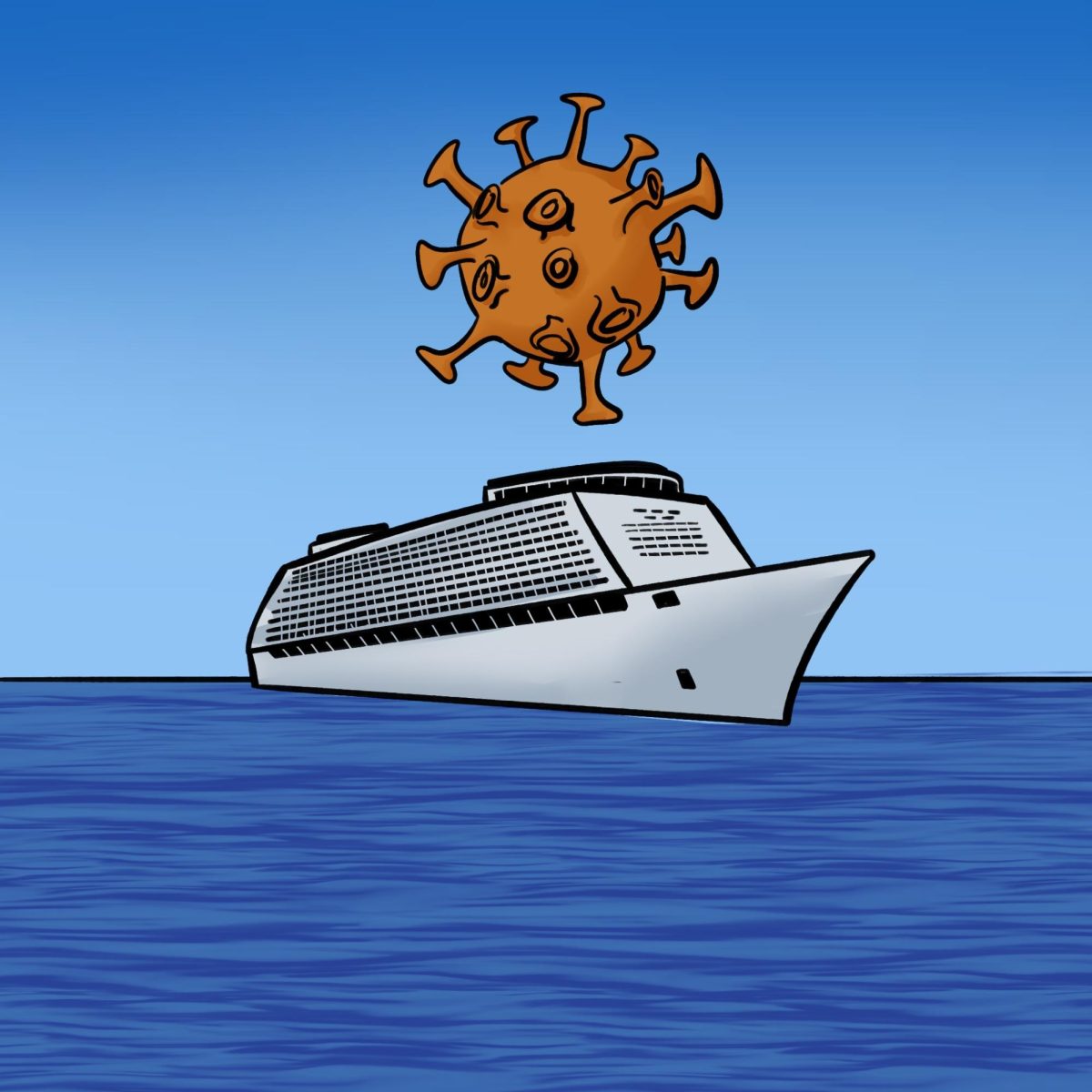
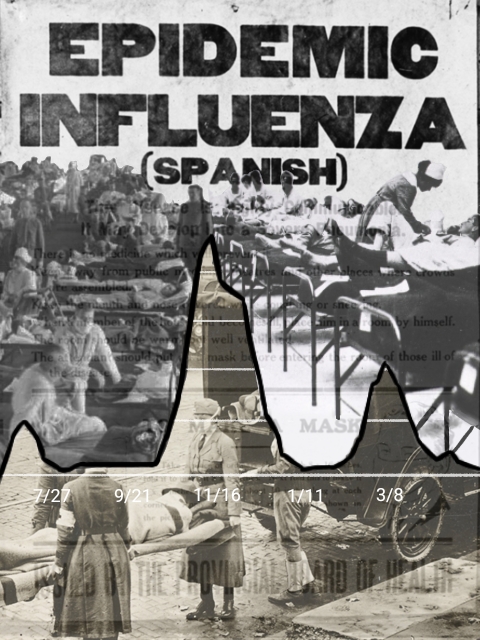
In the fall of 1918, the flu would make a violent resurgence. Scientists believed that the already-severe virus mutated while spreading through the crowded, unsanitary trenches in Europe. Although things seemed to calm down in the summer, the mutated version of the flu was now deadly enough to kill a healthy person within 24 hours of symptoms showing, and it was spreading like wildfire. Boats carrying soldiers home from the trenches brought the virus to all corners of the planet. Trains carrying infected soldiers spread it from ports inland, from which the flu crept into the countryside. Only a handful of the most remote or isolated places on Earth would be spared from the pandemic.
The first city in the United States to be affected by the second wave was Boston, where ships carrying soldiers back from Europe would disembark. From there, it spread rapidly throughout the country—first to other major cities on the East Coast, such as New York and Philadelphia, before travelling westward. New York City was spared from the brunt of the pandemic due to strategic decision-making and well-established public health infrastructure from the city’s past experience against epidemics like tuberculosis. Cities like Saint Louis reacted swiftly, closing public spaces—a decision that spared them from the brunt of the pandemic. However, Philadelphia was the hardest-hit major city in the United States for many reasons, namely administrative failures. Despite advice from experts, the city’s mayor refused to cancel the parade of the Fourth Liberty Loan Drive. Intended to raise morale for the war, it became a superspreader event. Just days later, the city’s hospitals and morgues were overflowing. Throughout the United States, the pandemic was so severe that it caused a shortage of coffins. In Washington, D.C., the situation had gotten so desperate that the Board of Health sent armed guards to redirect a Pittsburgh-bound train carrying 270 coffins to D.C.
Unlike most other diseases, the virus responsible for the 1918 Influenza Outbreak disproportionately killed young, healthy adults. This is believed to have been caused by the disease’s ability to trigger cytokine storms, which is essentially an immune overreaction, causing high amounts of damage to healthy cells. Additionally, the disease allowed for secondary bacterial infections to thrive, which exacerbated mortality. The disease was also referred to as the “Purple Death” due to the fact that victims’ skin would turn purple as they slowly suffocated and their lungs collapsed.
Many of the hardest-hit communities were indigenous communities with isolated immune systems in the Pacific Islands and North America. Western Samoa saw staggering mortality rates upwards of 20%. In contrast, American Samoa was one of the only countries not to be impacted by the pandemic, due to strict quarantine measures implemented by the colonial government to protect the people with weaker immune systems. In many Pacific Archipelagos, “colonial administrations blamed the habits of the indigenous people for the high death rates, and described the pandemic in a way which … indirectly legitimized their rule,” according to Phyllis Herda, a lecturer at the University of Auckland.
In Alaska, some indigenous communities experienced mortality rates over 90%. In Canada, Inuit communities on the coast of Labrador experienced a similar fate. Since the disease disproportionately affected adults, many young children were left orphaned by the disease. Hard-hit villages were abandoned, with the few survivors relocated to neighboring towns. Okak, the largest Inuit community in Labrador, was abandoned after the flu killed off 204 of the 263 residents, with survivors relocating to nearby towns. The pandemic dealt a devastating blow to Native American communities and cultural practices, and many Native American communities have experienced long-lasting trauma from the flu. Former Okak resident Kitora Boas, who was 20 years old in 1918, described a lingering “sense of let down in the air” throughout Northern Labrador after the pandemic.
India lost up to 20 million people to the flu—more than any other country. This number was worsened by the mishandling of the outbreak by colonial authorities and a famine that had left many people severely underfed. Gandhi nearly died of the flu. The perceived indifference from British authorities and the lack of action to address the outbreak highlighted the injustices of the colonial system, leading to the growth of India’s independence movement, as people grew increasingly disillusioned with British rule.
However, after subsequent waves in 1919 and 1920, the disease began to fade away. For a long time since then, the disease has been largely ignored. It became a taboo to talk about the pandemic, which gradually faded from society’s memory. The daily horrors that people experienced were not something anybody wanted to talk about. That is, until recently. Scientists have begun looking into the flu with a modern perspective on medicine, using samples of the flu that have been preserved in permafrost to discover a lot of information.
During the pandemic, the cause of influenza was not understood. Most scientists believed the disease was caused by a bacterium known as Pfeiffer’s bacillus, also known as Haemophilus influenzae, and efforts to treat influenza focused on this bacterium. In the 1930s, scientists began to realize that influenza was actually a viral disease, and this ultimately allowed them to create the extensive array of vaccines and medications for the flu that we have today. The better understanding of microbiology and medicine that we have gained since 1918 is crucial in handling modern-day outbreaks of influenza and other viral diseases.
Another lesson we have learned from the 1918 pandemic is the importance of transparency and openness when handling disease outbreaks, and the impact that censorship and war can have on the spread of diseases. With modern-day technologies such as flu tests and contact tracing, an outbreak of the flu would be easier to monitor. We can look at various success and failure stories of different regions around the world and apply this knowledge and experience in managing future outbreaks. This is crucial because in our increasingly interconnected and globalized world, disease can travel faster than ever, and we must remain constantly vigilant to ensure the well-being of our community and all of the people in it.