

























![[ERROR]: Lack of Women in the Software Industry](https://theechohsmse.com/wp-content/uploads/2024/12/APC_0280-984x1200.jpeg)







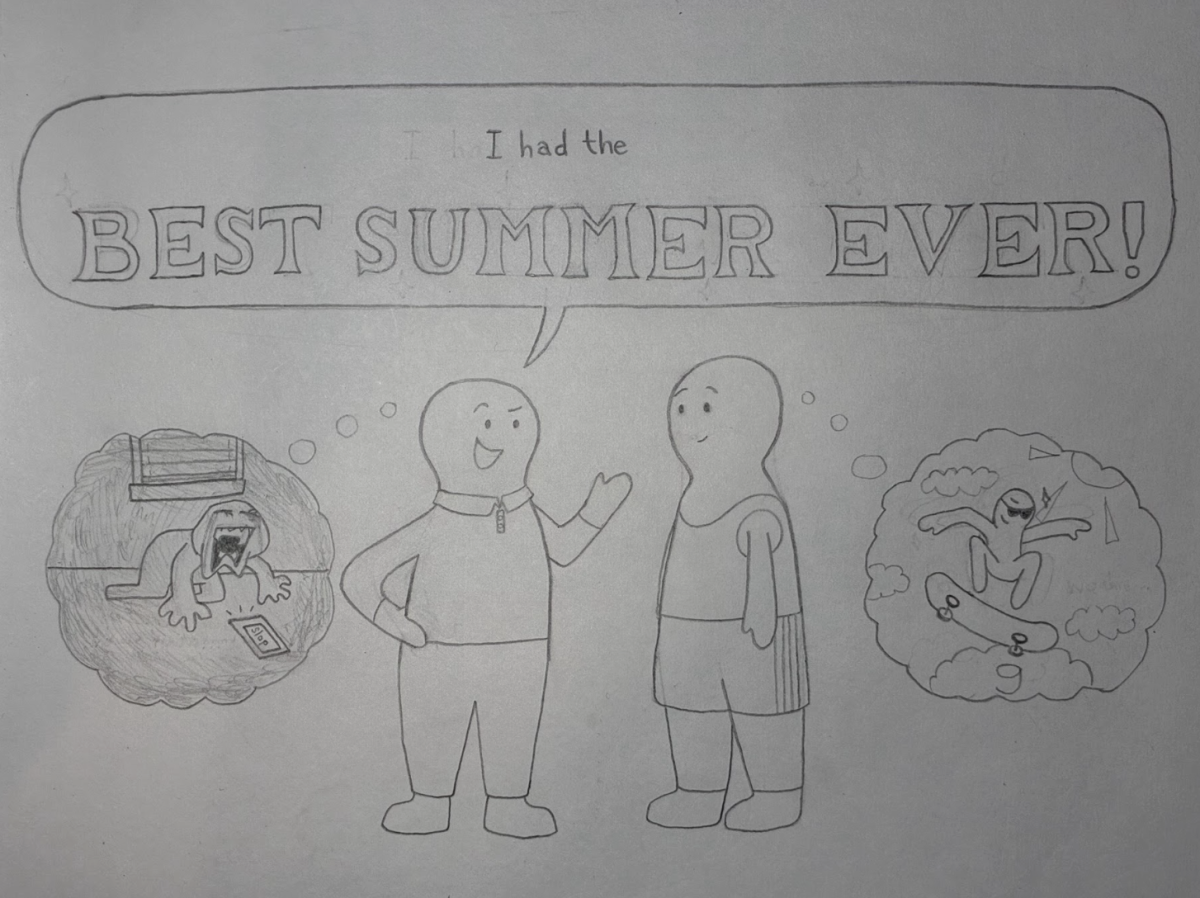
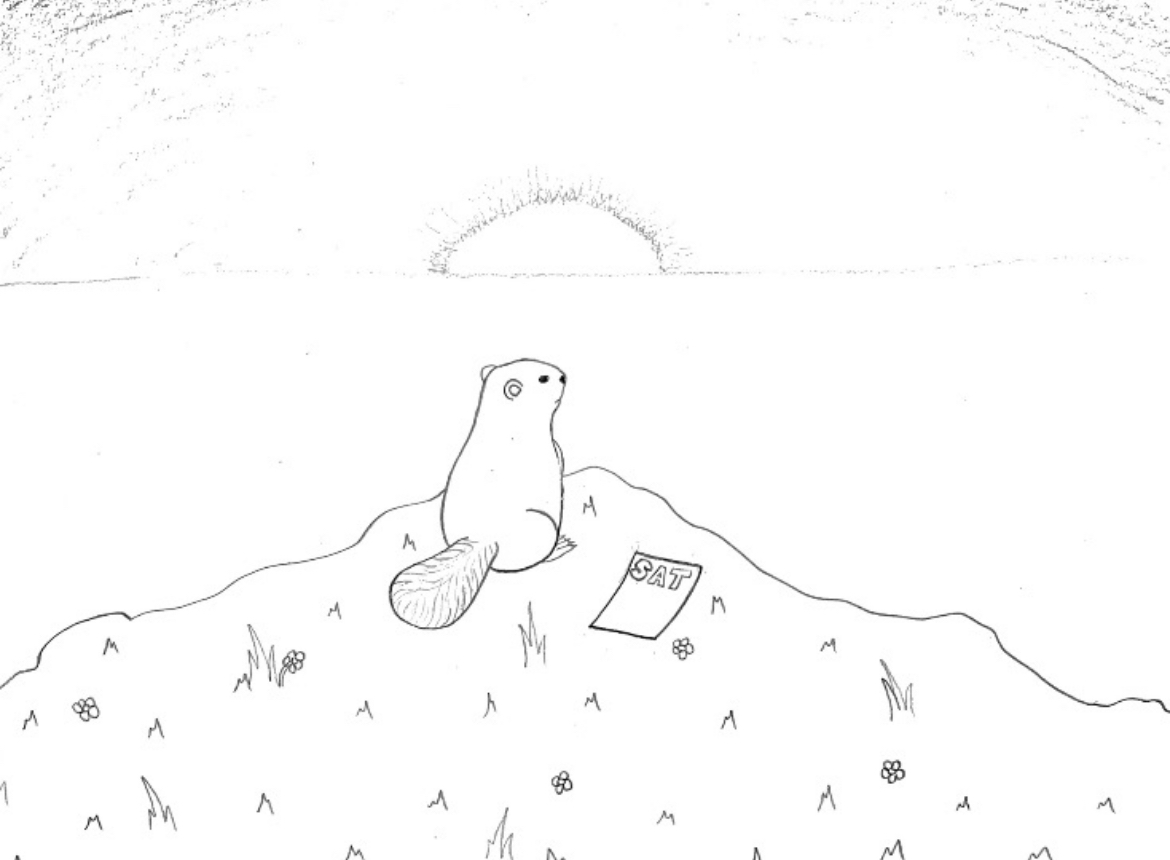
On Wednesday, November 5, 2025, Mr. Dolcy taught his AP Psychology class about failure. As one of the lucky few (well, actually many) students crammed into the much-too-small C5 classroom, I started thinking about what it means to fail. For many HSMSE students, our first time encountering true failure comes with the college process. We pour every ounce of ourselves into applications to top schools, click submit, and all of it for what? Most likely, we’ll be rejected.
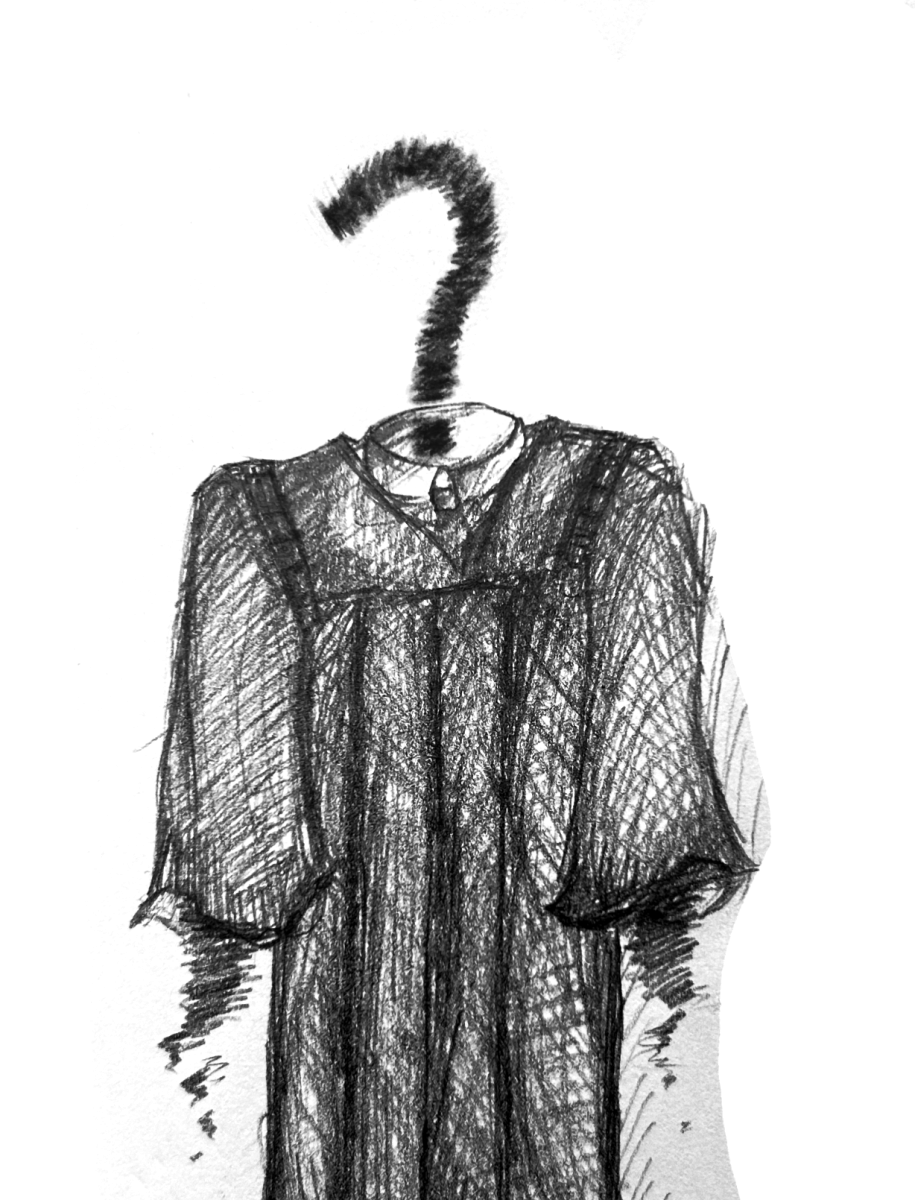
HSMSE prepares us for most things we’ll encounter in life: We can adeptly write research papers, integrate trigonometric functions, and calculate the pH of hydrochloric acid. We’re taught that failure is something to avoid: a red mark, a lowered grade, a line that divides the successful from the struggling. But sitting there, with my knees pulled up to my chest, I realized that maybe failing is the one skill we’ve never truly practiced.
This isn’t only an issue at HSMSE. “In 2020-21, Harvard University awarded ‘A’s’ 79% of the time, and Yale recorded the same rate of awarding A’s in 2022-23,” reports the U.S. Department of Education. An “A” is the most commonly awarded grade at American universities. In NYC public schools, where fewer than 10% of students pass state tests, 85% of students are passing school coursework. Why has failure become so uncommon, and why does it matter?
I asked HSMSE teachers of disparate subjects their thoughts on the matter; here’s what I learned.
Unlike many other schools in the city, HSMSE implements targeted instruction, meaning that we provide resources for students if they are falling behind. Ms. Hesseltine reported that it’s extremely difficult to fail her class. She says “Usually none [fail], maybe one or two have to go to targeted instruction.”
Our school is known to be academically rigorous, but what does that mean? We are top ranked in the city, state, and country, but what are the metrics? An academic challenge looks different for every student. For some, English isn’t their first language, and that makes our school rigorous. For others, they’ve never been pushed to truly write a creative piece in English class, and that becomes a challenge. Ms. Hesseltine thinks our school is academically rigorous because teachers “help students go one level up from where they are… Just like lifting weights, you can’t just lift what’s comfortable. You have to push yourself.”
Ms. Hesseltine is an advocate for smaller classes. She agrees with me that students need to be challenged to learn, but disagrees that harsher grading might be the solution. She believes that to prepare students for college, and adult life, their individual needs must be challenged, and that can only occur in small classes. She says, “what I’m describing requires really knowing students well. Knowing students well when there’s 25 of them in a class versus 34 is a big difference.”
“It feels like we’re making you grow up too fast. I’m so against forcing you to specialize faster than you should. I love that you get to experience unique classes but I don’t love that you are forced to pick a track.” Ms. H identifies a theme I’ve noticed among many HSMSE students. We all, or at least most of us, came to this school for the opportunity to specialize in a certain area. To become really, really good at something. But, the question is, is it too soon? Are we moving too fast? Didn’t really cross our minds, well not mine at least. Maybe HSMSE’s “tracks” are at fault for our inability to fail. We are so used to just focusing on what we’re good at, be it math or science. The norm is to focus on our specialty. Maybe that’s not a good thing.
Mr. Henning noted that HSMSE as a whole, has become much more averse to failure in the post-pandemic years. He said, “in the pandemic we basically failed nobody school-wide in any class. That has continued, not as a policy, but I think our thinking now is more like, [failing] does more harm than good.”
So…what even is grade inflation? Let’s consider Meriem’s opinion on the matter. She says, “a rise in the average grade assigned to students.” That’s simple enough. I like to call it, “the plague of points.” Nearly every HSMSE student will scrape the bottom of the barrel for every possible point they can, on any assignment. Part of the problem I see with grade inflation is, points and grades have become the focus of students’ desires. Not necessarily just educating themselves. Ms. Hesseltine comments, “It kills my soul a little bit every time a student comes to me to talk about five points on an assignment rather than to talk about their understanding of the text… In my classroom I don’t want grades to be the motivating factor.” Part of our goal as HSMSE students should be to push ourselves to see past the number and into the content of assignments.
Failure doesn’t just mean a horrendous score on a Liu exam (don’t worry, I’ve had my fair share). It means trial and error. It means putting yourself out there to be brutally rejected. It means learning to improve. To all our aspiring engineers, if you can’t fail, you’ll never succeed. I asked Mr. Henning about his peculiar approach to grading in his Principles of Engineering (POE) class. “In POE, it’s extremely rare that I have a student who is tuning out in the midst of all these people building stuff. To me, a student who makes an effort in every class period deserves an 80, even if they’re just not good at crafting things or good at solving problems.” I think POE, Architecture, and all other engineering classes at our school play a semi-fundamental role. They teach us exploration. They teach us the scientific method in a way that could never be covered in biology lectures. Tying back to Ms. Hesseltine’s earlier point, maybe our track system is letting us down. What would the HSMSE body of students look like if everyone had to fail in building a rubber band launcher? Ms. Hesseltine asks, “What if the first time you fail is when you get to college? You’ve missed out on learning about that with your family to support you.”
Now, time to stop avoiding the elephant in the room. College. Do our grades REALLY matter that much? Sadly, yes. Ivywise reports, “Your grades are the most important indicator of your academic ability and college readiness.” But don’t worry, it’s not all bad. Colleges consider our grades in the context of our high school. So, in all honesty, grade inflation doesn’t particularly impact the college application process all that much. I’m not suggesting teachers should start failing students out of the blue, or that failure is the only path to growth. But education has changed over time, and it’s worth asking whether those changes have made us stronger learners—or just more fragile ones.
The first time I fought with failure was in my junior year, in Mr. Henning’s Principles of Engineering class. I thought I’d learn about gears, pulleys, axles, but I didn’t. Well, I did, inadvertently. Mr. Henning never assigned a reading, or gave a test, but he taught me how to fail—not in the grading manner, since the lowest possible grade in his class was an 80, but in the literal sense. Every day was a lesson in trial, error, and persistence. We built launchers that misfired, bridges that collapsed, and “perpetual motion” devices that stopped moving almost immediately. More often than not, I walked out of room B8 frustrated, stressed, and sometimes even angry. But, over the course of a tumultuous semester, I learned the beauty of not finding the answer on the first try, and sometimes never finding it at all. His class taught me how to enter learning with an open mindset and focus on the process, not the result.
That experience opened my eyes to what real learning looks like. We attend an engineering school, for heaven’s sake—we should know how to fail.