
































![[ERROR]: Lack of Women in the Software Industry](https://theechohsmse.com/wp-content/uploads/2024/12/APC_0280-984x1200.jpeg)







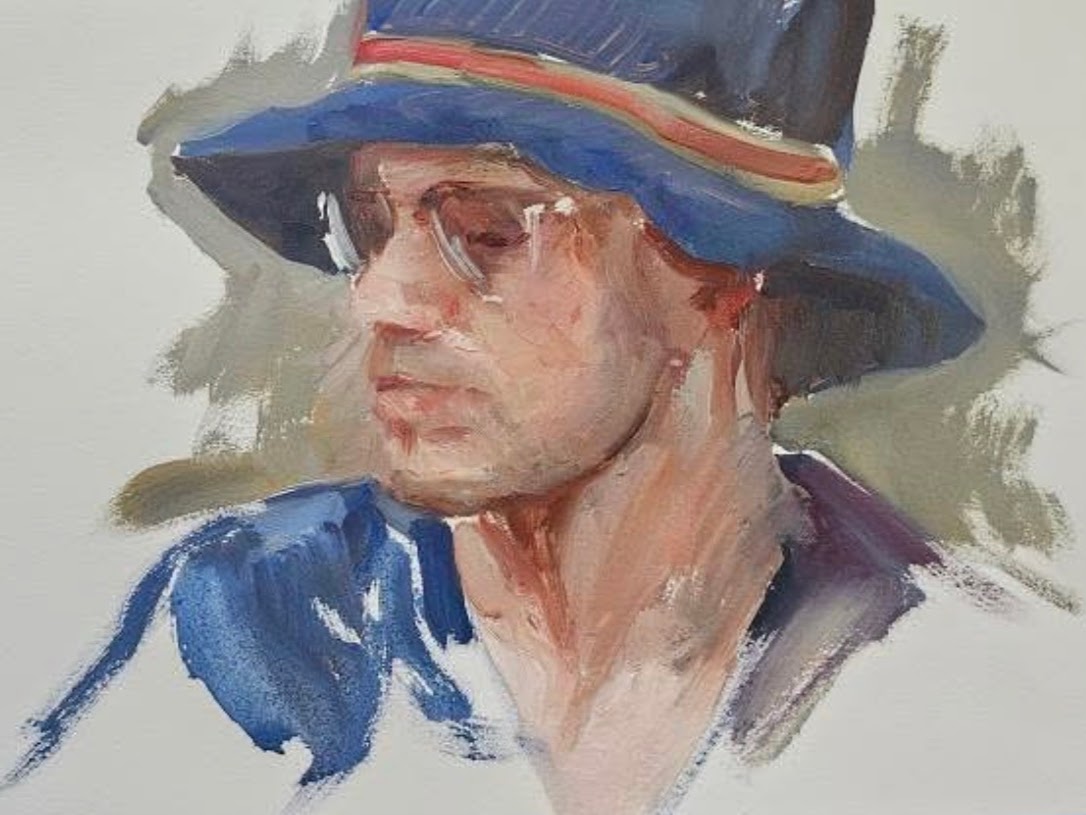
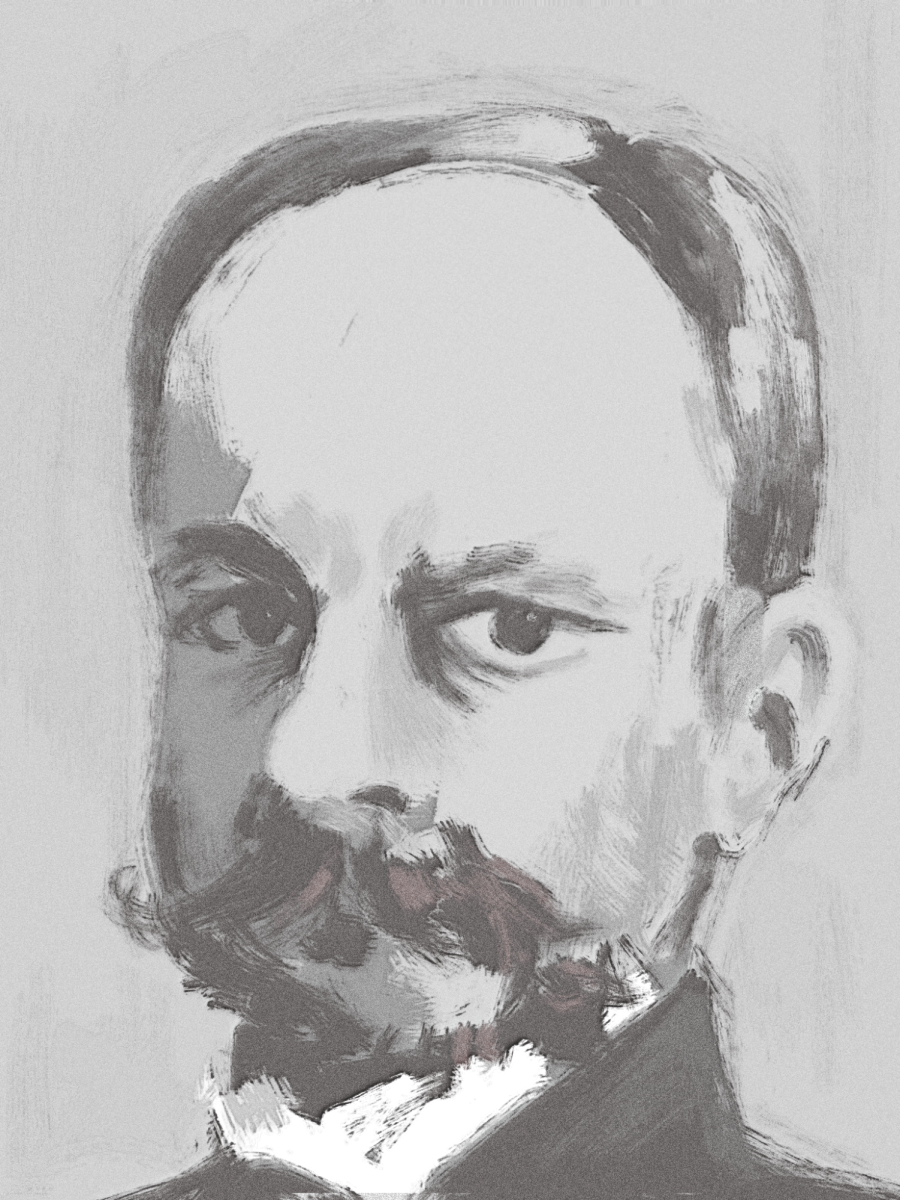
Mr. Schepp is MSE’s new Spanish teacher, but did you know he’s also a painter, polyglot, and aspiring novelist with a collection of 30 hats? As he is Ms. Hesseltine’s next-door neighbor, The Echo has gotten to enjoy his presence every third period. We were delighted to interview him and learn more about his art, travels, and love of languages.
This interview has been edited for length and clarity.
Elena Davis: How has your experience teaching at MSE been so far?
Mr. Schepp: It’s been wonderful. I just love that everyone is really, really motivated. I’ve learned a lot [from both staff and students]. One thing I’ve also liked is that teachers here have a lot of freedom to make decisions about what we teach. And as compared to where [I taught] previously, everyone’s really good at giving feedback and then also responding … There’s a lot of teachers in the building who have a lot of experience.
Ocean Hiller: Is there anyone you want to shout out?
CS: Ms. Hesseltine—my school neighbor, or teacher neighbor. At the beginning of the year, I used to tell people she was my neighbor, and then people thought I actually meant in real life, like where we live. She’s not my neighbor in real life, but she’s my teaching neighbor, and she’s been very neighborly, very teacher neighborly, providing advice. Also, the language department [has] been helpful. Mr. Bartley is my AP, and he’s been really good about [providing] support.
Oliver Grover: What led you to becoming a teacher?
CS: It was a way to use my passion for languages and teaching and learning. I think it is the whole cliché about using your passions in your work. It is true. Not everyone is lucky enough to be able to have a job where they can use what they care about. I had some really great teachers when I was younger that seemed like they had a good work–life balance. They seemed like very interesting and very passionate people, and I thought that could be good. I’ve continued to learn languages and use languages while I’m teaching over the years, and I’m still learning stuff about Spanish. I feel like with language learning, you never really stop.
OH: How many languages do you know?
CS: When I was in undergrad, I studied modern and classical languages, and so I learned Greek, Latin, and Hebrew. The modern language I did at the time was German, but I already spoke Spanish because I had started learning Spanish when I was young. Then later, I learned French, German, and Italian.
OH: What are your favorite words in some of those languages?
CS: In French, I love voila; it means so many things. In Italian, instead of saying non lo so [I don’t know], you can say boh, which I think is so funny and useful. For German, there’s a lot of good ones. Compound ones like Wanderlust and Heimweh [are classics]. Heimweh is where you have pain for a homeland … it’s like home pain. There’s a lot of beautiful words in Spanish. Maybe I’m just thinking about this because our last exam we did, but esperanza is a great word, the word for hope. [Esperanza] is very, very, very pretty.
OG: What do you think is the most effective way to learn a language?
CS: It’s a cliché, but it is so true that immersion really is the most effective way. But we can’t all be immersed; the best way is then to try to recreate that as much as possible by finding media, music, or podcasts that you can listen to. In the beginning, it has to be at a lower level—that’s the challenge. But there are a lot of resources that are for beginners. That [listening] and repetition has to happen a lot before you can really even start speaking. I feel like it depends on [personal] preference, too. Some people really like [having] a system and are like, “I need to know the rules of this before I start using it.” Other people don’t really need that at all … It really depends on personality and learning style. A mix of both is good. I also emphasize listening more, because I really think the sound of the language and hearing it is underappreciated.
ED: What language—other than, obviously, English—would you say you know the best?
CS: French, German, and Spanish are pretty equal, but I feel like they never stay the same. Because I’ve spent a lot of time in France the last [few] years, my French is still really good in terms of both slang and literature. I love French literature and French music. Oh, I should say Spanish, for sure!
OH: You could create a French Department!
ED, OG, OH: Laughter
CS: I’m planning to spend the whole summer in Spain, if I can, just because it’s been years since I’ve spent an extended amount of time in a Spanish-speaking country. In February of this past year, I was in Puerto Rico for a couple weeks, but other than that, my main Spanish use has been teaching, which is not enough; you still lose stuff, even though I’m teaching the grammar and stuff.
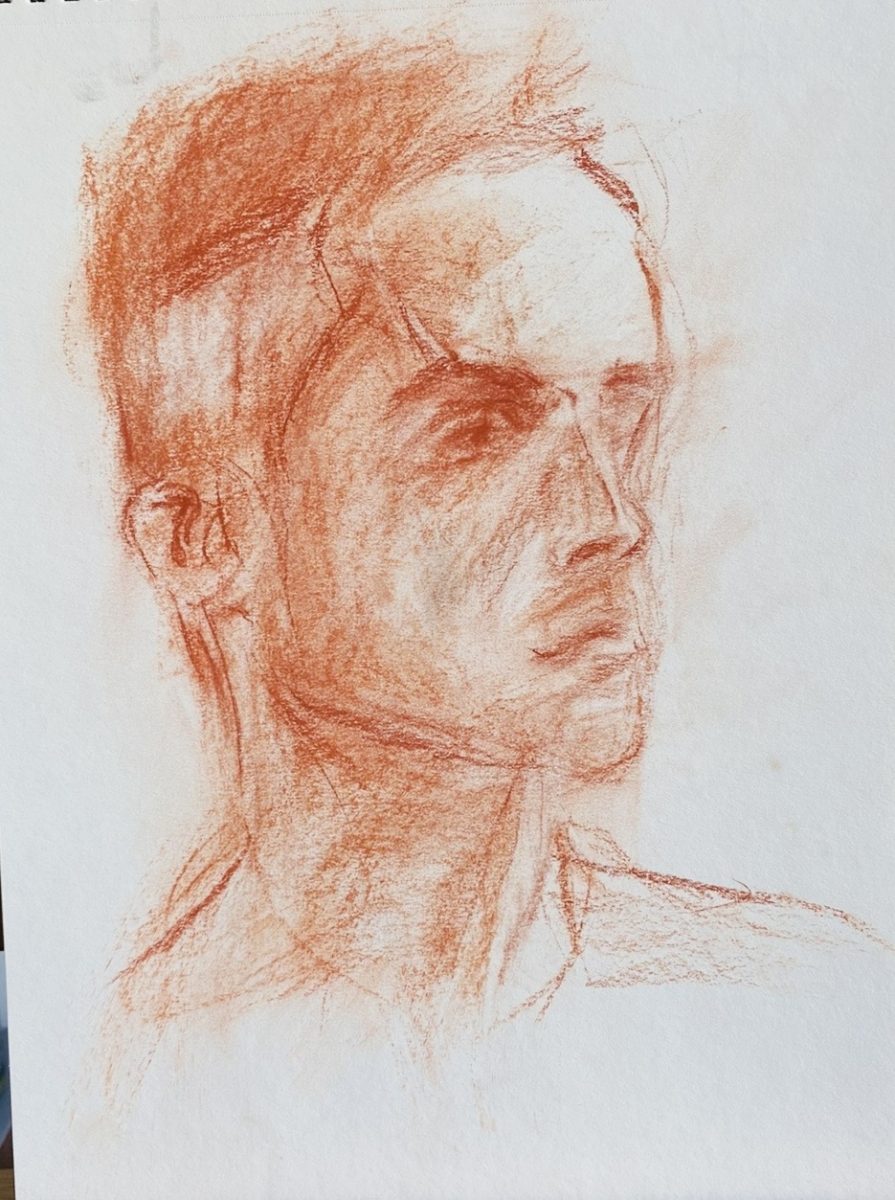
OG: Can you tell us about your art? What mediums and themes do you like to explore?
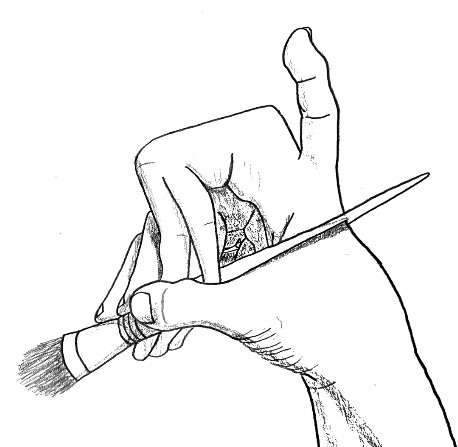
CS: I like portraits and landscapes in every medium … because [they’re] a great way to communicate emotion. The last [couple] years, I’ve done oil painting, partly because the Art Students League where I try to take classes [has] a lot of oil painters. But I want to shift more to like gouache and watercolor because … it’s just easier to carry [them] around.
(Web-exclusive)
OH: What projects are you most proud of?
CS: When I was in Puerto Rico in February, I was painting with a good friend of mine: Emmanuel Francisco Navarro Pizarro. He’s a painter I really admire; I hope he’s famous one day, because I think he deserves it, and I don’t think there’s many people in the Caribbean who are painting the way he paints. It was really fun; he drove me around the island, and we painted different stuff outside in this “en plein air” (like painting outside) tradition. I didn’t intend to sell any of them, but I had posted some of them online and this one Puerto Rican guy, who lives in Virginia, messaged me, and he was like, “Can I buy all of these? Everything you have related to Puerto Rico?” I’m kind of sad that I don’t have it personally anymore. There was a couple that I had painted on the beach, and there was still sand that got in the oil paint, and so there’s a nice tactile quality to the paint, and he sent me this really beautiful long letter explaining why it meant so much to him [to have] a piece of his homeland. I don’t own the paintings anymore, but I have the letter, and that meant a lot, so I think I’m most proud of that.
OH: You also do creative writing, and you’re pursuing an MFA in creative writing at Stony Brook right now. Could you tell us about the genres that you like to explore, and, again, any projects?
CS: My main concentration at Stony Brook is fiction. Hopefully, by the end of the program in a year, I’ll have a novel written; I have a good amount of it finished. It’s about painters in New York in 1917. [There’s] a group of painters around World War I who come back to New York, and it’s also about grief and love. But I’ve done several short story classes because that’s a good way to train and practice form. I’m pretty proud, actually: This semester, I finished a group of short stories that I’m gonna also try to send out to some journals. I also write poetry, so really all kinds of creative writing. But my main focus is fiction.
(Web-exclusive)
OG: You’re working on Stony Brook’s lit mag. What’s that like?
CS: Well, I have a GA [Graduate Assistantship] assignment. They offer me some funding—normally, when they offer you funding, you have to teach, but I obviously can’t teach because I’m here. Thankfully, they’re flexible. They said, “You can just help with other stuff,” so they asked me this semester to help some with The Southampton Review. I’m really busy, so I can’t really do as much as I would like, but it’s a really prestigious journal that’s published a lot of really great writers. I’ve been happy to get to know the editors a little bit.
OH: How do you find the time to pursue all of your passions and your teaching?
CS: It’s really difficult. Lately, I’ve [even] been happy if I can just paint for just a few minutes on the weekends. Also, friends are really good, because friends keep me accountable … Earlier this year, there was a sketching thing in Central Park of dancers, and that was very cool. I feel like having an event to go to pushed me. So, yeah, events, friends, and being okay with just a little bit of time.
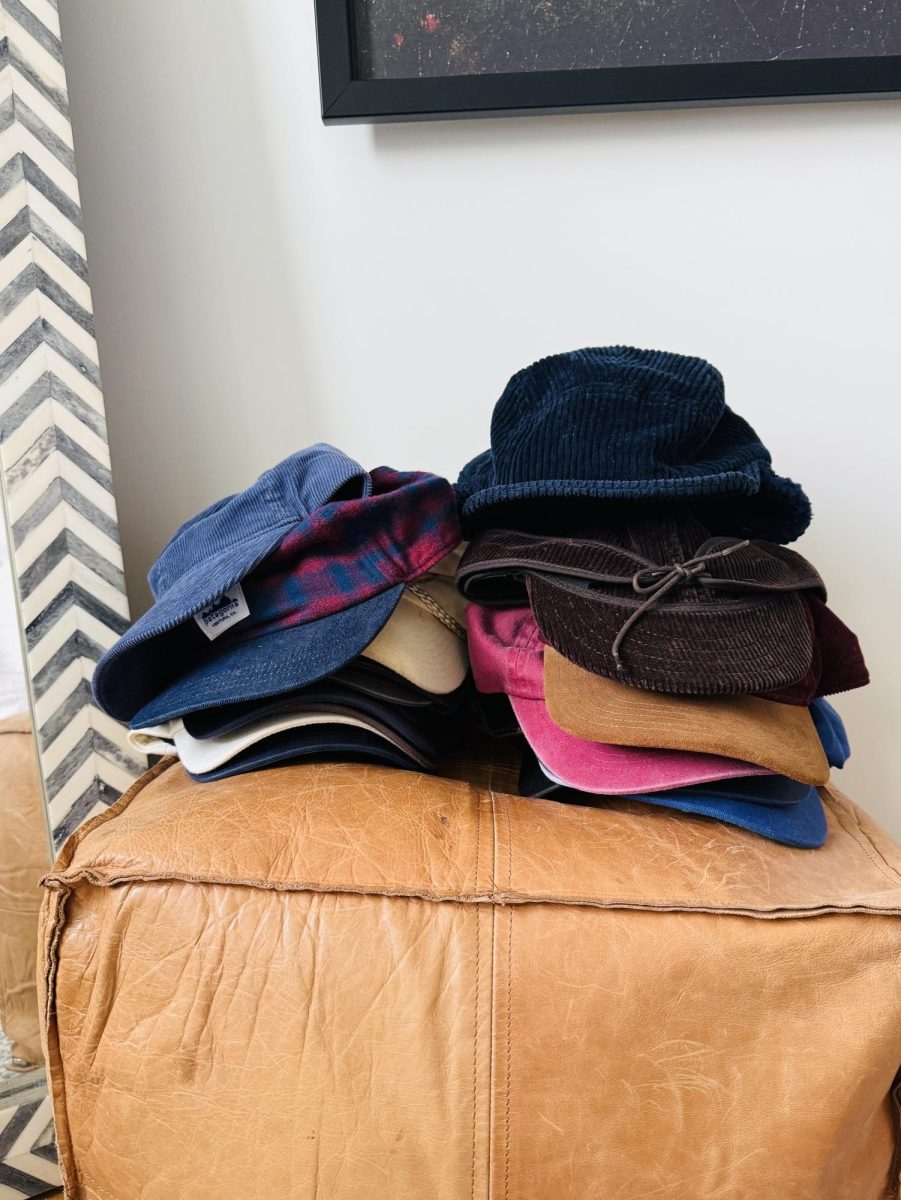
ED: This is sort of like a trademark of yours; how many hats do you have?
CS: It’s true, I mean, I’m almost embarrassed to say how many hats I have. I think, counting winter and summer, I probably have, like, 30 hats. I have a section of my closet that’s devoted to hats. I stopped wearing hats because I felt that it was maybe more professional to not.
OH: What inspires your fashion in general?
CS: Almost similar to painting, I like thinking about complementary colors or color families, and because I like to paint, that’s a fun thing to consider. New York’s a very fashionable place; that’s one thing I like about this city.
(Web-exclusive)
ED: I’ve heard that you’re very into vintage fashion specifically. Where do you find inspiration for that, and what makes you so interested in vintage fashion?
CS: I think [clothes] take part of someone’s personality … So, like, clothes that have been used—or even by you, if you have clothes that you’ve used for a long time—I feel like it adds part of you, and so it works as well for passing on stuff. If I had the money and the time and access to the tailors, I would just only buy vintage, because I think … it just has the most personality, it’s the coolest. Even, weirdly, if you can find vintage clothes that fit you, then they’ll fit you better. Unfortunately, I don’t have as much as I would like, but yeah.
There’s a [vintage] store in Dumbo called Front General Store that I like a lot, particularly for jeans. I’m proud of my collection of vintage Levi’s. I have a lot of vintage Levi’s, which I don’t wear as much as I would like—they’re almost like something that I just own … It makes me happy, just owning them. That’s a good store for vintage jeans. My old school was on Grand [Street] and Graham [Avenue] in Williamsburg, and there’s a couple of vintage stores just on Grand Street that are really good.
OG: How long have you lived in New York, and how do you like it so far?
CS: I’ve lived in New York since 2015, so about ten years. I like our cultural opportunities and access to cultural things, like museums. I’m a big museum person … and there’s so many great shows, so I love that being a constant part of my year. And the art scenes in general; I have some great painter friends here.
OH: What music do you like listening to?
CS: I like—
ED: The jazz band?! (plays in the background a couple classrooms away)
CS: Yeah, the jazz band every day. Earlier, they were playing “My Way” [by Frank Sinatra] on classic guitar, and I was like, “I could get into this.” But I like everything … Japanese Breakfast, or FKA twigs … And lately I’ve been listening to a lot of classical music and certain modern or jazz versions of classical music. There’s this group, Birds on a Wire, [which] sings [in] a lot of languages. It’s a cellist and a singer, and they invite other musicians to play with them.
(Web-exclusive)
OG: Any other media? What do you like in terms of shows and movies and books?
CS: Everything, really. Shows—I saw Hamnet this past weekend, and I cried a lot, in a good way. I feel like it was a very sad movie, but I really liked it. That was also a novel by Maggie O’Farrell that came out [five] years ago, and that was really cool. For contemporary writers, Claire Keegan is a [really cool] Irish novelist. Colm Tóibín is another novelist, he’s Irish, he’s very cool. And Marilynne Robinson is a classic. She’s American [and] she won the Pulitzer [Prize] several years ago; I love [her novel] Housekeeping, it’s maybe my favorite novel for contemporary literature.
OH: At the most recent C-Day, you were a [toilet-paper] mummy, and Mr. Seidlinger mummified you. Did you guys have any special secrets other than you wearing all white?
CS: Well, we do, but I don’t know if we can give away our secret, because what if we do it again next year? We have a couple techniques that I think really worked. You caught one—I think wearing white really helped the mummy effect. I tried not to move. At first, we thought I would go in a circle or something, like we would go in opposite [directions], and that was too much, so I’m glad we did not end up trying.
ED: Maybe the fact that [Mr. Seidlinger]’s a gym teacher, he could run a little faster?
CS: Yeah, maybe he was used to it. [We made] a good team.
OH: Do you have any final words of advice for MSE students?
CS: I feel like everyone’s already doing this, but try to follow your interests and passions while you’re here, because it’s a good place to try things. There’s a lot of teachers who are available to support students and the teachers really do care about students. So, just taking advantage of the time here is good.
ED, OG, OH: Thank you!