














![[ERROR]: Lack of Women in the Software Industry](https://theechohsmse.com/wp-content/uploads/2024/12/APC_0280-984x1200.jpeg)





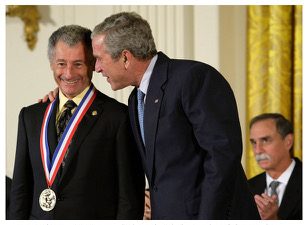
CCNY graduate and Internet Pioneer Leonard Kleinrock’s incredible career in computer science began in a way one might not expect: with his love for comics as a kid. One Superman comic led him to attend Bronx Science, and then study Electrical Engineering at CCNY. Although he did go on to study at MIT and work at UCLA, Kleinrock has continued to support CCNY as an active member of President Boudreau’s board.
“It was magic—what was going on, I had no idea. And to be honest, I’ve spent the rest of my life trying to figure it out.”
When Kleinrock was in elementary school, he was reading a Superman comic in which he saw a description on how to build a crystal radio. And he built it with materials he found around his home—except for a variable capacitor, which he and his mother purchased on Canal Street for a nickel. “[I] took it home and wired it up, and suddenly I could tune into stations; music and all kinds of stuff. It was magic,” he said. That’s not where it ends, though; Kleinrock’s interest continued, and he asked neighbors for the radios they were going to throw away. “I cannibalized old, and built new radios as a kid. I began to learn how these things work.” He learned even more by reading books from the library, and also by attending radio engineering classes at his high school, Bronx Science. He then went on to get an amazing education in electrical engineering at City College, an education for which he is, to this day, eternally grateful.
“You can’t do that now, by the way.”
You certainly can get an EE degree at City College now, but what Dr. Kleinrock was referring to is the fact that he got his degree solely by attending classes at night school. “Usually it takes four and a half years in the daytime, but I went to night, progressing at three-quarters time and every summer; [it] took five and a half years,” he said. “It was a very rich experience.” Kleinrock met individuals “from all walks of life,” including GIs who had returned from WWII who “knew what an education was worth.” But the reason why he went to night school was because he had been offered a job as an assistant electrical engineer; he could not turn it down to help support his family financially. Working daytime as an engineer and attending CCNY at night, he was able to get a “mix of both how things work, and why they work that way, which is not an experience that most students get,” he said. “What could be more fun?”
“Night school? Get the hell out of here.”
Towards the end of Kleinrock’s undergraduate degree, CCNY electrical engineering students were informed of an opportunity to further their studies through a funded master’s degree program at MIT. Dr. Kleinrock was interested and approached a CCNY professor in order to receive an application. Instead, he was denied an application since that professor did not respect evening session students. Nevertheless, Kleinrock was able to get his hands on an application when he contacted MIT himself. “I was the only one from CCNY accepted,” he said.
“It was a great experience. It was a scary experience.”
“MIT is a frightening place; it’s full of the best and the brightest, very competitive kids, very competitive faculty,” Dr. Kleinrock said. The summer before what he thought would be his final master’s course at MIT, his thesis supervisor told him, “You gotta get a PhD.”
“No, no, you’ve got to get a PhD.”
Kleinrock responded, “I don’t want a PhD. I’m married, I’ve got a great research job at MIT waiting for me, my son is going to be born this summer—I need to earn some serious money.” But his supervisor was persistent, so Kleinrock agreed to it upon two conditions. “Condition number one: I want to work for the best professor I know at MIT,” and that was Claude Shannon, creator of Information Theory; and “condition number two: I want to work on a problem which will have impact and meaning.”
“A perfect problem for me”
Shannon agreed to work with Kleinrock on a chess player program—the first one at the time. But he knew he did not want to complete his thesis on this topic. “I was surrounded by computers at Lincoln Lab and MIT, and I knew that, sooner or later, these computers would have to talk to each other and there was no adequate network technology to support this … So here was a new problem that nobody was looking at, whose solution would have impact, and for which I had an approach,” using a kind of math called Queueing Theory. “Perfect, it matched my desire,” he said. Kleinrock completed his research by the end of 1962 having created a mathematical theory of packet networks.
“Across the country in the Wild West”
As Kleinrock’s third graduation was approaching, he knew he was going to work at MIT’s Lincoln Laboratory. However, before he started to work for them, they said to him, “‘We don’t want you to feel obligated to work for us because we funded you … Maybe there’s something you’ll like more.’” Kleinrock received numerous research offers, as well as an assistant professorship at UCLA, even though Kleinrock had not expressed interest in this kind of position. “[It was] something I hadn’t done before, it was all the way across the country in the Wild West—in those days, that was all the way across the country—I had no family in the west, and it paid about half the salary I was going to get at MIT. But it looked interesting. It was a challenge.” Hesitant, Kleinrock consulted Lincoln Lab, to which they replied something along the lines of, “‘Try it. If you don’t like it, come back.’” Kleinrock was delighted: “What a magnificent offer—generous,” he said. “Well, I liked it, and I’ve been there now for 62 years.” Kleinrock is a Distinguished Professor of Computer Science at UCLA.
“What are you guys, crazy?”
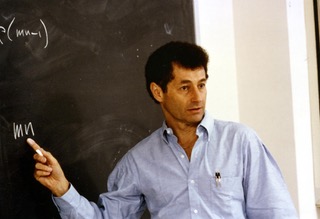
It was 1963 when Kleinrock got his PhD and went to teach at UCLA. It was also the perfect time for him to facilitate the first networked conversation among computers. “So, first thing I did, I went to AT&T, and I said, ‘Look, AT&T, you are the world’s largest network.’ [Their network is] called the voice network but it’s woefully inadequate to support data because voice communication … has a very different flow.” Here, Dr. Kleinrock explains this flow:
“Suppose I’m communicating data with you on the net. I hit a character, it’s wrapped up in a packet, it’s immediately sent over a gigabit link—it’s gone. Before I hit the next character, it’s an eternity as far as the link is concerned. Most of the time, that link and the path from me to you is being wasted. Now, with voice, our links are being wasted maybe one-third of the time—notice I just paused, I sipped a cup of coffee, we’re quiet. That’s acceptable. With data, you’re typically quiet more than 95% of the time. And those high-speed data lines are expensive, especially in those days … So this idea of message-switching, packet-switching, etc. was the solution whereby you would dynamically assign a link when there was traffic to be sent. When I’m sending nothing, let the link devoted to me be used by somebody else. You want to dynamically reassign these resources. How does it work? My mathematics showed how beautifully it performed.”
Kleinrock suggested they build a data network, but AT&T responded, ‘It won’t work… Even if it does work, we want nothing to do with it.’” Kleinrock thought, “‘What are you guys, crazy?’ but looking back now … they were correct. There was no business model for data. Computers were not talking to each other. So, why build a billion-dollar network and have no traffic yet? So they were short-term correct, long-term, dead wrong and the Internet basically displaced the voice network. But nobody wanted to build it.” Except for Kleinrock.
“Do what you want”
This “Do what you want” philosophy is the reason why the US experienced a golden era in technology during the mid-to-late ’60s. “A lot of the technology that you enjoy today came out of that era,” Kleinrock said—like graphics, networking, and artificial intelligence. Moreover, this was a time of focus on the Man–Computer Symbiosis—a term coined by JCR Licklider, a psychologist from MIT who supported the world’s best computer scientists with a terrific funding philosophy. During this time, people had the freedom to work on projects they were passionate about with limited stressors regarding funding or failure. The Advanced Research Projects Agency (ARPA) would ask a professor to do research for them and “the professor would say, ‘Oh, you want me to do research for you, ARPA? Buy me a computer.’ And of course they’d buy them a computer,” Kleinrock said. But there were more requests.
“They would say, ‘But look, see the graphics in Utah and the high performance computing in Illinois and the artificial intelligence in MIT? I want all of that here in Newark, New Jersey at my university.’ And ARPA said, ‘well, we can’t give everybody everything, but if we put you in a network, you can log onto the machine in Utah, in Salt Lake City, and use the graphics there.’” That’s what you do today when you search something on the web! But in order for you to make that search, there must be a network—that’s what ARPA decided. “The computers needed to be connected,” Kleinrock said.
“Aha, we’re going to make a network.”
And this is when Kleinrock’s “dream is going to be realized.” Kleinrock, and other scientists, wrote a specification stating that “[the network] should have a short response time, good reliability, measurement software, et cetera, et cetera,” and sent out a request for proposal for companies in the industry to bid on. “The contract was to build 19 such packet switch nodes. It was decided that UCLA would be the first node because we had the real expertise to do the measurement, analysis, evaluation,” he said. The company that won the contract was BBN, from Cambridge, Massachusetts, around Christmas of 1968. They promised to deliver the first node to UCLA eight months later on Labor Day Weekend of 1969, and they did—they “buil[t] a new technology, new applications, new users… on time, on budget, up and running. You could not do that today.”
“The day that the fledgling ARPANET took its first breath of life.”
On September 2, 1969—the day after that Labor Day—the team at UCLA connected the first packet switch—the Interface Message Processor (IMP) to their host computer. “That was the first connection.” Kleinrock said it was “the day that the fledgling ARPANET took its first breath of life. It saw the outside world, namely, our host computer.”
“It’s so ugly, it’s beautiful”
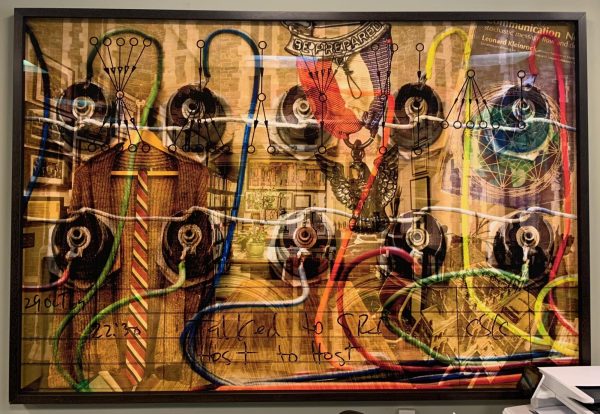
An IMP was also delivered to Stanford Research Institute (SRI), as well as the first data link of the ARPANET—just 50,000 bits per second, which “you wouldn’t pay a nickel for” today. This effectively created a two-node network, so the scientists “could test the functionality of the ARPANET [as] a user coming in locally through the network.” That test of functionality consisted of sending a message from UCLA to SRI—a message across the network. “All we wanted to do was send the first message from UCLA to SRI, so you might think, if we were smart enough, we would have a really good message,” he said.
“We were just a bunch of nerds”
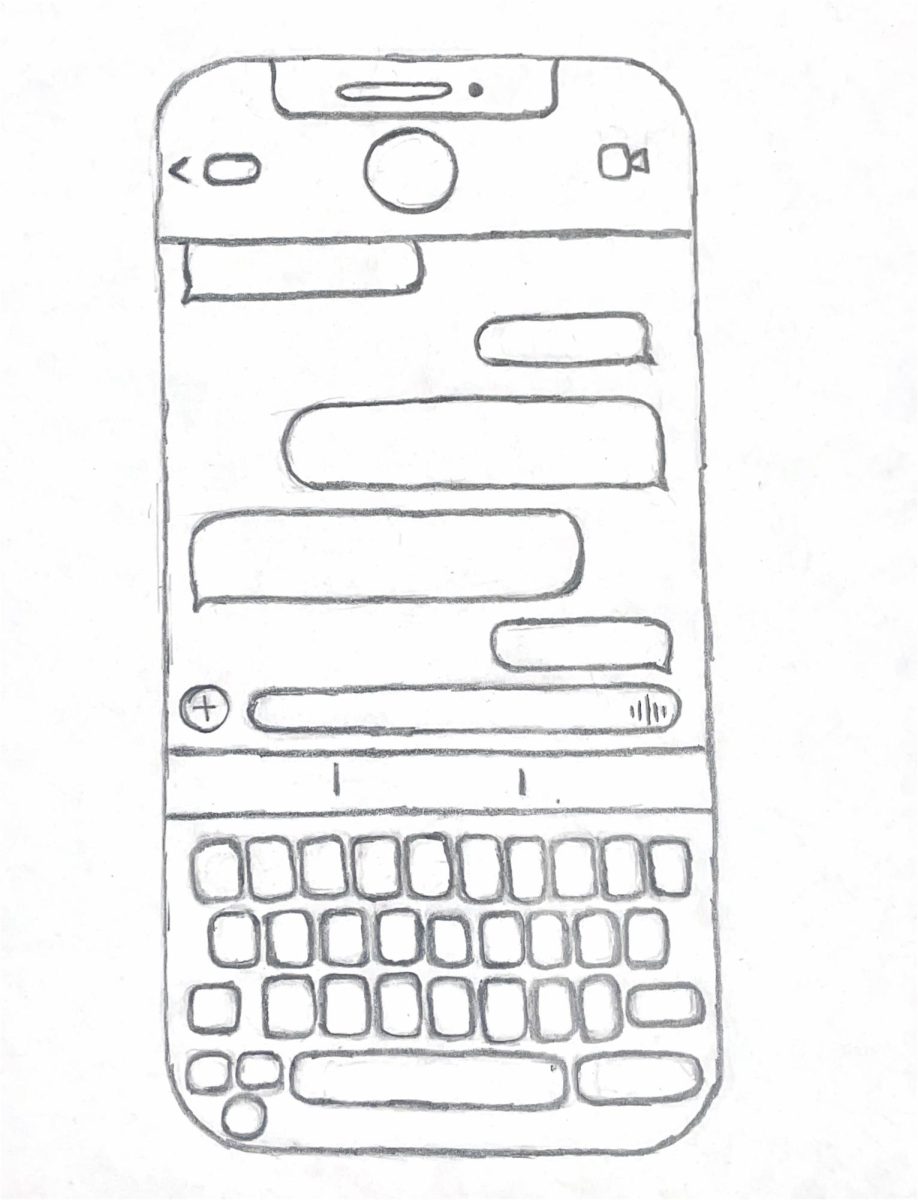
“All we wanted to do was log in,” which consisted of typing “L-O-G” —the SRI machine would do the rest and type “I-N.” Kleinrock’s student at UCLA, Charles Kline, would type the characters one by one, sending them to Bill Duvall at SRI. “We created a telephone link between these two so they could talk about what’s going on. When you type a character (say, L) on your terminal, in a time-shared system … it goes to the computer, [and] … it prints the L on your screen.” Duvall at SRI would recognize the letter and send it back to Kline. “So, we sent the L, and Charley said, ‘You get the L?’ and Bill said ‘Yep, got the L.’ We sent the O, ‘You get the O?’ ‘Yep, got the O.’ We typed the G…”
“‘Get the G?’”
Crash! (Envision a comic-style textbox popping out at you with sticks of dynamite. That was how Dr. Kleinrock’s presentation looked, and it was really cool.)
SRI did not return the “G,” meaning that “the first message ever on the Internet was ‘LO’ as in ‘lo and behold’—I added that later,” Kleinrock said. “We couldn’t have asked for a more succinct, more prophetic, more powerful message.”
And just in case you were wondering what crashed—“it wasn’t our computer … it was the SRI host computer … because it had a buffer overload; it wasn’t expecting to send three characters.” The team fixed that buffer overload and was able to log in within 30 minutes. And that was the beginning of the Internet Revolution that continues to impact us today. That first message “lo” was sent on October 29, 1969 at 10:30 p.m. in Room 3420, Boelter Hall, UCLA. One might say that the ARPANET uttered its first word that evening.
“It was no big deal.”
“We were working all the time, and that night, on October 29, we were just continuing to test it, a few engineers in a room. It was no big deal. We didn’t anticipate this was significant. We didn’t have a good message. So we weren’t building up to a crescendo here. We were busy bringing up an entire network,” Kleinrock said.
“We were doing this as a team.”
Kleinrock emphasized that, “We were a bunch of nerds trying to solve an engineering research problem. We were busy making the connection between the IMP and Host, and then the IMP and the other IMP, solving this problem. We were working all the time—I had a team of 40 people at UCLA. Student researchers, software students, hardware students, faculty, staff, etc. … We tested the heck out of it.” Kleinrock and his team were vigilant, notifying BBN about faults in the system and collaborating in order to correct them. “Notice, nobody got a patent. Nobody owned intellectual property. Nobody claimed ownership … There was no idea of trying to get money out of this … The kinds of words we were talking about were things like ethics, free, shared, open, trusted … You don’t hear those words these days. Right now it’s all negative, in a way,” he said.
“Ouch!”
The Internet continued to grow “rapidly, effectively, broadly, and properly.” Then, in 1988, “a graduate student named Robert Morris launched the first virus—you call it a virus, we called it a worm in those days. He launched a virus, a worm, on the net. It hit about 10% of the nodes on the network.” The team brushed off this threat, thinking “‘Oh, this is just a graduate student, hacking around—don’t worry about it.’” But then “his father published a note saying, ‘It’s a good thing my son did this. Because he was warning us of what could happen.’” And Kleinrock along with his team thought, “‘How could the father say this?’” but ultimately determined that “He was right; he was warning us of the dark sides of the network. But we ignored it,” he said.
“Ooh, I want it.”
Flash forward to 1994—by then the National Science Foundation (NSF) had decided to connect supercomputers that had been used for scientific research together on the ARPANET. They had to add more capacity to it, though, as it “was running at a lower speed than they wanted,” creating the NSFNET. Now, it also gained more users. “Up ’til then, only computer scientists were using this network. Suddenly physicists, chemists, biologists, oceanographers, psychologists” were, as well. Workers in these companies were using the Internet and Email, which appealed to many. “The staff want[ed] it, the executives want[ed] it, the managers want[ed] it. And it [was] around that time that the .coms began to appear, saying, ‘We want access to the ARPANET,’ which we then called the Internet.” At the same time, Kleinrock “chaired a committee that wrote a report called ‘Towards a National Research Network,’” which he presented to Al Gore, “the most knowledgeable person in [Washington, D.C.] about the Internet” … “[Gore] recognized we need[ed] a high-speed backbone network to make this happen. He convinced the first President Bush to sign it to law in 1991,” creating the gigabit backbone network. There was only one thing missing: “an easy user interface.” In the early 1990s, The World Wide Web provided that.
“How dare they?”
This broad interest in the Internet, as well as its accessibility, created the perfect conditions for the first broad-based spam message. It was sent by two lawyers named Laurence Canter and Martha Siegel on August 12, 1994, promising assistance in an upcoming green card lottery. “Those people were advertising their commercial services on our research network. How dare they?” But Kleinrock and his team did not just surrender the Internet to spam messages— “We sent so much Email back to them that we took down their server unintentionally creating the first denial of service attack!”
“People were watching.”
But taking down their server would not erase the fact that the message was sent—“People were watching,” he said. “The large tech and commercial companies were watching, and they said ‘Hm. This is a terrifically cheap and effective way to reach the public’ … It’s a way of making money. So the Internet suddenly focused all of its energies not on researching and technology, but on how to sell things to the consumer. And that’s really when the Internet took a serious turn in its direction … Before that, we felt there were just hackers out there, nuisances. We thought the Internet would mature out of its adolescence into a mature adult, but it just got worse. We began to see social networks occur, and they began to eat this stuff up,” Kleinrock said.
“It enables anybody to get anything.”
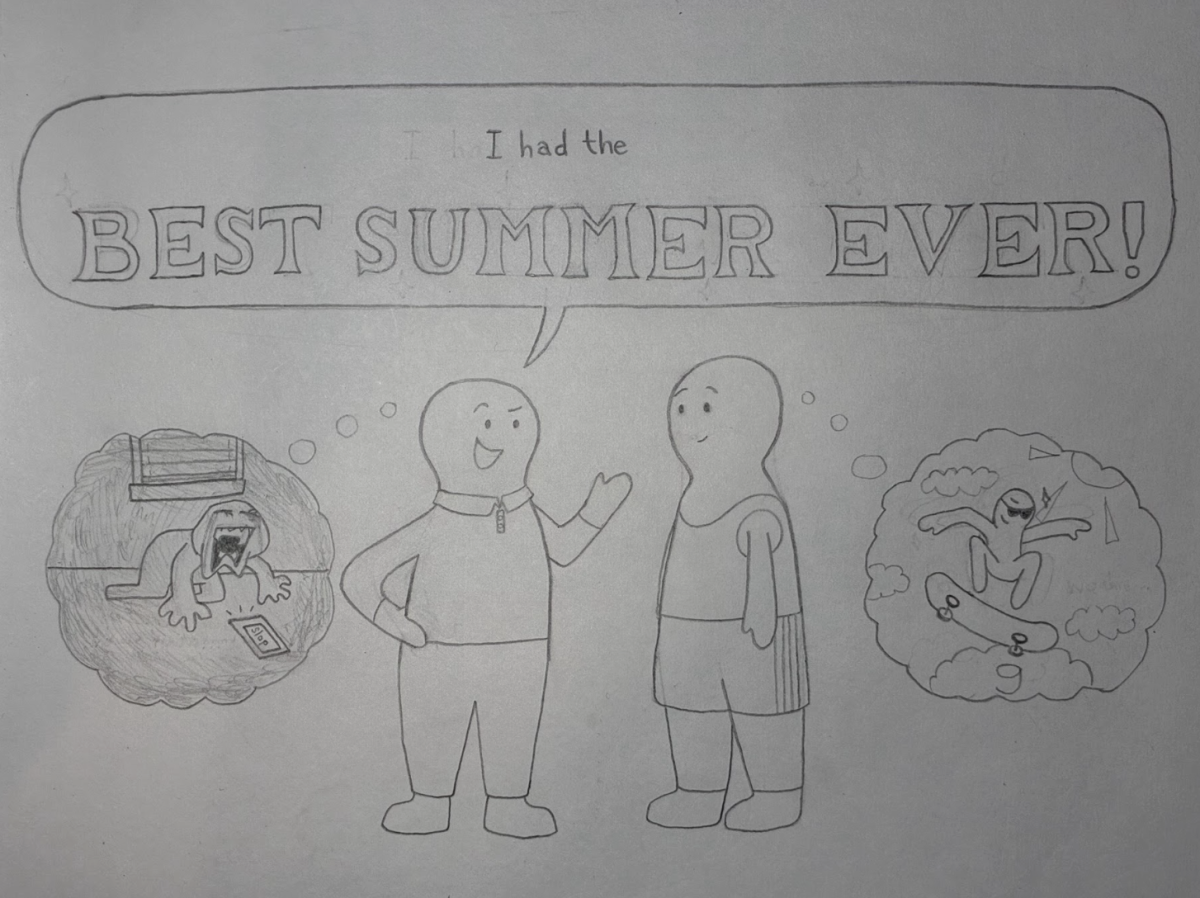
The companies were right—the vastness of the Internet coupled with its growing accessibility attracted the public eye; this was the perfect opportunity for people to easily make an impact. “Anybody, any individual … no matter how disheveled, sitting in their basement with banana peels all over the place. If they have a laptop, and a link to the Internet, they can reach out to millions of people immediately at almost no cost, anonymously. Now, this is the power of the Internet: It enables anybody to get anything. It’s also the dark side of the network,” he said.
But Kleinrock believes the real harm comes from social networks. “Once [they] appeared, not only can [a] miserable guy or gal in a basement launch messages out, but the social networks [can] pick it up and basically supercharge it and send out thousands of copies of this thing, even more aggressively. And now comes AI, which gives these people the ability to not only send out Email but some terrific, AI-generated fake news, fake pictures, fake videos … AI has accelerated this ability to send out garbage,” he said.
“AI has had a different kind of history”
“Whereas the Internet has had 25 years to curate and it has built in some protections… AI has had a different kind of history.” Dr. Kleinrock further explained:
“The name artificial intelligence was coined in 1956 by a professor named John McCarthy. Most of the work back then was using what’s called Symbolic AI … You’d write some code … and you knew the rules by which the system would work. But artificial intelligence didn’t really take off … until a few years ago, [when neural networks] began to come out quickly enough and with enough capacity to be able to solve some important problems. So AI, although it’s been around a long time, [the] neural networks and large language models that you see have only been around for a few years, and they have not had time to curate. They’ve come out doing bad things immediately. I worry how we’re going to try to control these powerful AI systems, which are known to hallucinate. They will lie to you, bare-faced lies,” he said
“But am I optimistic?”
Despite the immense power of the Internet and AI, Kleinrock remains optimistic about the future of the Internet. “Yes, I hope and believe [AI] will get controlled but how will it get controlled? Not by you and your generation or by me. I believe AI is the source to control AI … I believe it has the power, I don’t know how it’s going to do it, but my hope is that that’s going to be the key to getting these things under control. There will always be bad actors, but it’s up to your generation to figure out how to control them using the power that they have, and that’s only a hope, it’s not a prediction. I just hope it will happen,” he said.
“AI is a new world and we have to deal with it”
“One of the constituents that I recognize is the user population, you and me. [We are] far too silent about the abuses to which [we] are subject.” One alarming abuse is AI’s violation of user privacy. “Until there’s an organized way for the user population to say ‘No, I won’t accept this. You can’t do this,’ and you get the scientists to find solutions to it, we’re going to be stuck heading where the technology providers want to take us. They want to take us to a place where they just increase their profit, or do some terrible things politically … Maybe you and your friends want to fix this—but the user population is not vocal enough, it is not organized enough, and you’d think it could easily be done with social networking. There have been some movements, but not enough of them,” he said.
“It’s not a clear road ahead”
Although Kleinrock has had some incredible (and accurate) predictions for the Internet’s infrastructure, he explained that the applications and services aspect of the Internet are a whole other story. “Nobody predicted Email; it came on and took over. Nobody predicted user-generated content like YouTube, or search engines, or shopping machines, or any of the applications that have suddenly exploded … All we can predict is that we will not be able to predict what’s coming. Your generation is going to create all kinds of wonderful and scary things, so it’s an opportunity as well as a challenge. If it was all done, there’d be nothing for you to do, but there’s plenty to be done. It’s up to you guys to invent, create, and then hopefully curate,” he said.
Thank you to Dr. Kleinrock for graciously giving up his time to speak with me about the intricacies of his career, as well as the history of the Internet. This would also not be possible without the help of Dr. Boudreau, President of CCNY, ardent supporter of The Echo, and the reason why “CCNY is a beacon in the wind.” Thank you for telling me about Dr. Kleinrock’s contributions to the Internet back in May of 2025, and then introducing us last fall. Lastly, I would like to thank Ms. Hesseltine, The Echo’s advisor, for always encouraging me to take on my ideas (and helping me do so!).
To my dearest readers:
Next time you make a search on the web, think of all the work that went into making the Internet as you know it—the people behind that search.
Next time you type away to AI, have a gander at the privacy conditions, or at least be cautious. Your information can be used without your permission. Even an AI chatbot will tell you this.