

























![[ERROR]: Lack of Women in the Software Industry](https://theechohsmse.com/wp-content/uploads/2024/12/APC_0280-984x1200.jpeg)







After 18 years of working at HSMSE, Mr. Klein, our beloved guidance counselor and college advisor for 11th and 12th graders, has retired. Mr. Klein was a cornerstone of the HSMSE community through the invaluable mark he left on each graduating class. To honor his time and legacy at HSMSE, we wanted to interview him and highlight some of the behind-the-scenes work he’s done for MSE, where he’s off to next, and leave you with some final words of classic, Klein wisdom.
*This interview has been edited for clarity.
What are you most proud of from your time at MSE? And what are you going to miss the most?
I was involved in many aspects of the HSMSE community. The most prevalent was implementing a college advisement program, which enabled students to learn about themselves, discover the colleges that are best for them, and write impressive essays and applications. We prepared our kids to thrive at the most prestigious colleges, become great students and effective leaders, and, afterward, become tremendous professionals. That was very gratifying.
I was also reflecting — it’s not that the US and World Report rankings count for everything — but being consistently ranked as one of the top high schools in the nation and, this year, being ranked as the #1 school in New York State and #22 in the nation in our relatively brief history is an impressive accomplishment! We must credit our amazing and devoted faculty and leadership that enabled us to achieve that kind of national attention. I am proud of this notoriety as it helped us surpass our older peers, who’ve been around for over a century. As a newer school, showcasing our consistently high rankings enabled us to foster relationships with many professionals in the field, primarily college admissions representatives, who recognized our unique and rigorous programs — I’m proud of that, too.
How has the college process become more of a pressure cooker, and how much do you think that pressure is needed?
The college process has become more stressful and competitive over the past 20 years because more students are applying to colleges, while the size of the incoming classes has remained relatively the same size. The biggest impact on the college application process has been due to the advent of electronic applications, namely the Common Application, which has made it possible for students to apply to 20 or more colleges in an application season. Over this time period, the admission rates at the top colleges have decreased from 25% to less than 5%.
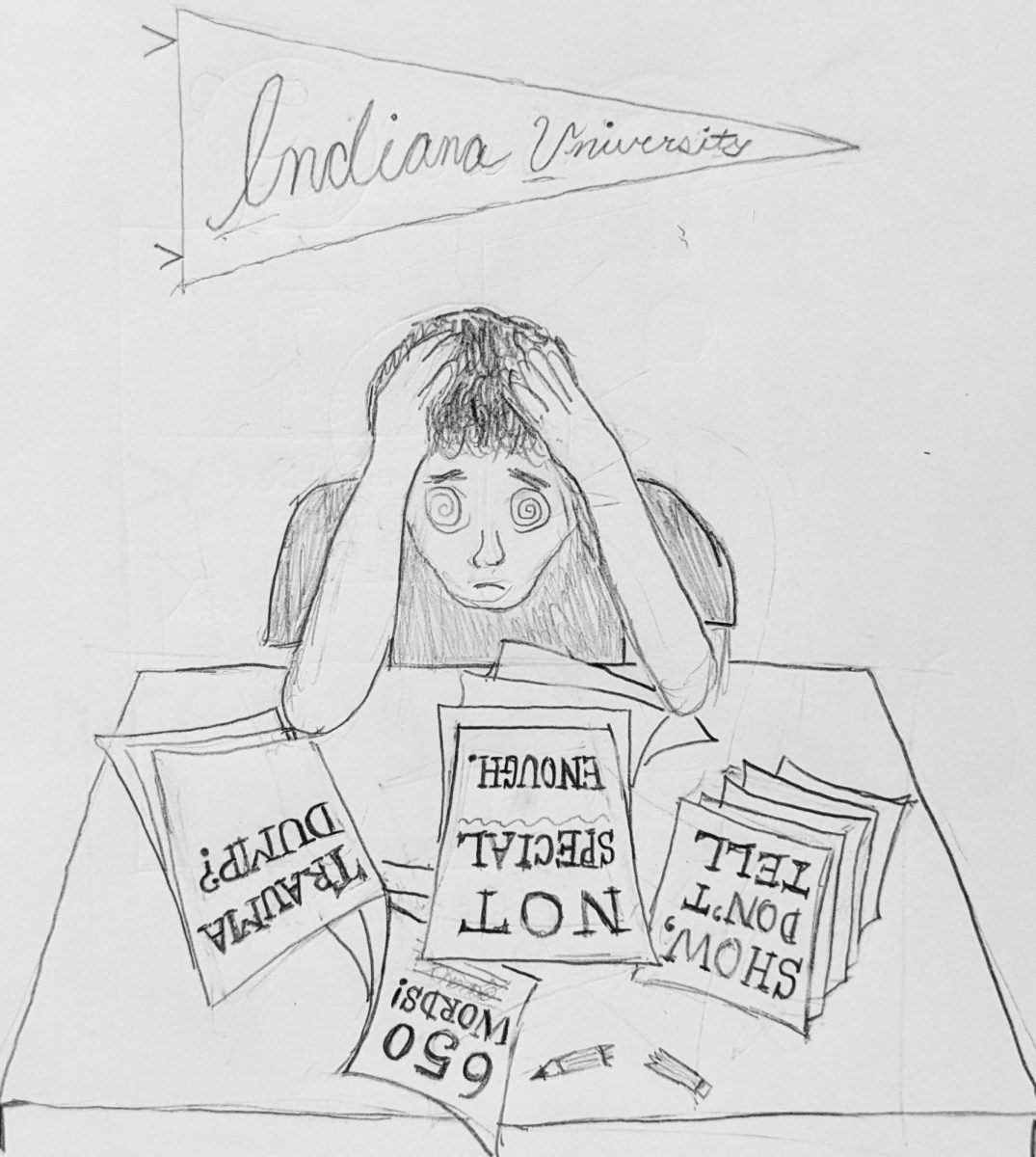
Throughout high school, this increased competition has increased students’ level of stress because they feel compelled to take as many advanced and college-level courses as possible, become involved in a multitude of activities, and try to attain perfect scores on standardized exams. Students have to craft multiple full-length essays, write as many as 30 unique short answer questions, prepare for several interviews, travel to various campuses, maintain the application data, and track the application for each college to which they applied. Students who do not feel confident that they will be admitted to a “good” school or the school they want to attend frequently employ the shotgun method and apply to 20 or more schools. I do not believe that method is successful — and it’s often counterproductive.
At HSMSE, we have encouraged students to discover the 10–15 colleges that are the best for them and focus their attention on those colleges’ applications. Ironically, focusing on these colleges and being able to communicate with these colleges “why” they are the best fit for them, which usually results in being admitted.
What advice would you give to high schoolers who are preparing for the college process?
To prepare for their college application process, students must know which criteria the colleges are examining. The most important factor for all colleges is the student’s grade point average (GPA). The colleges then consider the strength of the student’s coursework and their standardized test scores as equally important criteria. These factors benefit our students because HSMSE offers one of the most rigorous curricula in the nation, and all the academic tracks are highly regarded by the admissions officers. These admissions representatives also consider your participation and leadership in extracurricular activities, essays, short answer question responses, and letters of recommendation. For younger students, it is crucial to focus on the larger assessments, as well as completing their daily classwork and homework assignments.
Participating in HSMSE and community-based clubs and athletics will enable them to develop their interests, talents, leadership abilities, and interpersonal skills. Please also realize that students do not have to hold a “titled” position to be a leader in an organization and that committing to serving your community and family obligations are equally, and, often times, more impressive to colleges.
Older students must continue working arduously to maintain or improve their grades during their last high school years. Of course, colleges prefer to see students attain strong grades throughout high school, yet they will consider a student’s rise in grades even as late as 12th grade. I have deemed these students as having a “senior year epiphany.” During COVID, colleges waived their testing requirements due to the difficulty of administering exams. While some colleges are still maintaining their test-optional policies, many more schools again require that students submit their scores because their data has shown that the students who submitted higher test scores performed better than those who opted not to submit scores.
As HSMSE is a testing school, and our challenging curriculum prepares students for these exams, our students score well on the SAT, but you must prepare for them and practice taking them digitally. There is pressure for students to take the SAT early; however, studies have proven that taking the SAT later usually results in higher scores. I recommend that students take the free in-school SAT exam in March of their junior year and then again in June, as the students’ math and English courses will prepare them to do well on these exams.
You clearly have many great memories from working at HSMSE. But what are you maybe not going to miss as much?
I have to say I will not miss administering the SATs and the AP exams. I will not miss having to neurotically count, recount, pack, and ship thousands of answer sheets, testing booklets, orange free-response booklets, and student labels. The AP exams also required me to be in the building at six a.m. and not leave until nine p.m.
Who are you going to miss the most? Who’s your teacher best friend at MSE?
No surprise… it’s Ms. Patterson. We were a team. As our guidance department has only two full-time school counselors, we always relied on each other for support. She always did a great job assisting the 9th and 10th graders, and I adopted them as 11th and 12th graders. When a situation occurred, I knew I could always go back and rely on her to help me provide the best care for the student since she had already developed a close relationship with them and their families. We often worked late and complemented each other’s efforts to provide more services than many larger counseling departments. Everyone knows that she is a tremendously passionate, devoted, and kind counselor… however, the thing I will miss most about working with Ms. Patterson daily and something that few people know about her… is her outrageous sense of humor!
What do you have to say to seniors who are burnt out after the college project process?
To repeat Yankee legend Yogi Berra, “It ain’t over till it’s over.” Teachers are forgiving to a point, and they understand a little senioritis and burnout to an extent. The senior teachers also get a little burnt out from writing detailed letters of recommendation and dealing with seniors! Give yourself time to reflect on the process, your successes, on the things that didn’t work out the way you wanted. However, the best strategy to prevent getting burned out is good planning! They should follow the advice of their predecessors and “start early,” do the Brag Sheet, and listen to Ms. Barnewold, and the Guidance Interns!
What do you have to say to parents going into the college process? I’m sure over your 18 years, you’ve dealt with a lot of anxious parents, so what do you have to say to them?
I am stating this as a counselor and parent of two college students. First of all, it’s the student’s college application process; have them own it. Give them the responsibility. I know how hard it is, trust me. It was challenging not to take over my children’s college application process. (They also did not think I knew anything, anyway!)
That being said, be your children’s cheerleader, support them emotionally, and sometimes their executive assistant. There is a tremendous amount of information and material to organize, which many children find over whelming, especially when taking rigorous courses and committing to extra-curricular activities. Have your child see Ms. Barnewold — she’s an expert. Encourage them to listen to their teachers, coaches, and Guidance interns —they are all here to guide them.
Mr. Klein, what is your favorite Yiddish word?
I know a lot of fun Yiddish words. I will start by mentioning my second favorite Yiddish word, “bashert.” Loosely translated, bashert means “fate” or “meant to be.” If something happens, you may describe it as bashert… because everything happens for a reason. Romantically, it is described as someone to whom you feel deeply connected. Regarding the college application process, it is attending the best college that is best for you… finding the right fit… the place that is meant to be… You get there and realize, “This place is everything and more than I ever expected.”
However, my first favorite Yiddish word is to kvell — bursting with pride and joy over others’ success and achievements. That’s the feeling I get from helping our amazing students realize their goals and ambitions.
What’s next for you? What does retiring mean for you? Are you gonna go into private college counseling or continue with it?
I like to say that I retired as a public school counselor, but have not retired from working. I am involved in a few exciting ventures. For one, I’m developing the business that I started over 26 years ago. I am working with Dr. Bonds, our former principal, with her charity organization that helps underserved students get admitted to college. I’m also working with another organization called Stand With Us, which helps fight anti-Semitism on college campuses and in high schools. I am also seeing how I may continue assisting HSMSE in the future.
What are you going to miss the most?
It’s cliche to say, but it’s the truth — I will miss the students the most. They’re truly brilliant, funny, quirky, and inspirational. It was always gratifying to help those who
were encountering a problem, a personal or mental health crisis, or academic issues to develop solutions to cope with and overcome their situations. The exciting part of the job was the college process. Whether celebrating their successes or navigating through disappointments, we were always determined to find schools where they are happy to attend. And to see kids start out as little “freshies,” and then grow and develop into mature young adults, to see them achieve so much and develop into who they aspired to be, was always very emotional for me… I’m kvelling again… Maybe I’m getting parental, but watching the students grow was always so much fun.