

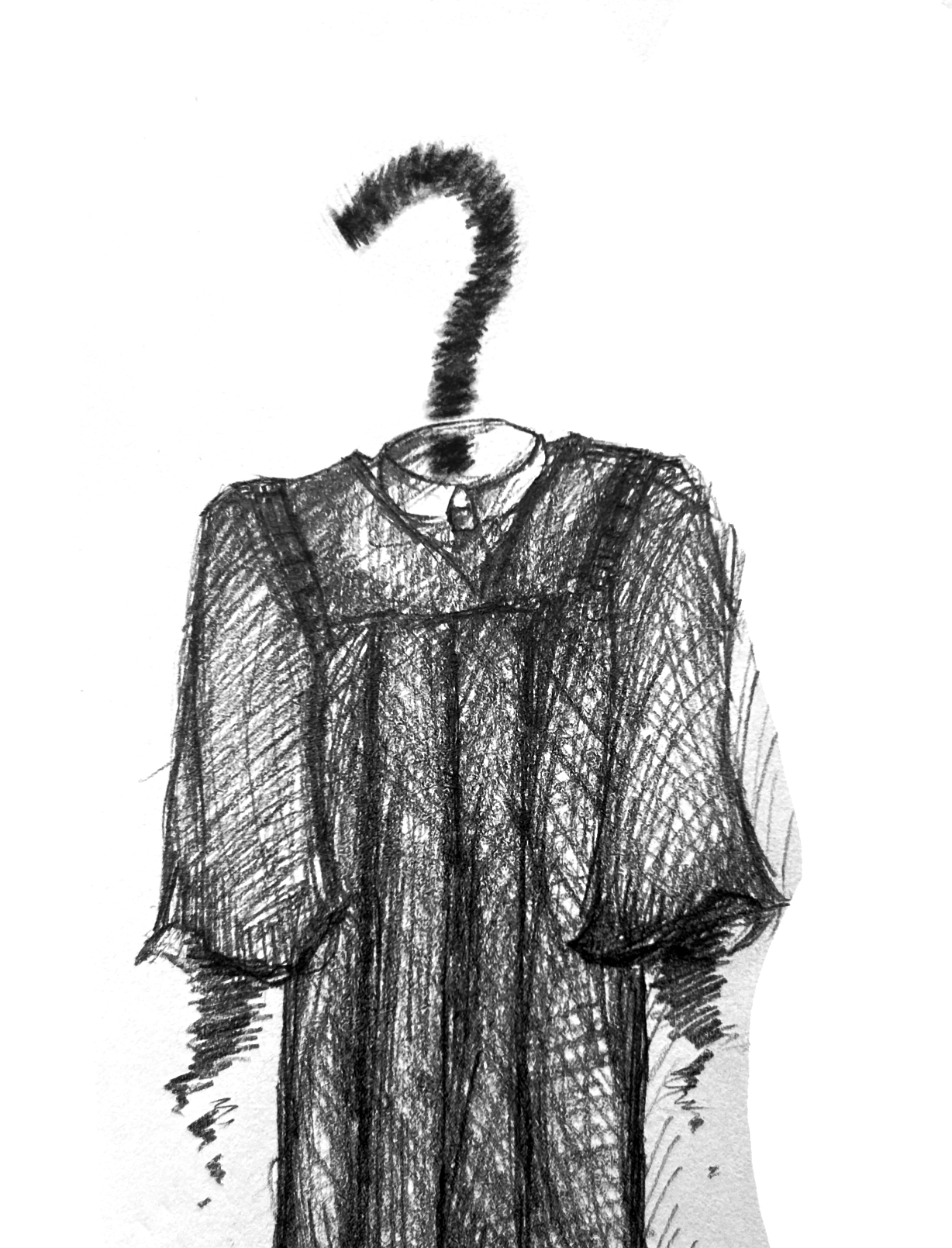
If you’ve ever looked at a New York City general election ballot, you may have noticed something odd. Whether you were helping to research candidates for a family member, or you’re able to vote yourself, you probably saw candidates running for judicial offices completely unopposed. Perhaps you attempted to research them, only to find that practically nothing about them could be found online. Maybe you decided to look back at the primary ballot, only to see that their name didn’t even appear on the primary ballot. That wouldn’t be unexpected. While New York’s judicial elections are ostensibly democratic, in practice, most elected judges, those being the judges of the Civil Court, Surrogate’s Court, and State Supreme Court, don’t ever face a competitive election before taking office. Instead, they are functionally selected by party insiders, in an extremely opaque and often unethical process.
The first thing to understand about New York judicial elections is that unlike in many other states, they are partisan, meaning that candidates run in a party’s primary and on their ballot line in a general election. There are two methods by which New Yorkers elect judges. The first method, being the more standard of the two, is used both for the city’s Civil Court, which handles “small money cases” (up to $50,000), and the Surrogate’s Court, which deals with wills and estates. Candidates get on primary ballots if they can gather enough signatures, and if they win those primaries they become that party’s nominee for the general election.
In practice, however, the majority of elections are uncompetitive. In 2025, only five out of the 14 Civil Court primary elections were contested. That’s higher than usual. In 2022, 17 out of 21 elections were uncontested. That’s because having institutional party support is a huge advantage. Political clubs and party organizations help campaign for their chosen candidates, and with so little attention paid toward these judicial elections, it’s extremely difficult for outsider candidates to generate momentum. It is rare for any potential candidate to subject themselves to such an uphill battle and run against the party-supported candidate. Additionally, the parties often utilize a loophole to unilaterally select nominees. When a Civil Court judge wins their primary but then is selected as their party’s nominee for the State Supreme Court, the party executives get to decide who appears on the general election ballot. This is known as backfilling and has become extremely common in New York.
Still, New York City’s Civil Court and Surrogate Court elections are nowhere near as unfair, or as flawed, as the elections for New York State’s Supreme Court. Unlike in most states, the New York Supreme Court is not the most powerful court in the state; that would be the New York Court of Appeals. The New York Supreme Court is rather the basic trial court of New York, which handles matters like criminal cases and divorces. The nominee for each party is decided by what is known as a judicial convention. During the primary, voters select judicial delegates, who come together and decide who the party should nominate. Very often, judicial delegates are members of local party clubs or local politicians supported by party leaders, who help them gather enough signatures to get on the ballot. Perhaps unsurprisingly, these elections are often uncontested.
As for the judicial conventions themselves, they’re effectively a rubber stamp. The party officers provide a list of candidates for the delegates to consider, and more than 96% of the time, they only give one. While in theory, delegates can propose their own candidates, in practice, that almost never happens. Party selections are also far from unbiased. Nearly all candidates donate thousands of dollars to party organizations, which is legal thanks to loopholes in the city’s code of ethics for judges. According to Noah Rosenblum, a NYU law professor who was interviewed by The City, “in order to receive the party nomination, you have to attend a whole series of fundraisers and make large contributions to party members.” This can distort the democratic process, which in theory is meant to ensure that candidates are properly equipped for the office. Many judicial candidates receive party nominations despite being deemed unqualified by the New York City Bar Association.
In fact, the unqualified nature of many judges may be the most egregious thing about this system. According to the New York City Bar Association, many judicial candidates who ran unopposed in 2025 have not “affirmatively demonstrated the qualifications necessary for the performance of the duties of the position for which they are being considered.” New Yorkers deserve the chance to choose the people who will be responsible for ensuring that the law is properly applied. This decision should not be based on who has the best relationship with party leaders or who pays them the most money, but based on who will best interpret and uphold the law. The current system is opaque, nakedly corrupt, and unfair.